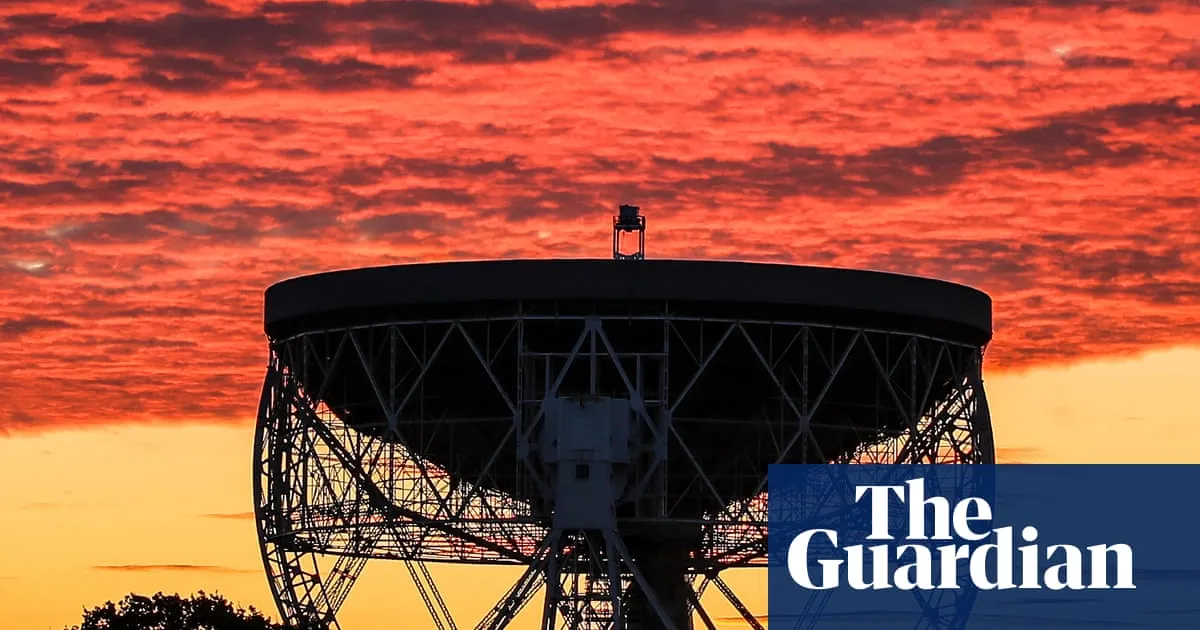
On a chilly day in December 1945, Bernard Lovell, a physicist at the University of Manchester, struck out for the Cheshire countryside to study cosmic rays, the streams of high-energy particles that crisscross the universe. Peering at the signals from his army surplus radar, he made an unexpected discovery: radio reflections from the ionised trails of shooting stars.The work marked the birth of radio astronomy at Jodrell Bank. A year later, engineers at the site mounted a radar on the base of a searchlight, providing sweeping access to speeding meteors. When Sputnik launched in 1957, they had just completed the Lovell telescope, the largest radio telescope in the world, the only one capable of tracking the Soviet satellite.With decades of upgrades, Jodrell Bank has remained world-class, at the heart of a seven-telescope network called e-Merlin, the UK’s national radio astronomy capability. But as of Monday, the network, and Jodrell Bank itself, are threatened with closure. The Science and Technology Facilities Council (STFC) plans to pull funding in March 2028. All observations will stop unless alternative support can be found.Radio astronomy is not an obscure endeavour producing esoteric data. It has changed our view of the universe. Armed with the technique, astronomers have spotted spinning neutron stars that emit powerful beams, illuminating space like a lighthouse. They have watched matter swirling around supermassive black holes, and glimpsed the faint afterglow of the big bang.Astronomers, of course, have other telescopes to peer down, at least metaphorically. But UK researchers working on many of these face hefty cuts too. Last month, the Rubin Observatory in Chile embarked on a decade-long project to record the largest cosmic movie ever. The UK’s involvement will drop 20%. The same goes for an observatory on La Palma in the Canary Islands. Work on the Bison solar observation network will fall by 40%. And the country is withdrawing from the Event Horizon Telescope, which captured the first image of a black hole. Astronomers converged on the same words to describe the news: devastating, shocking, disastrous.Throughout this year, the STFC has said it needs to make £162m in savings by 2030. The crisis follows cost overruns that arose from soaring electricity and staff costs and high foreign exchange rates for international collaborations such as Cern, home to the Large Hadron Collider, near Geneva. But figures obtained by Research Professional News suggest the situation may be worse: a combined forecast cost overrun of £684m for the four years of the government’s latest spending review period.Other fields of physics have not been spared the axe. The Diamond synchrotron and the Isis muon and neutron source, both in Oxfordshire, face cuts but will remain operational. The Clara facility in Cheshire, which tests next-generation particle accelerator technologies, is being mothballed. The operating budget for Boulby mine, the only deep underground science facility in the UK, is being slashed by 40%. There is no funding for the LHCb experiment on the Large Hadron Collider, which could terminate it early, leaving 80% of data uncollected.With the money it does have, the STFC wants to prioritise specific areas of research. But the best scientists will go wherever the best science can be done. And on this the signs are ominous. A recent survey found that nearly 80% of early-career physicists were considering leaving the UK after the funding crisis. The loss of even a fraction of that would be a blow for UK science and also national growth. The task now is to persuade them to stay.
SRCThe Guardian - World News
LANGEN
LEANCenter-Left
WORDS581
ENT12
TUE · 2026-07-28 · 05:00 GMTBRIEF NSR-2026-0728-96657
NSR-2026-0728-96657News Report·EN·Technology
World-class Jodrell Bank is under threat and UK risks a physics brain drain
Jodrell Bank, a historic site for radio astronomy, and its national network e-Merlin face closure in March 2028 due to funding cuts by the Science and Technology Facilities Council (STFC). This decision stems from the STFC's need to make significant savings by 2030, exacerbated by cost overruns.
Ian Sample Science editorThe Guardian - World NewsFiled 2026-07-28 · 05:00 GMTLean · Center-LeftRead · 3 min
The Guardian - World NewsFIG 01
Reading time
3min
Word count
581words
Sources cited
1cited
Entities identified
12entities
Quality score
100%
§ 01
Briefing Summary
AI-generatedNEWSAR · AI
Jodrell Bank, a historic site for radio astronomy, and its national network e-Merlin face closure in March 2028 due to funding cuts by the Science and Technology Facilities Council (STFC). This decision stems from the STFC's need to make significant savings by 2030, exacerbated by cost overruns. The potential closure threatens not only Jodrell Bank's world-class capabilities but also UK involvement in other major international astronomy projects and facilities. This funding crisis has led to widespread concern among scientists, with a significant percentage of early-career physicists considering leaving the UK, posing a risk to British science and national growth.
Confidence 0.90Sources 1Claims 5Entities 12
§ 02
Article analysis
Model · rule-basedFraming
Technology
Human Interest
Tone
Mixed Tone
AI-assessed
CalmNeutralAlarmist
Factuality
0.80 / 1.00
Factual
LowHigh
Sources cited
1
Limited
FewMany
§ 03
Key claims
5 extracted01
Jodrell Bank and the e-Merlin network face closure in March 2028 due to funding cuts from the Science and Technology Facilities Council (STFC).
factualSTFC
Confidence
1.00
02
The UK is withdrawing from the Event Horizon Telescope collaboration.
factualarticle
Confidence
0.95
03
The Clara facility is being mothballed, and other facilities like Diamond synchrotron and Isis muon and neutron source face cuts.
factualarticle
Confidence
0.90
04
The UK's involvement in the Rubin observatory project will drop by 20%, and work on the Bison solar observation network will fall by 40%.
statisticarticle
Confidence
0.90
05
The STFC needs to make £162m in savings by 2030, with a potential cost overrun of £684m for the current spending review period.
statisticSTFC / Research Professional News
Confidence
0.85
§ 04
Full report
3 min read · 581 words§ 05
Entities
12 identifiedKey playerOppositionContextPositiveNeutralNegative
Organizations4
Locations6
§ 06
Keywords & salience
10 termsjodrell bank
1.00
radio astronomy
1.00
funding cuts
0.90
physics brain drain
0.80
cosmic rays
0.70
lovell telescope
0.70
stfc
0.60
scientific research
0.50
universe
0.40
black holes
0.40
§ 07
Topic connections
Interactive graph No topic relationship data available yet. This graph will appear once topic relationships have been computed.