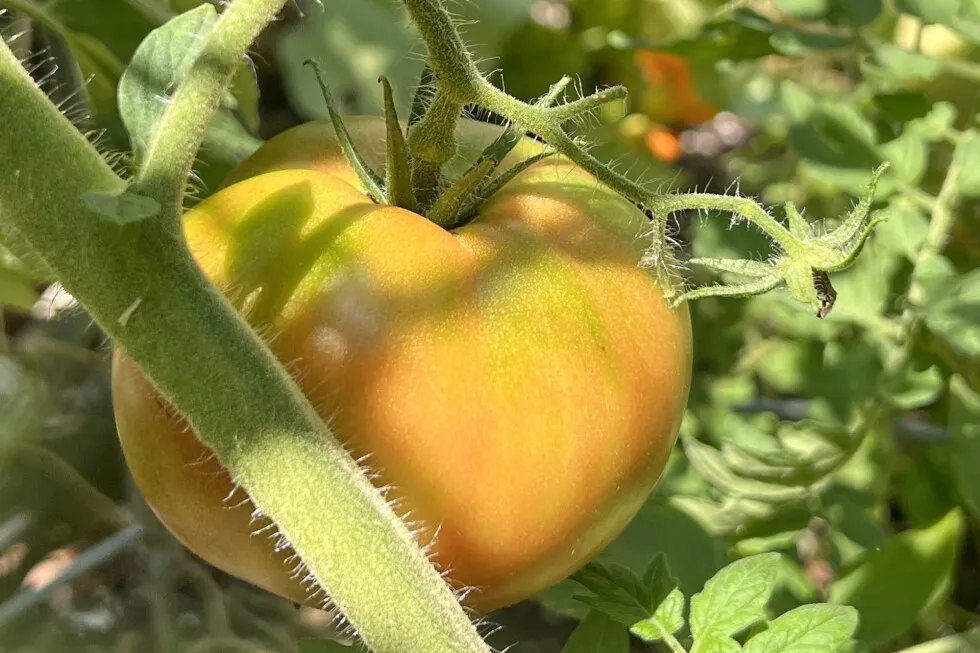
The risks of waiting too long to harvest garden vegetables 1 of 2 | A partially ripe tomato appears on a plant on Long Island, N.Y., on July 21, 2024. (Jessica Damiano via AP) 2 of 2 | Ripe green beans appear on a vine on Long Island, N.Y. on June 3, 2024. (Jessica Damiano via AP) By Jessica Damiano Updated 6:25 PM MESZ, July 28, 2026 Add AP News on Google Add AP News as your preferred source to see more of our stories on Google. Share Share Facebook Copy Link copied Print Email X LinkedIn Bluesky Flipboard Pinterest Reddit We sowed. We planted. We watered, watched and waited. And now, beanstalks are reaching for the heavens, tomatoes are getting plump and zucchini are seemingly doubling in size overnight. Timing their harvests is a balancing act, and in many cases you, as gardener, are forced to choose between optimal flavor and yield. Sometimes, one must be compromised in favor of the other — or to save your crop. Just don’t wait too long. Tomatoes are ripe when their mature color — red, yellow, orange, purple, etc. — is uniform. But waiting for that perfect vine-ripened moment often means risking loss. Plump, juicy tomatoes may split open on the vine or be devoured by hungry critters, who know a perfectly ripe tomato when they see one. I pick my tomatoes a few days before they reach their peak, then let them continue to ripen upside-down on the kitchen counter (the placement helps prevent bruising at the bottom). In fact, as long as at least half the tomato is taking on color, it will ripen well indoors. How to know when six other garden vegetables are ready to pick Cucumbers should be green, firm and glossy. Standard types are best harvested when they’re between 6 and 8 inches long (15 to 20 centimeters); pickling types typically top out at 2-4 inches long (5 to 10 centimeters). They grow rapidly, so check plants daily. Wait too long and they’ll turn yellow and bitter. Who says a vegetable garden needs full sun? Some plants do well in shadier spots 2 MIN READ 11 A gardener’s guide to 5 orchids that mimic animals, insects and even a naked man 2 MIN READ How to protect your roses from black spot disease 2 MIN READ Green bean pods should be plump but not bulging, and firm enough to snap when bent. Harvest the “ready” ones daily because the more you pick, the more the plant will produce; if you don’t remove the ripe beans, production will slow to a crawl. Zucchini grows very quickly, so check plants daily and harvest when the zucchinis are 6-8 inches long and their skin is soft enough to pierce easily with your fingernail. This is also the ideal size for sweetness. Posting a photo of an 18-inch zucchini might amuse your friends, but you probably won’t enjoy eating its tough, seed-filled flesh. On the other hand, eggplants tend to stop growing when they reach peak ripeness. Shiny skin is another indicator of maturity. Grab it while you can, because if you wait too long, their skin will turn dull and fade in color — and you’ll be left deciding whether to eat or toss the soft, spongy, bitter, hard-seed-filled poor excuse for an eggplant. Corn will tell you it’s ready when its silks turn brown. Husks should be fresh, green and feel full. If you’re not certain it’s ready, peel the husk back slightly, just enough to reveal the top row of kernels, and pierce one with your fingernail. If the “juice” inside is milky, it’s ready. If it’s watery, close it up and try again in a few days. But if there isn’t any liquid inside, the corn is past its prime. That means the kernels’ wonderful sugars will have turned into starch. You can’t go wrong with peppers though: Pick them at their immature green stage or wait until they turn red, yellow or orange. The longer they’re left on the plant, the sweeter (or hotter) they’ll be, but they’ll be perfectly edible either way. Regardless of the crop, harvest in the morning, just after the dew has dried, for peak moisture content, sugar concentration and texture. Twist fruit off thin vines or stems, such as those of tomatoes and beans, while holding the main branch with your other hand to prevent damage. Use clean, sharp scissors or pruners when removing fruit from thicker-stemmed plants, such as eggplants. For more AP gardening stories, go to https://apnews.com/hub/gardening.
SRCAssociated Press (AP)
LANGEN
LEANCenter
WORDS759
ENT10
TUE · 2026-07-28 · 16:53 GMTBRIEF NSR-2026-0728-96878
NSR-2026-0728-96878News Report·EN·Human Interest
The risks of waiting too long to harvest garden vegetables
Waiting too long to harvest garden vegetables can lead to loss of flavor and yield, or even crop spoilage. For tomatoes, picking them a few days before peak ripeness and letting them finish indoors can prevent splitting or pest damage.
Associated Press (AP)Filed 2026-07-28 · 16:53 GMTLean · CenterRead · 4 min
Associated Press (AP)FIG 01
Reading time
4min
Word count
759words
Sources cited
0cited
Entities identified
10entities
Quality score
100%
§ 01
Briefing Summary
AI-generatedNEWSAR · AI
Waiting too long to harvest garden vegetables can lead to loss of flavor and yield, or even crop spoilage. For tomatoes, picking them a few days before peak ripeness and letting them finish indoors can prevent splitting or pest damage. Cucumbers become bitter if left too long, while green beans slow production if not harvested regularly. Overripe zucchini become tough and seedy, and eggplants turn dull, spongy, and bitter. Corn is ready when its silks turn brown and kernels are milky, but past prime if watery or dry. Peppers can be harvested at any stage, with longer ripening increasing sweetness or heat. Harvesting in the morning after dew has dried is recommended for optimal quality.
Confidence 0.90Claims 5Entities 10
§ 02
Article analysis
Model · rule-basedFraming
Human Interest
Tone
Measured
AI-assessed
CalmNeutralAlarmist
Factuality
0.70 / 1.00
Factual
LowHigh
Sources cited
0
No named sources
FewMany
§ 03
Key claims
5 extracted01
Zucchini harvested at 6-8 inches long with soft skin is ideal for sweetness.
factual
Confidence
0.90
02
Harvesting green beans daily encourages the plant to produce more.
factual
Confidence
0.90
03
Cucumbers harvested too late turn yellow and bitter.
factual
Confidence
0.90
04
Tomatoes can be picked a few days before peak ripeness and will continue to ripen indoors if at least half colored.
factual
Confidence
0.90
05
Waiting too long to harvest tomatoes risks them splitting open or being eaten by pests.
factual
Confidence
0.90
§ 04
Full report
4 min read · 759 words§ 05
Entities
10 identifiedKey playerOppositionContextPositiveNeutralNegative
Organizations7
§ 06
Keywords & salience
10 termsvegetable harvest
1.00
harvest timing
0.90
crop yield
0.80
optimal flavor
0.70
garden vegetables
0.70
tomato ripening
0.60
fruit splitting
0.50
pest damage
0.50
cucumber harvest
0.40
zucchini harvest
0.40
§ 07
Topic connections
Interactive graph Network visualization showing 4 related topics
View Full Graph Person Organization Location Event|Click node to navigate|Edge numbers = shared articles