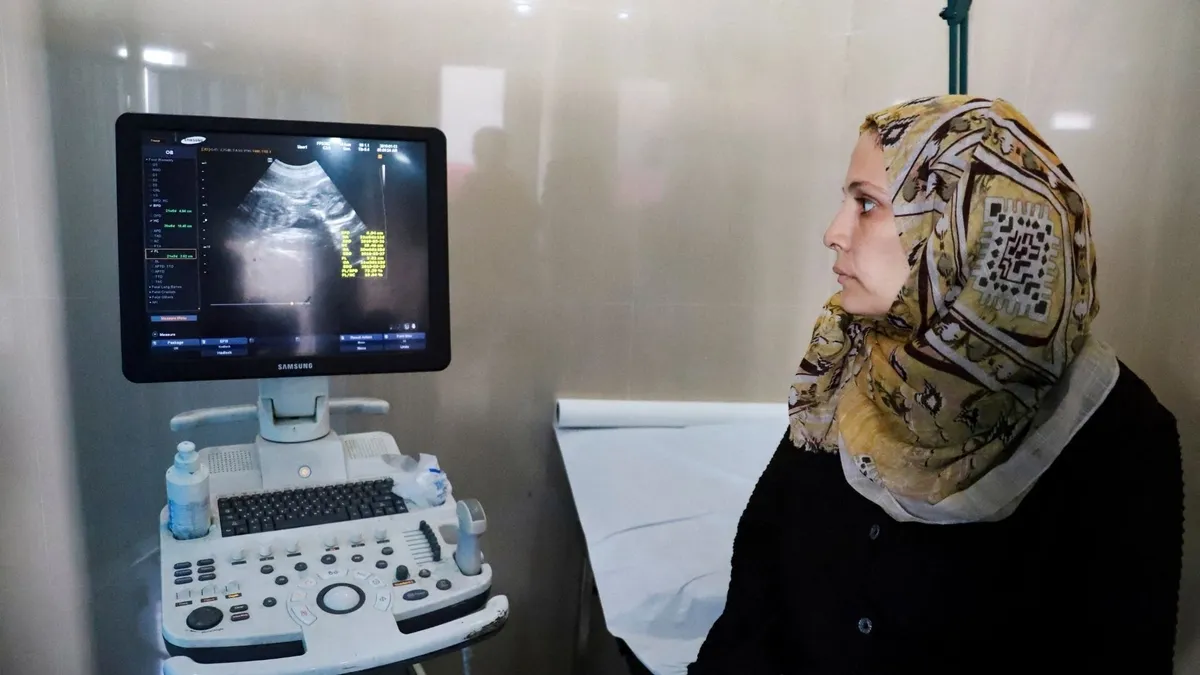
At al-Awda Hospital, doctors say about 70% of pregnancy losses they see are linked to Israel’s genocide and blockade.Published On 28 Jul 2026Deir el-Balah, Gaza – For years, Nuha Abu Lebda dreamed of becoming a mother. But Israel’s genocidal war on Gaza has turned that dream into loss, time and time again.As she was forcibly displaced several times across the Gaza Strip since the war began in October 2023, Abu Lebda lost three pregnancies. She says the losses came after months of air strikes, hunger, fear and living without proper medical care.Recommended Stories list of 3 itemslist 1 of 3‘I have nowhere else to go’: Gaza’s shelter crisislist 2 of 3Life without refrigerators: Gaza residents fight heat and food spoilagelist 3 of 3Sixty Palestinians detained by Israel return to Gaza, describe abusesend of list“I miscarried because of the air strikes, the displacement, the difficult conditions, the lack of clean water and malnutrition,” she tells Al Jazeera.After each miscarriage, she hoped she could still become a mother.“When I lost my baby, I was exhausted. I woke up hoping my baby was still inside me. But the dream I carried for 10 years was gone.”Abu Lebda sold her gold and almost everything she owned to pay for injections of heparin, a drug prescribed to some women to prevent blood clotting during pregnancy. She hoped the treatment would help her bring her pregnancies to term, but she lost the babies despite it.“I cried so much because I lost the baby I dreamed of every single day,” she laments.Even after the fighting slowed, her dream remained the same. “I dream of bringing a baby into this world. I want to be a mother and have children. Every time I see my husband playing with children, I start crying.”Medical officials in Gaza say they are treating a surge in miscarriages, which they link directly to Israel’s genocidal war and blockade. The trend has worsened as Gaza’s health system has collapsed under bombardments and Israeli ground operations with malnutrition and psychological strain cited as key drivers.Dr Yasser Saadeddine, the maternity director at al-Awda Hospital in Deir el-Balah in central Gaza, told Al Jazeera roughly 70 percent of pregnancy losses his team treats are linked to the war and blockade.A displaced Palestinian mother has a meal with her children inside a tent in Deir el-Balah. The war has led to malnutrition and psychological strain, which has taken a particular toll on pregnant women [File: Ramadan Abed/Reuters]‘I lost my daughter during childbirth’Abu Lebda is one of many women in Gaza who say they have lost pregnancies during the war. They describe miscarriages, premature births and losing newborns while trying to survive bombardments, displacement, hunger and the collapsing healthcare system.Mai Zaqout tells Al Jazeera she lost her daughter because she could not access the medical care she needed.“I lost my daughter during childbirth. She had already died inside my womb for a month, but I could not deliver her because the medical resources and support I needed were not available,” she says.Her loss came shortly after another tragedy. “All of this happened within a very short time after my husband was killed.”For Sara al-Awad, she had a scare when she was eight months pregnant. She says powerful explosions in Tal al-Hawa, a neighbourhood in Gaza City, caused extreme fear and stress, leading to severe bleeding.“Because of the fear, anxiety and the power of the explosions, I started bleeding. My placenta had separated.”Al-Awad says no ambulance could reach her, and she waited for hours before her brother took her to al-Quds Hospital in a wheelchair. “The doctors decided I needed an emergency C-section immediately.”Her baby, Muhammad, was born weighing only 1.1kg (2.4lb) and was placed in an incubator. But as fighting continued around the hospital, Sara and her family were separated from him.“My brother had to leave for the south while Muhammad stayed alone in the incubator. We could only check on him through messages from the medical staff,” she says.After more than a month, al-Awad was finally reunited with her baby. “Thank God, the ceasefire came. … Muhammad left the incubator after 37 days.”‘I witnessed horrific situations’Across Gaza, other women have similar stories.For Iman Badah, the loss was of the child she had waited years for.“I am a mother who lost my only son. I waited six years to have him. I gave birth prematurely while I was being displaced,” she tells Al Jazeera.Nuha Salameh was carrying twins during the war. “Fear and trauma caused me to lose them.”She says doctors told her that, before the war, her babies may have survived.“The doctor told me that if the situation had been normal, we would have placed them in the incubator, and they would have lived.”Nidaa Seyam says she experienced her second miscarriage during the war. “I lost a baby girl, and this is the second time I have miscarried.”She says doctors told her the war conditions affected her pregnancy. “They told me it was because of the psychological stress we are living through and malnutrition.”She also describes surviving intense bombardment.“I witnessed horrific situations where I was trapped under air strikes. I inhaled a lot of toxic fumes.”A medical staff member works in the dark at al-Awda Hospital during Israel’s war when the facility had to suspend medical services due to running out of fuel needed to operate its electric generators in December 2025 [File: Moiz Salhi/Anadolu Agency]‘War, blockade, malnutrition, displacement’Palestinian doctors say these stories are becoming more common.They report more miscarriages and pregnancy complications linked to hunger, stress, displacement and the lack of medical care.At al-Awda Hospital, doctors say they have seen a major increase in pregnancy losses.“During the war, there was a significant increase in miscarriage cases we received,” Saadeddine says.He says the causes include “the war and the blockade, including malnutrition, poor hygiene, environmental contamination and continuous displacement”.Doctors say miscarriages are only one part of the crisis. They are also seeing more babies dying in the womb, more premature deliveries and more dangerous pregnancy complications.Many women lost their homes, medical records and access to regular check-ups during repeated displacements. Hospitals are also struggling with shortages of medicines, equipment and medical staff.For many mothers, the war has left wounds that continue to hurt even after most of the fighting has stopped. For women in Gaza, the war has not ended with October’s “ceasefire”. It continues with every pregnancy lost, and every dream of motherhood left unfulfilled.
SRCAl Jazeera
LANGEN
LEANCenter
WORDS1 068
ENT12
TUE · 2026-07-28 · 18:46 GMTBRIEF NSR-2026-0728-96884
NSR-2026-0728-96884News Report·EN·Human Interest
‘The dream I carried is gone’: Miscarriages rise amid trauma of Gaza’s war
Doctors at al-Awda Hospital in Gaza report a significant rise in miscarriages, with approximately 70% of cases linked to the ongoing war and blockade. Women like Nuha Abu Lebda have experienced multiple pregnancy losses due to factors including air strikes, displacement, hunger, and lack of medical care.
Hind KhoudaryAl JazeeraFiled 2026-07-28 · 18:46 GMTLean · CenterRead · 5 min
Al JazeeraFIG 01
Reading time
5min
Word count
1 068words
Sources cited
2cited
Entities identified
12entities
Quality score
100%
§ 01
Briefing Summary
AI-generatedNEWSAR · AI
Doctors at al-Awda Hospital in Gaza report a significant rise in miscarriages, with approximately 70% of cases linked to the ongoing war and blockade. Women like Nuha Abu Lebda have experienced multiple pregnancy losses due to factors including air strikes, displacement, hunger, and lack of medical care. The collapsing healthcare system, combined with malnutrition and psychological strain, is cited as a major driver of these tragic outcomes. Other women share similar stories of losing babies during childbirth or experiencing premature births and complications due to the extreme conditions. The article highlights the devastating impact of the conflict on maternal health and reproductive outcomes in Gaza.
Confidence 0.90Sources 2Claims 4Entities 12
§ 02
Article analysis
Model · rule-basedFraming
Human Interest
Public Health
Tone
Sensational
AI-assessed
CalmNeutralAlarmist
Factuality
0.60 / 1.00
Mixed
LowHigh
Sources cited
2
Limited
FewMany
§ 03
Key claims
4 extracted01
Mai Zaqout lost her daughter during childbirth because she could not access necessary medical care.
quoteMai Zaqout
Confidence
0.90
02
Nuha Abu Lebda lost three pregnancies due to air strikes, displacement, hunger, fear, and lack of proper medical care.
quoteNuha Abu Lebda
Confidence
0.90
03
About 70% of pregnancy losses seen at al-Awda Hospital are linked to Israel’s war and blockade.
statisticDr Yasser Saadeddine, maternity director at al-Awda Hospital
Confidence
0.90
04
Medical officials in Gaza report a surge in miscarriages linked to Israel's war and blockade, exacerbated by a collapsed health system, malnutrition, and psychological strain.
factualAl Jazeera (reporting on medical officials)
Confidence
0.80
§ 04
Full report
5 min read · 1 068 words§ 05
Entities
12 identifiedKey playerOppositionContextPositiveNeutralNegative
Organizations1
Locations4
§ 06
Keywords & salience
10 termsmiscarriages
1.00
gaza war
1.00
pregnancy loss
0.90
health system collapse
0.80
malnutrition
0.70
psychological strain
0.70
displacement
0.60
blockade
0.50
medical care
0.40
heparin
0.40
§ 07
Topic connections
Interactive graph No topic relationship data available yet. This graph will appear once topic relationships have been computed.