EXPLAINERNations worldwide maintain territories and autonomous administrations for strategic and military purposes, many of which are remnants of colonial empires.The top 10 countries with the most overseas territories [Al Jazeera]Published On 22 Jan 2026Speaking at the World Economic Forum in Davos on Wednesday, United States President Donald Trump said the US needs “ownership” of Greenland to defend itself from adversaries like China and Russia, but said he “won’t use force” to acquire the self-ruling island, which is part of the Kingdom of Denmark.Across the world, various nations maintain overseas territories that house strategic and military installations, but also for historical, economic and environmental reasons. Many of them are remnants of colonial empires. While many former colonies around the world gained independence in the 20th century, they often chose to maintain their links for economic stability, security or because they were too small to be viable as fully independent nations.From the British and French overseas territories to the US-owned regions in the Caribbean and the Pacific, these territories exercise varying degrees of self-government and autonomy.Al Jazeera maps the 10 countries with the most overseas territories.United Kingdom – 14 territoriesThe UK has 14 overseas territories across the Atlantic, Caribbean, Pacific and polar regions.The inhabited territories include Anguilla, Bermuda, British Virgin Islands, the Cayman Islands, Falkland Islands, Gibraltar and Montserrat. These are self-governing, with the UK responsible for defence and foreign affairs.The UK also administers regions which are sparsely populated – the British Antarctic Territory, British Indian Ocean Territory, Pitcairn Islands, South Georgia Island and the South Sandwich Islands, as well as Akrotiri and Dhekelia bases in Cyprus. These are mainly used for military, scientific and environmental purposes.The UK recently handed sovereignty of the Chagos Islands in the British Indian Ocean Territory back to Mauritius after a decades-long dispute. This week, Trump strongly criticised this move as “an act of great stupidity”.In a statement on Monday, an official UK government spokesperson said the decision had been made because the UK-US military base on Diego Garcia was “under threat after court decisions undermined our position and would have prevented it operating as intended in future”. The base is leased to the US but operates as a joint UK-US base.The UK also has three Crown Dependencies, which, unlike the British Overseas Territories, have never been colonies and are not part of the United Kingdom. They have their own tax systems and courts. The UK is only responsible for their defence and foreign affairs. Crown Dependencies are possessions of the British Crown, owing allegiance to the monarch rather than the UK government.They include the self-governing Channel Islands of Jersey and Guernsey near the French Normandy coast. The Isle of Man, located in the Irish Sea between the UK and Ireland, is also a Crown Dependency.United States – 14 territoriesThe US has five permanently inhabited territories and nine which are uninhabited, mainly in the Caribbean and the Pacific.The inhabited territories are: Puerto Rico, Guam, the US Virgin Islands, American Samoa and the Northern Mariana Islands. Puerto Rico is the most populous and is a self-governing commonwealth. These territories have local governments but limited representation at the federal level.The US also controls a group of mostly uninhabited islands commonly referred to as the US Minor Outlying Islands, which are primarily used for military or strategic purposes. These are: Baker Island, Howard Island, Jarvis Island, Johnston Atoll, Kingman Reef, Midway Atoll, Navassa Island, Palmyra Atoll and Wake Island.France – 13 territoriesFrance has 13 overseas territories spread across the Atlantic, Caribbean, Indian Ocean, Pacific and South America. Unlike the UK and US territories, some of these are fully integrated into France as administrative regions, while others are overseas “collectives”.Five territories – French Guiana, Guadeloupe, Martinique, Mayotte and Reunion – are fully integrated parts of France. They have representatives in the French parliament and use the euro as their currency. French Guiana is home to the Guiana Space Centre, where space launches are conducted by several European private companies and government agencies.France administers French Polynesia, New Caledonia, Saint Pierre and Miquelon, Wallis and Futuna, Saint Martin and Saint Barthelemy, and Clipperton Island, all of which have varying degrees of autonomy.France also claims the French Southern and Antarctic Lands, which are uninhabited and used mainly for scientific research and environmental protection. However, some countries such as Mauritius, Madagascar and the Comoros dispute France’s sovereignty over these islands.Australia – 7 territoriesAustralia has seven overseas territories, three of which are inhabited – Norfolk Island, Christmas Island and the Cocos (Keeling) Islands. Residents of these islands are Australian citizens, and the territories have various levels of governance.The four mostly uninhabited territories that Australia controls are Heard Island and McDonald Islands, Ashmore and Cartier Islands, the Coral Sea Islands Territory and the Australian Antarctic Territory. These are primarily used for scientific research, meteorological monitoring and the administration of Australia’s maritime jurisdiction.The Netherlands – 6 territoriesThe Netherlands has six territories in the Caribbean.Three – Aruba, Curacao and Sint Maarten – have their own governments, parliaments and prime ministers and are known as “constituent” countries. Aruba gained this status in 1986, with Curacao and Sint Maarten becoming constituent countries in 2010.The other three territories are Bonaire, Sint Eustatius and Saba. These are directly administered by The Hague, but have local governments and use the US dollar.Norway – 5 territoriesNorway has five territories in the Arctic and Antarctic.Its first Arctic territory is Svalbard, which has a special legal status under the 1920 Svalbard Treaty, allowing international settlement and restricting military activity. The second territory is Jan Mayen, an uninhabited volcanic island used for meteorological research, monitoring and defence.Norway also claims three uninhabited territories in Antarctica: Bouvet Island, Peter I Island and Queen Maud Land. Bouvet Island and Peter I Island are mostly covered by glaciers, while on Queen Maud Land, there is very limited ice-free land at the coast. It hosts the largest-known seabird colony in Antarctica.(Al Jazeera)New Zealand – 4 territoriesNew Zealand has two self-governing regions that are part of it, one dependent territory, and one Antarctic claim.The Cook Islands in the South Pacific Ocean, located between New Zealand and Hawaii, and Niue, located in the South Pacific Ocean northeast of New Zealand and east of Tonga, are both self-governing in “free association” with New Zealand. This is a voluntary association in which a nation, such as the Cook Islands or Niue, assumes responsibility for its domestic affairs but defers to New Zealand for defence and foreign policy.Tokelau came under the control of New Zealand in 1925 and is a non-self-governing territory. This means that the UN considers it a territory where the people have “not yet attained a full measure of self-government” but are being encouraged to work towards it.
SRCAl Jazeera
LANGEN
LEANCenter
WORDS1 113
ENT11
THU · 2026-01-22 · 11:44 GMTBRIEF NSR-2026-0122-9698
NSR-2026-0122-9698News Report·EN·Political Strategy
Mapping the 10 countries with the most overseas territories
A recent Al Jazeera report maps the top 10 countries with the most overseas territories, remnants of colonial empires maintained for strategic, military, economic, and historical reasons. The United Kingdom leads with 14 territories across the Atlantic, Caribbean, Pacific, and polar regions, some self-governing and others used for military or scientific purposes.
Hanna DuggalAl JazeeraFiled 2026-01-22 · 11:44 GMTLean · CenterRead · 5 min
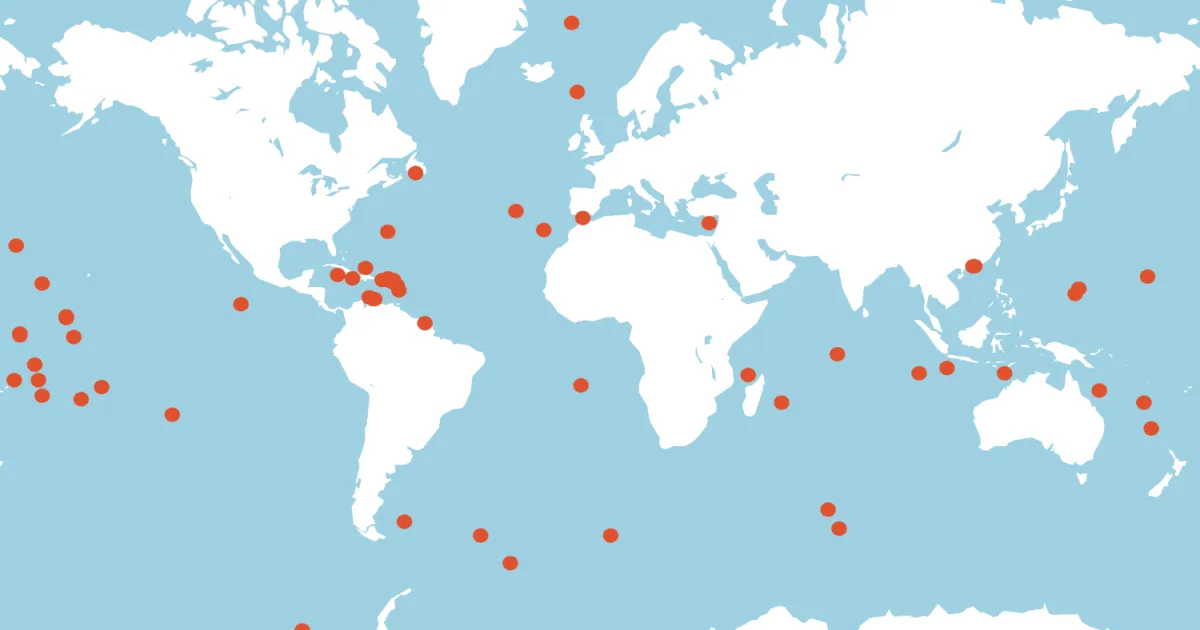
Al JazeeraFIG 01
Reading time
5min
Word count
1 113words
Sources cited
1cited
Entities identified
11entities
Quality score
100%
§ 01
Briefing Summary
AI-generatedNEWSAR · AI
A recent Al Jazeera report maps the top 10 countries with the most overseas territories, remnants of colonial empires maintained for strategic, military, economic, and historical reasons. The United Kingdom leads with 14 territories across the Atlantic, Caribbean, Pacific, and polar regions, some self-governing and others used for military or scientific purposes. The UK recently ceded sovereignty of the Chagos Islands to Mauritius, a move criticized by US President Trump who stated the US needs "ownership" of Greenland to defend itself from adversaries like China and Russia. These territories vary in autonomy, with the UK responsible for defense and foreign affairs in many. The UK maintains a joint military base with the US on Diego Garcia.
Confidence 0.90Sources 1Claims 5Entities 11
§ 02
Article analysis
Model · rule-basedFraming
Political Strategy
National Security
Tone
Measured
AI-assessed
CalmNeutralAlarmist
Factuality
0.80 / 1.00
Factual
LowHigh
Sources cited
1
Limited
FewMany
§ 03
Key claims
5 extracted01
Trump strongly criticised the UK's move to hand back the Chagos Islands as “an act of great stupidity”.
quoteDonald Trump
Confidence
1.00
02
The UK is responsible for the defence and foreign affairs of its inhabited territories.
factualAl Jazeera
Confidence
1.00
03
The UK recently handed sovereignty of the Chagos Islands back to Mauritius.
factualAl Jazeera
Confidence
1.00
04
United States President Donald Trump said the US needs “ownership” of Greenland.
quoteDonald Trump
Confidence
1.00
05
The UK has 14 overseas territories across the Atlantic, Caribbean, Pacific and polar regions.
factualAl Jazeera
Confidence
1.00
§ 04
Full report
5 min read · 1 113 words§ 05
Entities
11 identifiedKey playerOppositionContextPositiveNeutralNegative
Organizations1
§ 06
Keywords & salience
9 termsoverseas territories
1.00
united kingdom
0.80
colonial empires
0.70
strategic and military purposes
0.60
british indian ocean territory
0.60
diego garcia
0.50
economic stability
0.50
self-government
0.50
sovereignty
0.40
§ 07
Topic connections
Interactive graph No topic relationship data available yet. This graph will appear once topic relationships have been computed.