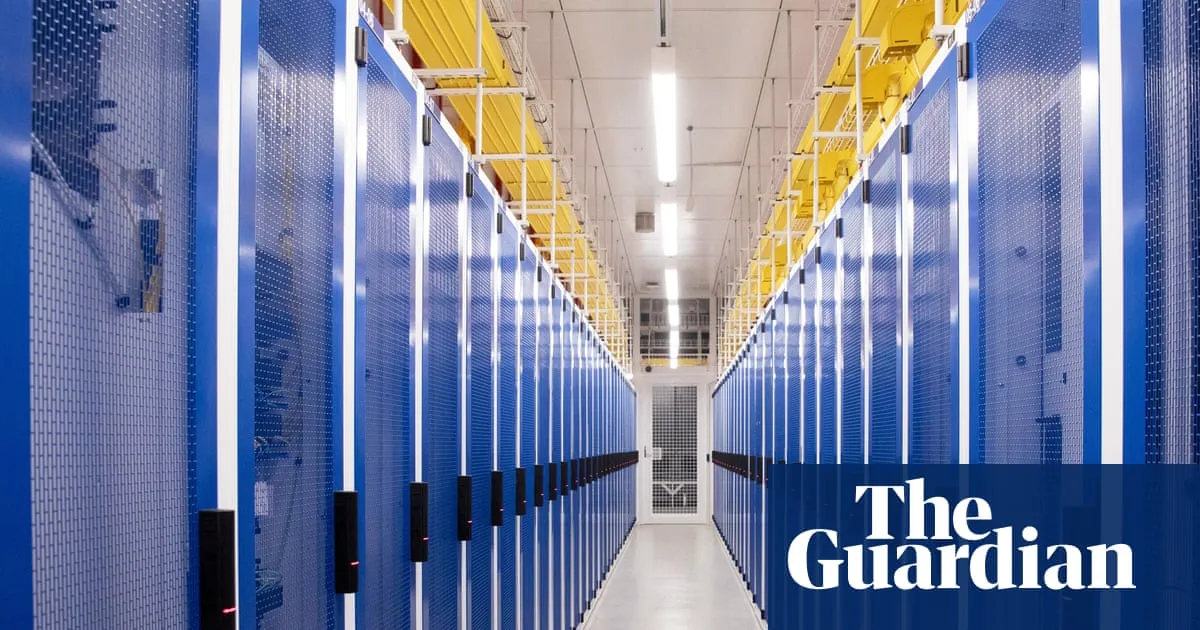
Labor says it will forge on with its plans to place energy and water usage rules on datacentres – despite the objections of Queensland and the NT. Photograph: Bloomberg/Getty Images View image in fullscreen Labor says it will forge on with its plans to place energy and water usage rules on datacentres – despite the objections of Queensland and the NT. Photograph: Bloomberg/Getty Images Queensland and NT reject Labor’s push to ensure that power-hungry AI datacentres use renewable energy Federal-state stoush comes as rating agency warns that electricity bills could skyrocket Follow our Australia news live blog for latest updates Get our breaking news email, free app or daily news podcast Queensland and the Northern Territory have rejected the federal government’s plans to mandate that AI datacentres use renewable power, rubbishing Anthony Albanese’s proposals to regulate the booming technology as “underdeveloped ideas that hand increased power to Canberra”. The latest federal-state stoush on energy comes as S&P Global, the economic rating agency, warns that power use from datacentres could rise five-fold by 2035 to 10% of Australia’s total consumption, and that a mismatch between delivery timelines for datacentres and renewable projects could lead to energy bills skyrocketing. But the federal Labor government says it will forge on with its plans to place energy and water usage rules on datacentres, and to develop “nationally consistent” regulations about AI – even if some states don’t agree. The federal government is examining whether it can set price protections to shield Australians from any energy bill spikes related to the datacentre boom. Anthony Albanese says he wants to do AI 'the Australian way' – video A meeting of state and federal energy ministers on Tuesday discussed the Albanese government’s expectations for datacentre development after the prime minister pledged to legislate binding standards for AI companies, including on locations and energy use. Datacentres would be required to generate renewable energy, minimise water use and maximise energy efficiency. Albanese said there would be a “legal obligation” for new datacentres to underwrite new power supply, pay for their grid connection costs and “put at least as much energy into our grid as they take out of it”. The Liberal-National government in Queensland raised concerns about a renewables mandate at an energy ministers’ meeting in May, the only holdout as all the other states agreed that datacentres should fully offset their energy demands with renewables, and transparently report their energy use and emissions. On Tuesday the Liberal government in the NT joined Queensland in rejecting further proposals and agreements about datacentres. All states – “with QLD and NT opposing”, according to a communique – backed the commonwealth’s plan for nationally consistent rules on datacentres, including underwriting new renewables and offsetting their power use, plus mandating that consumers face no price impacts. “Queensland will always support proposals that deliver affordable, reliable and sustainable power, however, we will not support underdeveloped ideas that hand increased power to Canberra at the expense of Queenslanders,” said the state treasurer and energy minister, David Janetzki. “We will continue to deliver affordable, reliable, and sustainable energy to deliver cost of living relief Queenslanders can rely on, while consulting with the community to support investment, jobs and economic growth.” The NT minister, Gerard Maley, was contacted for comment. Federal government sources said Queensland and the NT’s opposition to the plan would not stymie Albanese’s roadmap, and insisted work to deliver nationally consistent rules would continue. The federal energy minister, Chris Bowen, will address the National Press Club next week, when he is expected to reveal more about the Albanese government’s plans before a national cabinet meeting in August and another energy ministers’ summit in September. Federal powers relating to the Australian Energy Market Operator and Australian Energy Market Commission and surrounding connections of large facilities to power grids could be invoked to mandate that new datacentres use renewables. This week’s Guardian Essential poll found Australians were reluctant to embrace new AI datacentres, with less than a third saying they would be happy to have a facility in their area; 61% of people raised concerns about impact on energy demand and power prices, 44% were worried about water supply and 41% worried about environmental impacts and noise. S&P, in a report released this week, noted Aemo’s estimates that datacentre energy use could rise to 20 terawatt hours, or about 10% of Australia’s total consumption, by 2034-35. It also cited Sydney Water’s estimates that datacentres could use 15% to 20% of the city’s water by 2035. The rating agency warned of an “infrastructure and temporal mismatch” which could lead to consumer prices rising. “A big gap exists between data center delivery (18-24 months) and the delivery of transmission or renewable projects (three to five years),” it said. “Delays in transmission projects, such as those seen with Project Energy Connect in New South Wales (NSW) and Western Renewables Link in Victoria, could tighten supply and increase costs. “If renewable and storage infrastructure fails to keep pace, the government’s Clean Energy Finance Corp. estimates wholesale prices could rise by 25% across states, with emissions rising by 14%.” Explore more on these topics Datacentres Australian politics Anthony Albanese Energy (Australia news) Renewable energy Energy (Environment) Queensland news Share Reuse this content
SRCThe Guardian - World News
LANGEN
LEANCenter-Left
WORDS871
ENT8
WED · 2026-07-29 · 03:19 GMTBRIEF NSR-2026-0729-97008
NSR-2026-0729-97008News Report·EN·Political Strategy
Queensland and NT reject Labor’s push to ensure that power-hungry AI datacentres use renewable energy
Queensland and the Northern Territory have rejected the federal government's proposal to mandate that AI datacentres use renewable energy. The states criticized the plan as underdeveloped and an overreach of Canberra's power.
Josh ButlerThe Guardian - World NewsFiled 2026-07-29 · 03:19 GMTLean · Center-LeftRead · 4 min
The Guardian - World NewsFIG 01
Reading time
4min
Word count
871words
Sources cited
4cited
Entities identified
8entities
Quality score
100%
§ 01
Briefing Summary
AI-generatedNEWSAR · AI
Queensland and the Northern Territory have rejected the federal government's proposal to mandate that AI datacentres use renewable energy. The states criticized the plan as underdeveloped and an overreach of Canberra's power. This disagreement occurs as S&P Global warns that datacentre electricity consumption could quintuple by 2035, potentially leading to skyrocketing energy bills due to a mismatch in renewable project timelines. Despite these objections, the federal Labor government intends to proceed with developing nationally consistent regulations for datacentres, including energy and water usage rules. Prime Minister Anthony Albanese has stated that new datacentres will be legally obligated to underwrite new power supply and offset their energy consumption.
Confidence 0.90Sources 4Claims 5Entities 8
§ 02
Article analysis
Model · rule-basedFraming
Political Strategy
Economic Impact
Tone
Mixed Tone
AI-assessed
CalmNeutralAlarmist
Factuality
0.70 / 1.00
Factual
LowHigh
Sources cited
4
Well sourced
FewMany
§ 03
Key claims
5 extracted01
Power use from datacentres could rise five-fold by 2035 to 10% of Australia’s total consumption.
statisticS&P Global
Confidence
0.95
02
The federal government will forge on with plans for energy and water usage rules on datacentres, even if some states disagree.
factualFederal Labor government
Confidence
0.90
03
New datacentres will have a legal obligation to underwrite new power supply and pay for grid connection costs.
quoteAnthony Albanese
Confidence
0.90
04
Queensland and NT reject federal government plans to mandate renewable energy use for AI datacentres.
factualQueensland and NT governments
Confidence
0.90
05
A mismatch between datacentre delivery and renewable projects could lead to energy bills skyrocketing.
predictionS&P Global
Confidence
0.85
§ 04
Full report
4 min read · 871 words§ 05
Entities
8 identifiedKey playerOppositionContextPositiveNeutralNegative
Organizations3
Locations3
§ 06
Keywords & salience
10 termsrenewable energy
1.00
ai datacentres
1.00
energy usage
0.90
federal-state stoush
0.80
power bills
0.70
energy ministers
0.60
northern territory
0.50
labor government
0.50
queensland
0.50
s&p global
0.40
§ 07
Topic connections
Interactive graph Network visualization showing 51 related topics
View Full Graph Person Organization Location Event|Click node to navigate|Edge numbers = shared articles