American service personnel accused of rape on British soil are being charged with lesser offences by their military courts, a discrepancy that experts say is deepening the traumatic impact on survivors long after verdicts are passed.There are more than 12,000 personnel stationed in US military bases across the UK, most of them in England. Although UK law enforcement has primary jurisdiction over crimes that occur when personnel are off duty, local police often choose to cede authority to the American military.When that happens, British victims are thrust into an unfamiliar world, where their alleged attackers are tried at courts martial, often by a panel of American military personnel stationed at the same base.Victims of sexual attacks by military personnel that would meet a common definition of rape are also finding that their attackers are instead being prosecuted for lesser offences, which carry more lenient sentences.Under the set of laws that govern US forces, known as the Uniform Code of Military Justice (UCMJ), the crime of rape carries a narrower definition to that adopted by the British courts, meaning many cases are charged instead as sexual assault.British law defines rape as when someone puts their penis in another person’s vagina, anus or mouth without their consent and carries a maximum life sentence. Whether or not a victim was intoxicated is not relevant; the law centres on whether the alleged victim consented to the sexual act.In contrast, under article 120 of the UCMJ, a rape charge requires the prosecution to prove that the defendant, without consent, used force or administered an intoxicant. In cases where the victim was drinking alcohol voluntarily, or is not proven to have been overwhelmed by force, the case is charged as sexual assault, with a maximum penalty of 20 years.“It’s concerning if the occupation of the accused pulls a survivor into a justice system that she doesn’t know very much about, or understand, and isn’t one that she feels she has got a voice in,” said Kelly Johnson, a senior criminology lecturer at the University of Glasgow whose research examines policing responses to sexual violence.“A process might say it’s complying with its own formal rules, and still be experienced by survivors as alienating, degrading, and fundamentally unfair.”In the case of Capt Jacob Wulfson, an American fighter pilot, prosecutors accused him of drugging and strangling Sarah Steele, a British academic, during a date in his apartment in December 2023, before penetrating her vagina with his penis without her consent.The charge for the non-consensual penetration was sexual assault and “aggravated sexual contact” – a crime that does not even appear in UK statutes.An all-male panel of airmen found Wulfson not guilty of the sexual assault charge, but guilty of strangulation. They sentenced him to be confined to a corrections facility for six months.Steele said: “Words have power. Legal terminology isn’t just a technical exercise, it shapes how victims are understood. I respect that the law uses precise definitions, but the language carried a profound emotional weight for me.”She recalled “having to explain what the legal label meant and what it didn’t mean. Having to repeatedly explain that distinction has been exhausting and, frankly, retraumatising.”In another case, Tyrion Davis, an American airman, was tried in a court martial in June 2022 after two British women, including his wife, accused him of rape. The official charge sheet said that he was convicted on one charge of sexual assault – described as penetrating the victim’s vagina with his penis without consent – but acquitted of 10 further counts of sexual assault and abusive sexual contact, and two counts of assault.Experts working with survivors of sexual violence say that a perception that the crime on the charge sheet reflects their lived experience can be integral to how a victim is able to process their experience.Katrin Hohl, a professor of criminology and criminal justice at the University of London, said: “The way other people respond to what happened to you, the way other people label it and frame it and see it has profound consequences for your ability to move forward. If the criminal justice system treats you in a way that denies you validation, it doesn’t just not help you recover, it actually adds further trauma.”An earlier version of the UCMJ’s article 120 defined crimes of sexual violence more loosely, but a new definition adopted in 2007, and refined several times since then, instituted the narrower definition of rape.Critics of article 120 say it fails victims because it was not developed in consultation with victims’ rights groups and individuals specialising in the field of sexual assault.“I think the intention came from a good place,” said Don Christensen, who served as chief prosecutor for the US air force between 2010 and 2014. “They modelled some of these changes on some state laws, but they didn’t really, to my understanding, talk to many of us who were prosecuting cases to ask us what the problems were.”Rachel VanLandingham, a law professor and former US air force judge advocate involved in efforts to reform military law, said the broader problem with prosecuting sexual offences under the UCMJ was a structural one.“They pick the charges and then they get to pick the jury members, which is completely structurally unfair, but the system was never designed to be fair. It was designed to be a commander’s tool for strict discipline,” she said.For victims, the consequences of having their experiences funnelled through such an opaque and militarised process can be devastating. “When victims don’t feel like they’re taken seriously, they’re not treated with respect and dignity, they’re not heard, that causes retraumatisation or what’s known as a secondary victimisation,” said Johnson, of the University of Glasgow. “Some victims say this is more profoundly damaging and harmful than the initial experience.”
SRCThe Guardian - World News
LANGEN
LEANCenter-Left
WORDS960
ENT10
WED · 2026-07-29 · 09:00 GMTBRIEF NSR-2026-0729-97074
NSR-2026-0729-97074News Report·EN·Legal & Judicial
Why US military prosecutes alleged rapes of women in UK as ‘sexual assaults’
American service personnel stationed in the UK accused of rape are often prosecuted for lesser offenses like sexual assault by their military courts. This occurs because the US Uniform Code of Military Justice (UCMJ) has a narrower definition of rape than British law, requiring proof of force or administered intoxicants, whereas British law focuses on lack of consent.
Louisa Loveluck and Harry DaviesThe Guardian - World NewsFiled 2026-07-29 · 09:00 GMTLean · Center-LeftRead · 4 min
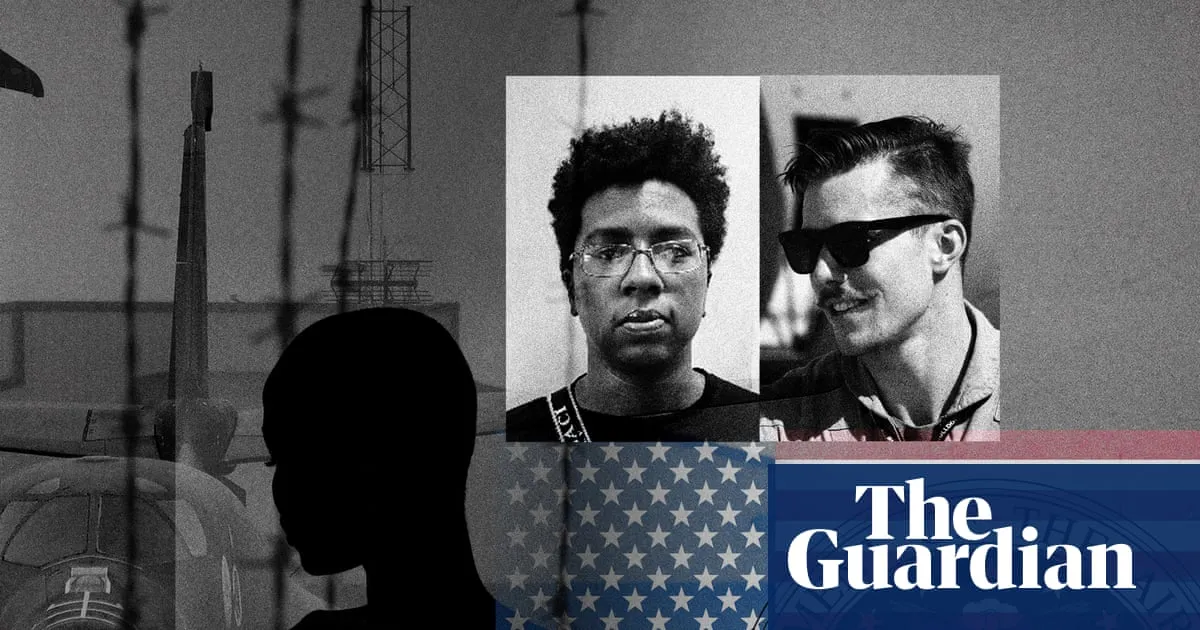
The Guardian - World NewsFIG 01
Reading time
4min
Word count
960words
Sources cited
2cited
Entities identified
10entities
Quality score
100%
§ 01
Briefing Summary
AI-generatedNEWSAR · AI
American service personnel stationed in the UK accused of rape are often prosecuted for lesser offenses like sexual assault by their military courts. This occurs because the US Uniform Code of Military Justice (UCMJ) has a narrower definition of rape than British law, requiring proof of force or administered intoxicants, whereas British law focuses on lack of consent. When UK police cede jurisdiction to the US military, British victims are tried in unfamiliar courts martial. Experts state this discrepancy can deepen trauma for survivors, as the charges may not reflect their experience. Cases like Captain Jacob Wulfson and Airman Tyrion Davis illustrate instances where rape allegations resulted in convictions for lesser sexual assault charges.
Confidence 0.90Sources 2Claims 5Entities 10
§ 02
Article analysis
Model · rule-basedFraming
Legal & Judicial
Human Rights
Tone
Mixed Tone
AI-assessed
CalmNeutralAlarmist
Factuality
0.70 / 1.00
Factual
LowHigh
Sources cited
2
Limited
FewMany
§ 03
Key claims
5 extracted01
Capt Jacob Wulfson was found not guilty of sexual assault but guilty of strangulation, receiving a six-month confinement sentence.
factual
Confidence
0.90
02
In the case of Capt Jacob Wulfson, prosecutors charged him with sexual assault and 'aggravated sexual contact' for an act that would be rape under UK law.
factual
Confidence
0.90
03
British law defines rape based on non-consensual penetration, while UCMJ Article 120 requires proof of force or administered intoxicants, or voluntary intoxication by the victim.
factual
Confidence
0.90
04
US military courts prosecute alleged rapes of women in UK as lesser offenses like 'sexual assault' due to narrower definitions in the Uniform Code of Military Justice (UCMJ).
factual
Confidence
0.90
05
Victims of sexual attacks by US military personnel in the UK are often tried in unfamiliar US military courts, potentially leading to a sense of alienation and unfairness.
quoteKelly Johnson
Confidence
0.80
§ 04
Full report
4 min read · 960 words§ 05
Entities
10 identifiedKey playerOppositionContextPositiveNeutralNegative
Events1
§ 06
Keywords & salience
10 termssexual assault prosecution
1.00
military justice
1.00
rape definition discrepancy
0.90
us military bases uk
0.80
uniform code of military justice
0.80
jurisdiction over crimes
0.70
survivor impact
0.60
courts martial
0.50
consent
0.40
lenient sentences
0.40
§ 07
Topic connections
Interactive graph Network visualization showing 51 related topics
View Full Graph Person Organization Location Event|Click node to navigate|Edge numbers = shared articles