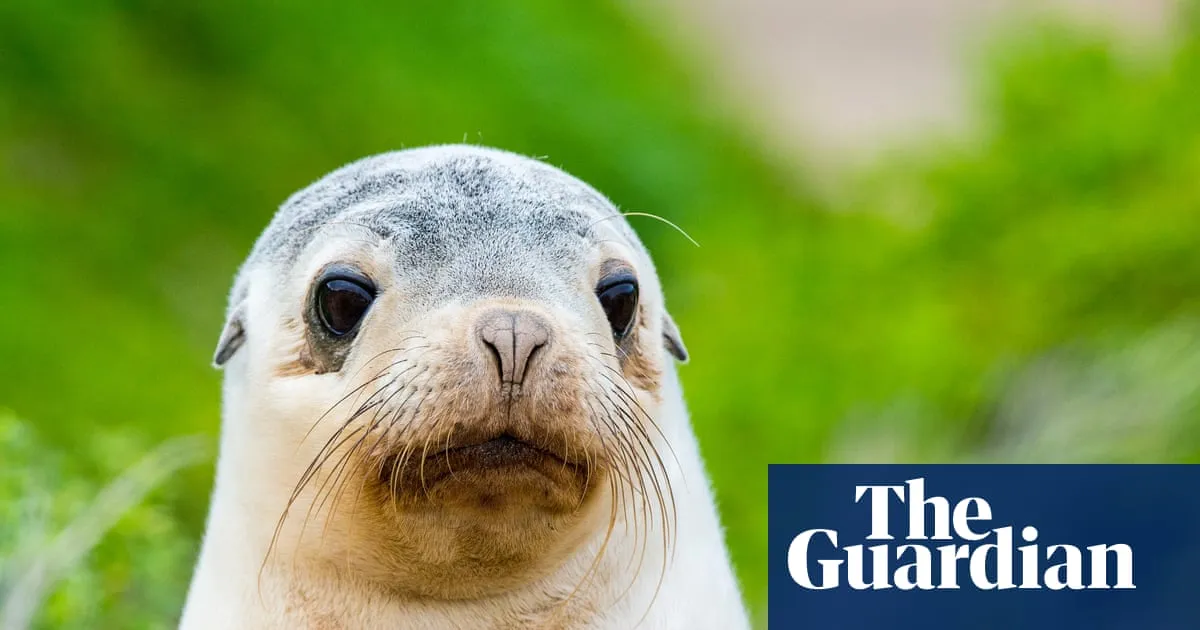
Conservationists fear for the sea lion population at Australia" class="entity-link entity-location" data-entity-id="210" data-entity-type="location">South Australia’s Kangaroo Island, after bird flu was detected there. Photograph: Andrea Izzotti/Getty Images/iStockphoto View image in fullscreen Conservationists fear for the sea lion population at Australia" class="entity-link entity-location" data-entity-id="210" data-entity-type="location">South Australia’s Kangaroo Island, after bird flu was detected there. Photograph: Andrea Izzotti/Getty Images/iStockphoto Bird flu is spreading locally and Australia faces more wildlife deaths. How bad could it get? Authorities say local transmission of H5 bird flu virus among South Australian birds signals ‘shift in the situation’ Get our breaking news email, free app or daily news podcast Australia has entered a new phase in dealing with the incursion of deadly H5N1 bird flu, with authorities confirming on Wednesday that local transmission of the highly virulent strain had taken place. “We have had what is suggestive of local transmission for the first time,” Julie Collins, the federal minister for agriculture, fisheries and forestry, said on Wednesday afternoon, after 11 new suspected detections were reported in South Australian birds. “We will expect to see increased evidence and deaths of wildlife … given there has been some local transmission,” she said. “This small shift in the situation will be very disappointing to many, but is certainly not an unexpected development as the last continent to detect H5 bird flu.” Now that authorities believe transmission of H5 strain is occurring locally, what does this mean for Australia’s wildlife, and how bad could things get? What’s the current status of H5N1 bird flu in Australia? On Wednesday morning, South Australian authorities announced 11 new suspected bird flu detections in greater crested terns in the state’s south-east, including four cases on Kangaroo Island. That brings Australia to a total of 27 confirmed detections. Julie Collins, the agriculture minister, said the Consultative Committee on Emergency Animal Diseases – comprising federal and state and territory authorities – had met on Wednesday and agreed that “some local transmission has occurred between a number of greater crested terns that are resident in Australia" class="entity-link entity-location" data-entity-id="210" data-entity-type="location">South Australia”. Dr Beth Cookson, Australia’s chief veterinary officer, said genetic sequencing showed all confirmed cases detected to date were related to sub-Antarctic strains of the virus. Clare Scriven, the SA minister for primary industries, said earlier on Wednesday: “This is concerning but not unexpected. We knew that eventually when bird flu arrived in Australia it would spread. It has spread on every other continent around the globe.” To date, there have been no H5 detections in poultry or agricultural industries in Australia. “The risk to human health remains low,” Collins said. How could bird flu affect wildlife on Kangaroo Island? One of the Kangaroo Island bird flu detections was at Seal Bay, home to the country’s third-largest Australian sea lion population. Conservationists have expressed fears for the sea lion population there. Alexia Wellbelove, campaigns director at the Australian Marine Conservation Society (AMCS), said Australian sea lions were “now on the frontline of the potential wildlife crisis”. About 80% of the Australian sea lion population is found in Australia" class="entity-link entity-location" data-entity-id="210" data-entity-type="location">South Australia; the endangered mammal has seen populations decline by 60% in four decades, with remaining numbers about 12,000. “In South America, this virus killed 30,000 sea lion pups in just six months following transmission from birds to marine mammals,” Wellbelove said. “On our own Heard Island, it killed more than 13,000 elephant seal pups in a single season … we now have to face the very real possibility of similar devastation here at home, in a species already teetering on the edge.” Scriven said on-beach tours at Seal Bay were temporarily paused to keep people separate from the “very vulnerable” animal population and to reduce the risk of spreading infection. Not much, unfortunately. Cookson said on Wednesday: “We do know from the overseas experience that once the virus becomes more widespread in wild bird populations it will not be possible to avoid losses in susceptible wildlife in the natural environment.” Authorities had anticipated the arrival of H5N1 in Australia through migratory birds “for a number of years”, she said. They will continue to focus on surveillance, to confirm where the virus is circulating and to “reduce the impacts where possible”. Collins said the federal government had invested more than $113m preparing for the virus’s arrival. “We have also, working with states and territories, now released a further $24m.” Without listing specific animals, Cookson said the government was taking “a number of actions in high-priority conservation species, including site- and species-specific planning”. There would also be a focus on protecting captive breeding populations, and implementing farm biosecurity measures to “limit contact between wild birds and poultry”. Groups including the AMCS and the Invasive Species Council have called on the federal government to establish a $200m national wildlife resilience fund, “focused on emergency protection and recovery for our most at-risk species”. Worldwide, the H5N1 variant has caused “unprecedented levels of ongoing outbreaks”, killing millions of wild birds and tens of thousands of mammals. Large-scale deaths have not yet occurred in Australia, but the major concerns relate to potential wildlife impacts: more than 150 native bird species have been assessed as being at “very high risk” of extinction or major decline if they are infected – including the red goshawk, fairy tern, plains-wanderer, shy albatross, black swan and western hooded plover. More than 10 mammal species are at very high risk, including the Australian sea lion, the subantarctic fur seal and the Australian fur seal. There could also be significant impacts on the poultry industry. Globally, an estimated 140m farmed birds have died or been culled since January last year. In the United States, the virus was linked to a 220% spike in egg prices in the first quarter of 2025. Western Australia’s Chamber of Commerce and Industry has warned that if the virus were to reach commercial flocks, it could push egg prices above $10 a carton. Mass culls could be necessary, and the RSPCA has called for fast-tracked research into more humane killing methods, such as the use of nitrogen in gas or foam. Human-to-human transmission of the virus is not common, but since 2003, there have been 1,000 reported cases of H5N1 in humans globally, with a 48% fatality rate. Explore more on these topics Bird flu Birds Wildlife Australia" class="entity-link entity-location" data-entity-id="210" data-entity-type="location">South Australia Kangaroo Island Animals Endangered species news Share Reuse this content
SRCThe Guardian - World News
LANGEN
LEANCenter-Left
WORDS1 048
ENT9
WED · 2026-07-29 · 15:00 GMTBRIEF NSR-2026-0729-97183
NSR-2026-0729-97183News Report·EN·Environmental
Bird flu is spreading locally and Australia faces more wildlife deaths. How bad could it get?
Australia is facing a new phase in dealing with the H5N1 bird flu virus, with authorities confirming local transmission among wild birds in South Australia for the first time. This development, announced by federal Agriculture Minister Julie Collins, follows 11 new suspected detections in South Australian birds, bringing the total to 27 confirmed detections.
Donna LuThe Guardian - World NewsFiled 2026-07-29 · 15:00 GMTLean · Center-LeftRead · 5 min
The Guardian - World NewsFIG 01
Reading time
5min
Word count
1 048words
Sources cited
4cited
Entities identified
9entities
Quality score
100%
§ 01
Briefing Summary
AI-generatedNEWSAR · AI
Australia is facing a new phase in dealing with the H5N1 bird flu virus, with authorities confirming local transmission among wild birds in South Australia for the first time. This development, announced by federal Agriculture Minister Julie Collins, follows 11 new suspected detections in South Australian birds, bringing the total to 27 confirmed detections. Conservationists are concerned about the potential impact on the Australian sea lion population at Kangaroo Island, where the virus has been detected. While the risk to human health remains low and there have been no detections in poultry, authorities anticipate increased wildlife deaths due to local transmission. Efforts are underway to monitor the virus's spread and implement protective measures for vulnerable wildlife and captive breeding populations.
Confidence 0.90Sources 4Claims 5Entities 9
§ 02
Article analysis
Model · rule-basedFraming
Environmental
Public Health
Tone
Mixed Tone
AI-assessed
CalmNeutralAlarmist
Factuality
0.80 / 1.00
Factual
LowHigh
Sources cited
4
Well sourced
FewMany
§ 03
Key claims
5 extracted01
The risk to human health from H5N1 bird flu remains low.
factualJulie Collins, federal minister for agriculture, fisheries and forestry
Confidence
1.00
02
Genetic sequencing shows confirmed cases are related to sub-Antarctic strains of the virus.
factualDr Beth Cookson, Australia’s chief veterinary officer
Confidence
1.00
03
Local transmission of H5 bird flu virus among South Australian birds has been confirmed.
factualJulie Collins, federal minister for agriculture, fisheries and forestry
Confidence
1.00
04
Conservationists fear for the sea lion population at South Australia’s Kangaroo Island due to bird flu detection.
factual
Confidence
0.90
05
11 new suspected detections of bird flu were reported in South Australian birds, including greater crested terns.
factualSouth Australian authorities
Confidence
0.90
§ 04
Full report
5 min read · 1 048 words§ 05
Entities
9 identifiedKey playerOppositionContextPositiveNeutralNegative
Locations3
§ 06
Keywords & salience
10 termsbird flu
1.00
h5n1 virus
0.90
wildlife deaths
0.90
local transmission
0.80
australia
0.70
south australia
0.70
sea lion population
0.60
kangaroo island
0.50
greater crested terns
0.50
veterinary officer
0.40
§ 07
Topic connections
Interactive graph Network visualization showing 51 related topics
View Full Graph Person Organization Location Event|Click node to navigate|Edge numbers = shared articles