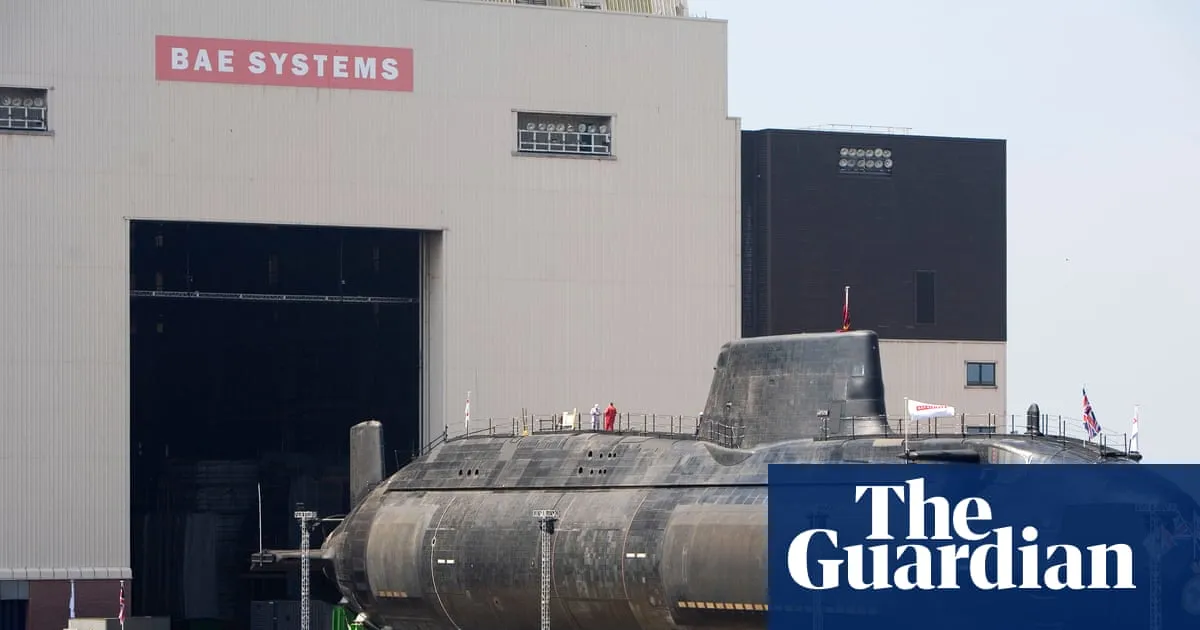
Andy Burnham will place the renewal of Trident at the heart of his vision of a reindustrialised Britain on Thursday when he travels to Barrow-in-Furness to launch the next phase of the nuclear submarine replacement programme.The new prime minister intends to emphasise that defence spending on projects such as the £31bn Dreadnought-class boats built in the Cumbrian town is a case study of taxpayer investment revitalising communities around the UK.“Keeping this country safe is the first responsibility of any government – but security is not only about what we build; it is about who builds it, and who benefits from it,” Burnham said ahead of his visit to England’s north-west.A new phase of contracts worth £8.4bn, part of the already agreed Dreadnought programme, will help support 18,000 extra jobs in nuclear defence by 2030 and 22,000 additional apprentices by 2035, Downing Street said.“To every young person across the country, I want you to know that there is a path for you into a reindustrialised Britain, and it starts with the apprenticeships we are funding through this investment today,” the prime minister added.The visit also presents an opportunity to reinforce Burnham’s pro-Trident credentials. The prime minister voted to build the new submarines in 2016, when the Labour party split over the issue and its then leader, Jeremy Corbyn, voted against.Wes Streeting, the new defence secretary, and John Healey, the chancellor, were also among the MPs who voted in favour, though other another key figure in Burnham’s team, Louise Haigh, who runs the new office of the prime minister, voted no.Labour has previously been split over the issue of Trident, with Jeremy Corbyn voting against new submarines in 2016. Photograph: Anthony Devlin/PA Archive/PA ImagesThe UK’s military nuclear activities currently support 47,000 jobs, including 13,500 in the Barrow shipyard. Its surrounding constituency historically switched from Labour to Conservative, and was retaken by Labour at the last election in 2024.Burnham, who has had limited previous engagement with foreign and defence policy, entered office just over a week ago and immediately lent into a Nato commitment to increase defence spending by over £25bn a year to reach 3.5% of GDP by 2035.A row over whether his predecessor, Keir Starmer, was serious about the pledge led to the shock resignation of Healey as defence secretary last month. Starmer was so seriously undermined it precipitated his own departure.When Healey quit, he also called for military budgets to hit 3% of GDP by 2030 as an interim target to show the UK was committed to the Nato goal. Starmer had only been willing to offer an increase to 2.68% of GDP.But on Wednesday, at a press conference, Burnham declined to commit to hitting 3% by 2030. Instead he referred to the UK pledge to meet the Nato target to increase it to 3.5% of GDP by 2035, reiterating comments already made by Streeting and Healey.skip past newsletter promotionafter newsletter promotion“When it comes to defence, obviously those commitments … relate to the parliament after this one,” Burnham said. “In terms of our Nato commitments, I have been very clear that we will honour those commitments. It does mean being prepared to look at challenging issues,” he added.The new Dreadnought submarines are intended to replace the ageing Vanguard-class submarines, one of which is always at sea carrying Britain’s nuclear deterrent. Each of the existing submarines can carry 40 nuclear warheads, with enough destructive power to destroy Moscow and several other major Russian cities.The largest share of the latest phase of work in the Dreadnought programme is being awarded to BAE Systems, the owner of the Barrow shipyard. The British defence giant has been awarded a new £5.9bn contract to complete the build of the first four new boats, HMS Dreadnought, so it can be ready for service in early 2030s.The work is part of the overall £31bn Dreadnought programme, which is so complex it includes a £10bn contingency to cover overspends. Concern about the scale of the programme has meant it has already been placed on amber alert by government procurement monitors.Trident warheads are designed and built at AWE in Aldermaston and Burghfield in Berkshire, which employ 9,000, while a further 4,000 at Rolls-Royce in Derby help build the nuclear reactors that power the Dreadnought and other submarines used by the Royal Navy.
SRCThe Guardian - World News
LANGEN
LEANCenter-Left
WORDS713
ENT12
WED · 2026-07-29 · 21:30 GMTBRIEF NSR-2026-0729-97282
NSR-2026-0729-97282News Report·EN·Economic Impact
Trident renewal central to defence spending, says Andy Burnham
Prime Minister Andy Burnham will launch the next phase of the UK's Trident nuclear submarine replacement program in Barrow-in-Furness, emphasizing defense spending as a means of revitalizing communities and fostering reindustrialization. This next phase involves £8.4 billion in new contracts, expected to support 18,000 additional jobs and 22,000 apprenticeships in nuclear defense by 2035.
Dan Sabbagh Defence and security editorThe Guardian - World NewsFiled 2026-07-29 · 21:30 GMTLean · Center-LeftRead · 3 min
The Guardian - World NewsFIG 01
Reading time
3min
Word count
713words
Sources cited
3cited
Entities identified
12entities
Quality score
100%
§ 01
Briefing Summary
AI-generatedNEWSAR · AI
Prime Minister Andy Burnham will launch the next phase of the UK's Trident nuclear submarine replacement program in Barrow-in-Furness, emphasizing defense spending as a means of revitalizing communities and fostering reindustrialization. This next phase involves £8.4 billion in new contracts, expected to support 18,000 additional jobs and 22,000 apprenticeships in nuclear defense by 2035. The Dreadnought-class submarine program, costing £31 billion, is a significant investment in national security and local economies, with BAE Systems receiving a £5.9 billion contract for the first four boats. Burnham's visit aims to reinforce his pro-Trident stance and highlight job creation, while the government reaffirms its commitment to NATO's defense spending targets.
Confidence 0.90Sources 3Claims 4Entities 12
§ 02
Article analysis
Model · rule-basedFraming
Economic Impact
Political Strategy
Tone
Measured
AI-assessed
CalmNeutralAlarmist
Factuality
0.70 / 1.00
Factual
LowHigh
Sources cited
3
Well sourced
FewMany
§ 03
Key claims
4 extracted01
Andy Burnham lent into a Nato commitment to increase defence spending by over £25bn a year to reach 3.5% of GDP by 2035.
factual
Confidence
0.90
02
The UK’s military nuclear activities currently support 47,000 jobs, including 13,500 in the Barrow shipyard.
statistic
Confidence
0.90
03
Andy Burnham will place the renewal of Trident at the heart of his vision of a reindustrialised Britain.
quoteAndy Burnham
Confidence
0.90
04
New phase of contracts worth £8.4bn will support 18,000 extra jobs in nuclear defence by 2030 and 22,000 additional apprentices by 2035.
statisticDowning Street
Confidence
0.80
§ 04
Full report
3 min read · 713 words§ 05
Entities
12 identifiedKey playerOppositionContextPositiveNeutralNegative
People5
Locations3
Events1
§ 06
Keywords & salience
9 termstrident renewal
1.00
defence spending
0.90
nuclear submarine replacement programme
0.80
reindustrialised britain
0.70
taxpayer investment
0.60
apprenticeships
0.50
dreadnought-class boats
0.50
nato commitment
0.40
barrow-in-furness
0.40
§ 07
Topic connections
Interactive graph Network visualization showing 51 related topics
View Full Graph Person Organization Location Event|Click node to navigate|Edge numbers = shared articles