An Italian friar has unearthed a document from the pharmacy archives of an ancient convent in Florence describing a medicinal potion made from Bolivian coca leaves and kola nuts, prompting suggestions it could have been a precursor to the famous US soft drink, Coca-Cola.Father Manuel Russo, rector of the San Marco convent, said he stumbled across the yellowed document, a sort-of promotional flyer, while sorting out the archives.The flyer details the recipe for an elixir vinoso ricostituente, or restorative wine elixir, made with 10g of Bolivian coca leaves and 30g of kola nut, blended with wine, which the friars who concocted it promoted as a tonic to be used to recuperate the body and mind from fatigue caused by illness and ageing.The document was not dated, but it is believed to have been produced around the mid-19th century, when the friars plied a brisk trade in Bolivian coca leaves imported to Italy by missionaries, long before they were globally banned in 1961 for containing the natural alkaloid used to make cocaine.The recipe was similar to the one used by the American pharmacist, John Pemberton, who in 1886 created a sweet syrup by mixing coca leaf extract and kola nuts. Local alcohol laws prevented him from using wine and so he combined the ingredients with carbonated water. Pemberton’s tonic eventually became Coca-Cola.After learning of Russo’s discovery, some local news outlets pondered whether the soft drink’s origins were, in fact, in Florence and not the US.But with no evidence demonstrating a link between the friars’ creation and the Coca-Cola recipe, Russo, who also found a couple of empty bottles that contained the potion, is erring on the side of caution.“I don’t want to attract a lawsuit from Coca-Cola or something like that,” he joked. “Mr Pemberton invented his own recipe, and without alcohol … Plus at that time other people were producing this kind of medicine with coca leaves. It was quite common in Italy and France. The only thing I can say is that San Marco’s pharmacy had its own recipe.”Kola Coca, an alcoholic syrup made in 1885 by distillers in Valencia, Spain, has also been held up as a potential inspiration for Coca-Cola.Other documents found by Russo showed that the Florence friars’ concoction, the price for which ranged between 2 and 6 Italian lira – less than a cent in today’s euro currency – was wildly popular among customers.“Because it had fantastic properties that fought against fatigue, and the fatigue that came with ageing,” said Father Russo. “Up until Bolivian coca leaves were banned – because by that point it was understood that cocaine was a problem more than a cure – I would say that it was one of our bestsellers.”skip past newsletter promotionafter newsletter promotionSan Marco convent was founded in 1436 on Via Cavour in Florence, with the pharmacy opening in 1460 to serve the neighbourhood’s poor community.Russo said the pharmacy, which he describes as “one of the most beautiful things we have at the convent”, still operates – although in 1995 its location was transferred to a different part of the Tuscan city.However, the original premises are intact, including the remains of a crocodile brought from the Nile River, which has been hanging from the ceiling since the 1600s. Chemists in 19th-century Europe often hung crocodiles and other reptiles from the ceilings of their shops as a way of indicating to customers that they had access to rare, exotic ingredients.Russo also found labels for pure oxygen, cognac and rectified petroleum spirit. “The inventory in the pharmacy’s archives is incredible,” he said.
SRCThe Guardian - World News
LANGEN
LEANCenter-Left
WORDS594
ENT12
THU · 2026-07-30 · 07:00 GMTBRIEF NSR-2026-0730-97410
NSR-2026-0730-97410News Report·EN·Human Interest
Was Florentine friars’ fatigue-fighting elixir a precursor to Coca-Cola?
An Italian friar, Father Manuel Russo, discovered a 19th-century document in Florence's San Marco convent archives detailing a "restorative wine elixir." This potion, made with Bolivian coca leaves and kola nuts blended with wine, was promoted by friars to combat fatigue. The recipe's similarity to John Pemberton's 1886 creation, which used coca leaf extract and kola nuts to form Coca-Cola, has led to speculation about a potential precursor.
Angela Giuffrida in RomeThe Guardian - World NewsFiled 2026-07-30 · 07:00 GMTLean · Center-LeftRead · 3 min
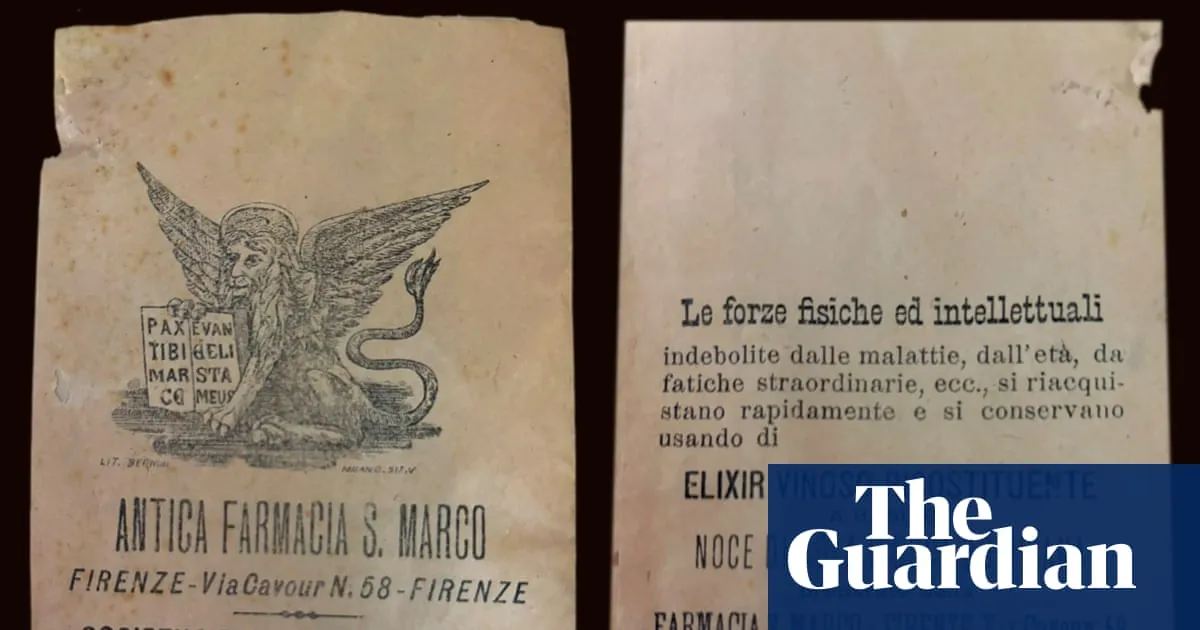
The Guardian - World NewsFIG 01
Reading time
3min
Word count
594words
Sources cited
2cited
Entities identified
12entities
Quality score
100%
§ 01
Briefing Summary
AI-generatedNEWSAR · AI
An Italian friar, Father Manuel Russo, discovered a 19th-century document in Florence's San Marco convent archives detailing a "restorative wine elixir." This potion, made with Bolivian coca leaves and kola nuts blended with wine, was promoted by friars to combat fatigue. The recipe's similarity to John Pemberton's 1886 creation, which used coca leaf extract and kola nuts to form Coca-Cola, has led to speculation about a potential precursor. While the friars' elixir was popular and sold before coca leaves were globally banned, Father Russo cautions against definitively linking it to Coca-Cola, noting Pemberton's recipe used carbonated water instead of wine and that similar coca-based medicines were common at the time.
Confidence 0.90Sources 2Claims 5Entities 12
§ 02
Article analysis
Model · rule-basedFraming
Human Interest
Technology
Tone
Measured
AI-assessed
CalmNeutralAlarmist
Factuality
0.70 / 1.00
Factual
LowHigh
Sources cited
2
Limited
FewMany
§ 03
Key claims
5 extracted01
Kola Coca, an alcoholic syrup made in Spain in 1885, has also been suggested as a potential inspiration for Coca-Cola.
factualArticle
Confidence
1.00
02
There is no evidence demonstrating a direct link between the friars' creation and the Coca-Cola recipe.
factualFather Manuel Russo
Confidence
1.00
03
John Pemberton created Coca-Cola in 1886 by mixing coca leaf extract and kola nuts with carbonated water.
factualArticle
Confidence
1.00
04
The friars promoted their restorative wine elixir as a tonic to combat fatigue from illness and aging.
factualFather Manuel Russo
Confidence
1.00
05
An Italian friar discovered a document describing a medicinal potion made from Bolivian coca leaves and kola nuts.
factualFather Manuel Russo
Confidence
1.00
§ 04
Full report
3 min read · 594 words§ 05
Entities
12 identifiedKey playerOppositionContextPositiveNeutralNegative
Locations6
§ 06
Keywords & salience
10 termscoca-cola precursor
1.00
medicinal potion
0.90
coca leaves
0.80
kola nuts
0.80
restorative wine elixir
0.70
fatigue fighting
0.60
san marco convent
0.50
john pemberton
0.50
19th century
0.40
historical recipe
0.40
§ 07
Topic connections
Interactive graph No topic relationship data available yet. This graph will appear once topic relationships have been computed.