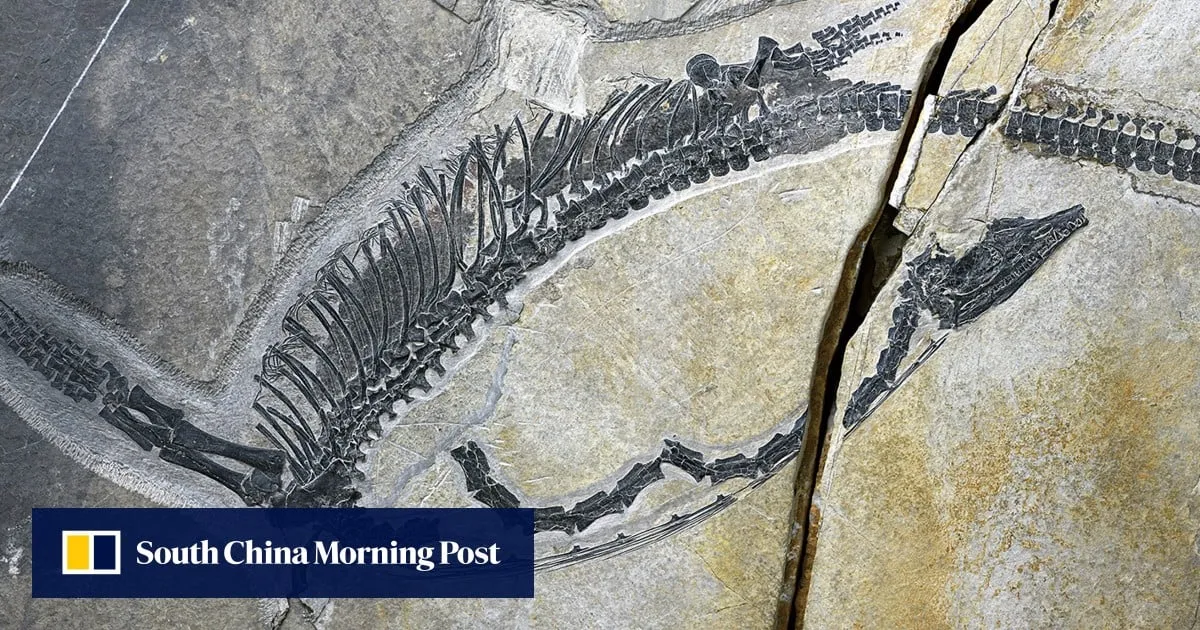
A Chinese-led team has analysed a 240 million-year-old fossil with the oldest known preserved stomach, liver and intestinal soft tissue in reptiles.The complete skeleton fossil has highly specialised body features that indicate it lived in the water, suggesting the marine colonisation of archosaurs was earlier and more extensive than previously believed.The fossil of the Austronaga minuta from the Early Triassic period also offers a “unique opportunity” to study how Triassic reptiles made the vital evolutionary transition from land to sea.
SRCSouth China Morning Post
LANGEN
LEANCenter-Right
WORDS80
ENT5
THU · 2026-07-30 · 08:00 GMTBRIEF NSR-2026-0730-97448
NSR-2026-0730-97448News Report·EN·Human Interest
Triassic fish for lunch? Chinese fossil reveals oldest preserved reptile stomach
A Chinese-led team has analyzed a 240-million-year-old fossil, *Austronaga minuta*, from the Early Triassic period. This fossil contains the oldest known preserved stomach, liver, and intestinal soft tissue in reptiles.
Victoria BelaSouth China Morning PostFiled 2026-07-30 · 08:00 GMTLean · Center-RightRead · 1 min
South China Morning PostFIG 01
Reading time
1min
Word count
80words
Sources cited
0cited
Entities identified
5entities
Quality score
100%
§ 01
Briefing Summary
AI-generatedNEWSAR · AI
A Chinese-led team has analyzed a 240-million-year-old fossil, *Austronaga minuta*, from the Early Triassic period. This fossil contains the oldest known preserved stomach, liver, and intestinal soft tissue in reptiles. The complete skeleton exhibits specialized aquatic features, suggesting that archosaurs colonized marine environments earlier and more extensively than previously understood. This discovery provides a unique opportunity to study the evolutionary transition of Triassic reptiles from land to sea.
Confidence 0.85Claims 4Entities 5
§ 02
Article analysis
Model · rule-basedFraming
Human Interest
Environmental
Tone
Measured
AI-assessed
CalmNeutralAlarmist
Factuality
0.90 / 1.00
Factual
LowHigh
Sources cited
0
No named sources
FewMany
§ 03
Key claims
4 extracted01
The fossil has highly specialized body features that indicate it lived in the water.
factual
Confidence
1.00
02
The fossil offers a unique opportunity to study the evolutionary transition of Triassic reptiles from land to sea.
factual
Confidence
1.00
03
The fossil of Austronaga minuta suggests the marine colonization of archosaurs was earlier and more extensive than previously believed.
factual
Confidence
1.00
04
A 240 million-year-old fossil with the oldest known preserved stomach, liver, and intestinal soft tissue in reptiles has been analyzed.
factual
Confidence
1.00
§ 04
Full report
1 min read · 80 words§ 05
Entities
5 identifiedKey playerOppositionContextPositiveNeutralNegative
Locations1
§ 06
Keywords & salience
8 termstriassic reptiles
1.00
preserved stomach
0.90
marine colonisation
0.80
early triassic period
0.70
fossil analysis
0.60
evolutionary transition
0.50
austronaga minuta
0.40
chinese fossil
0.40
§ 07
Topic connections
Interactive graph No topic relationship data available yet. This graph will appear once topic relationships have been computed.