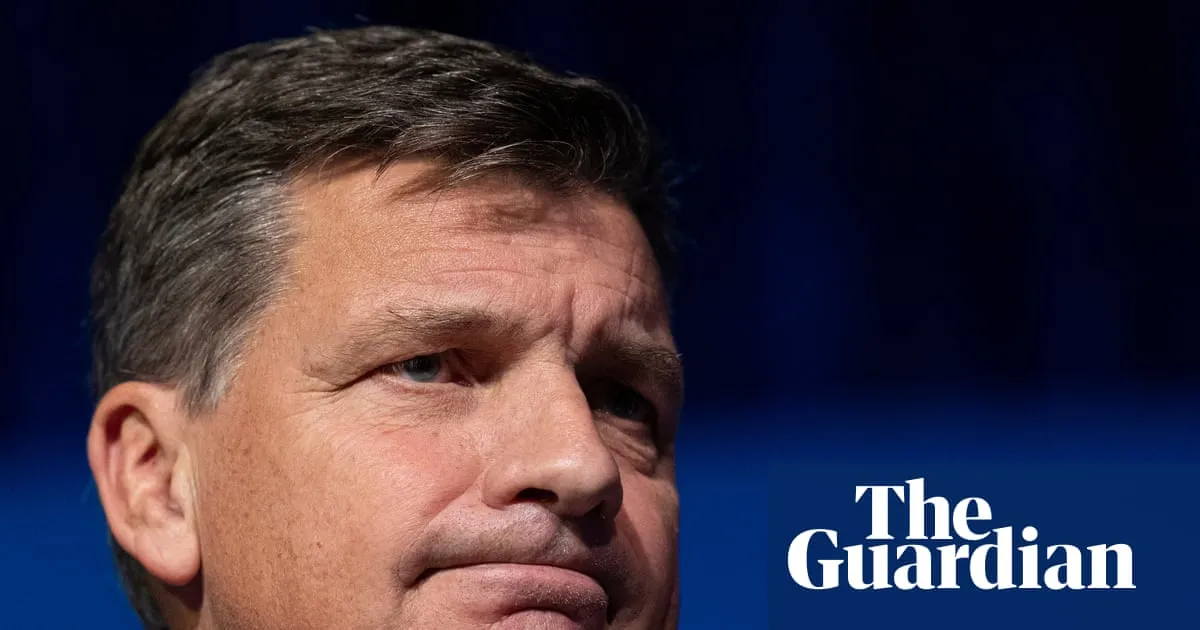
The idea that Angus Taylor might have been supporting the plotters would amount to a level of treason well beyond what’s tolerated in factional politics. Photograph: Asanka Ratnayake/Getty Images View image in fullscreen The idea that Angus Taylor might have been supporting the plotters would amount to a level of treason well beyond what’s tolerated in factional politics. Photograph: Asanka Ratnayake/Getty Images Analysis Icac revelations have left Angus Taylor’s colleagues anxious – and his factional enemies angry Dan Jervis-Bardy The opposition leader is the highest-profile person mentioned so far at the NSW anti-corruption commission – and the political figure with the most to lose Get our breaking news email, free app or daily news podcast After the opening days of an inquiry exposing a dark underbelly of the New South Wales Liberals, the prevailing mood among Angus Taylor’s colleagues is one of apprehension. The federal opposition leader is not a specific target of Operation Rosny, which is investigating allegations of corruption against people associated with the NSW branch. He is not accused of wrongdoing. But Taylor is the highest-profile person mentioned so far – and the political figure with the most to lose. To briefly recap, the opposition leader was on Tuesday named as a potential donor to the Reformers, a group of hard-right Liberal operatives plotting to take over the party from the inside. The inquiry heard that a screenshot of a message from Dallas McInerney, then the chief executive of Catholic Schools NSW, was sent to Reformers members in which McInerney said he planned to “shake down Angus for 10k” during a breakfast meeting in Canberra. The message was allegedly sent in March 2021 when Taylor was energy minister in the Morrison government. Dylan Whitelaw, another Reformers associate who gave evidence on Tuesday and Wednesday, was read a later intercepted text message in which he claimed McInerney had told him he had secured a commitment from Taylor for a “15k injection and a 3k monthly donation!” Whitelaw couldn’t recall sending the message and told the inquiry he would be “very surprised” if Taylor made any contribution. After initially declining to refute the allegations, Taylor told a press conference on Wednesday that “no payment was made”. “I’m not going to give a running commentary on all of this. I’m not a party to the proceedings, but no payment was made,” Taylor said. If that response was supposed to put the matter to bed – and reassure his colleagues – it didn’t work. On Thursday, Taylor was asked again about any potential donations during a press conference in Logan, Queensland. “I’ve answered these questions yesterday. I’m not going to give a running commentary on it,” Taylor said. “You can ask the question 100 times,” he repeated. “I’ll give you the same answer.” Guardian Australia spoke with several Liberals on condition of anonymity, who believed Taylor must provide a more comprehensive answer, if indeed he had no role in bankrolling Reformers’ operations. Unsurprisingly, the Labor treasurer, Jim Chalmers, expressed the same view. “You know, I don’t want to interfere with the Icac process that his political allies are involved in at the moment … but there are a number of questions to be answered here, and he should front up and explain any involvement he’s had in this,” Chalmers said. There were further questions for the opposition leader after Whitelaw was asked at Wednesday’s hearing if the $3,000 monthly payments that Taylor had allegedly agreed to were connected to a similar amount that Catholic Schools NSW was paying to the Reformers-linked lobbying firm Beckington. There is no evidence that Taylor donated to the Reformers – only text messages suggesting payments would be sought or had been received. He has not yet clarified what involvement – or even knowledge – he had of the Reformers and their alleged branch-stacking operation. At Thursday’s hearing, Reformers witness Robert Assaf wasn’t sure what Taylor knew of their work but said he “definitely wasn’t opposed”. Among the troves of text messages released by Icac is one from Whitelaw in which he told Reformers that “Angus Taylor is locked-in” for an event in Goulburn in September 2020. An “Angus” is mentioned in several other text messages although the context is unclear. There are, at this stage, more questions than answers. But the evidence so far has been enough to cause anxiety among his colleagues because of Taylor’s close ties to McInerney. The pair are friends and factional allies. McInerney, one of the most powerful backroom operators in the NSW Liberal right faction, has helped Taylor with campaigns and was influential in his overthrowing of Sussan Ley. 2:01 Jim Chalmers accuses Angus Taylor of trying to ‘out-One Nation One Nation’ – video The deeper Icac delves into McInerney’s dealings the more dangerous the inquiry becomes for Taylor, whose leadership is already tenuous given the Coalition’s dire position in the polls. Liberals are surprised Taylor has not been quicker to distance himself from McInerney, who stepped down from Catholic Schools NSW after the inquiry was announced. The opening days of evidence have elicited another emotion among Taylor’s factional enemies in NSW: anger. The Reformers’ recruitment drives targeted, among others, branches in the federal seats of Berowra, Lindsay and Farrer, with the aim of dislodging Julian Leeser, Melissa McIntosh and Sussan Ley respectively. McIntosh and Ley were only saved after an intervention from then prime minister Scott Morrison ahead of the 2022 federal election. The notion that Taylor might have been supporting the plotters – potentially even financially – would amount to a level of treason well beyond what’s tolerated in the messy blood sport of factional politics. The inquiry has more than seven weeks of hearings to go. Taylor might not be a target of Icac but he’s unlikely to emerge completely unscathed. Explore more on these topics New South Wales politics New South Wales Angus Taylor Liberal party Australian politics analysis Share Reuse this content
SRCThe Guardian - World News
LANGEN
LEANCenter-Left
WORDS987
ENT9
THU · 2026-07-30 · 15:00 GMTBRIEF NSR-2026-0730-97545
NSR-2026-0730-97545Analysis·EN·Political Strategy
Icac revelations have left Angus Taylor’s colleagues anxious – and his factional enemies angry
Federal Opposition Leader Angus Taylor has been mentioned in NSW's Independent Commission Against Corruption (ICAC) inquiry, Operation Rosny, which investigates corruption allegations within the NSW Liberal branch. While not accused of wrongdoing, Taylor is the highest-profile figure named and faces scrutiny over alleged attempts to solicit donations for a Liberal faction called the Reformers.
Dan Jervis-BardyThe Guardian - World NewsFiled 2026-07-30 · 15:00 GMTLean · Center-LeftRead · 4 min
The Guardian - World NewsFIG 01
Reading time
4min
Word count
987words
Sources cited
3cited
Entities identified
9entities
Quality score
100%
§ 01
Briefing Summary
AI-generatedNEWSAR · AI
Federal Opposition Leader Angus Taylor has been mentioned in NSW's Independent Commission Against Corruption (ICAC) inquiry, Operation Rosny, which investigates corruption allegations within the NSW Liberal branch. While not accused of wrongdoing, Taylor is the highest-profile figure named and faces scrutiny over alleged attempts to solicit donations for a Liberal faction called the Reformers. Text messages presented to the ICAC suggest that Dallas McInerney, a friend and factional ally of Taylor, planned to seek $10,000 from him and later claimed a commitment for a $15,000 injection and $3,000 monthly donation. Taylor has stated that no payment was made, but his responses have not fully allayed concerns among colleagues and the Labor opposition. The inquiry's findings could impact Taylor due to his close ties with McInerney, a significant figure in the NSW Liberal right faction.
Confidence 0.90Sources 3Claims 5Entities 9
§ 02
Article analysis
Model · rule-basedFraming
Political Strategy
Legal & Judicial
Tone
Mixed Tone
AI-assessed
CalmNeutralAlarmist
Factuality
0.60 / 1.00
Mixed
LowHigh
Sources cited
3
Well sourced
FewMany
§ 03
Key claims
5 extracted01
Angus Taylor stated that 'no payment was made' regarding the alleged donations.
quoteAngus Taylor
Confidence
0.90
02
Angus Taylor is the highest-profile person mentioned so far at the NSW anti-corruption commission.
factual
Confidence
0.90
03
A message from Dallas McInerney stated he planned to 'shake down Angus for 10k' for the Reformers.
quoteDallas McInerney (via testimony)
Confidence
0.80
04
Several Liberals believe Taylor must provide a more comprehensive answer about potential donations.
factualUnnamed Liberals
Confidence
0.70
05
A text message claimed McInerney had secured a commitment from Taylor for a '15k injection and a 3k monthly donation!'.
quoteDylan Whitelaw (via testimony)
Confidence
0.70
§ 04
Full report
4 min read · 987 words§ 05
Entities
9 identifiedKey playerOppositionContextPositiveNeutralNegative
People3
Organizations5
§ 06
Keywords & salience
10 termsangus taylor
1.00
icac revelations
0.90
factional politics
0.80
nsw anti-corruption commission
0.70
operation rosny
0.60
reformers
0.60
corruption allegations
0.50
political figure
0.50
liberal operatives
0.40
morrison government
0.40
§ 07
Topic connections
Interactive graph Network visualization showing 39 related topics
View Full Graph Person Organization Location Event|Click node to navigate|Edge numbers = shared articles