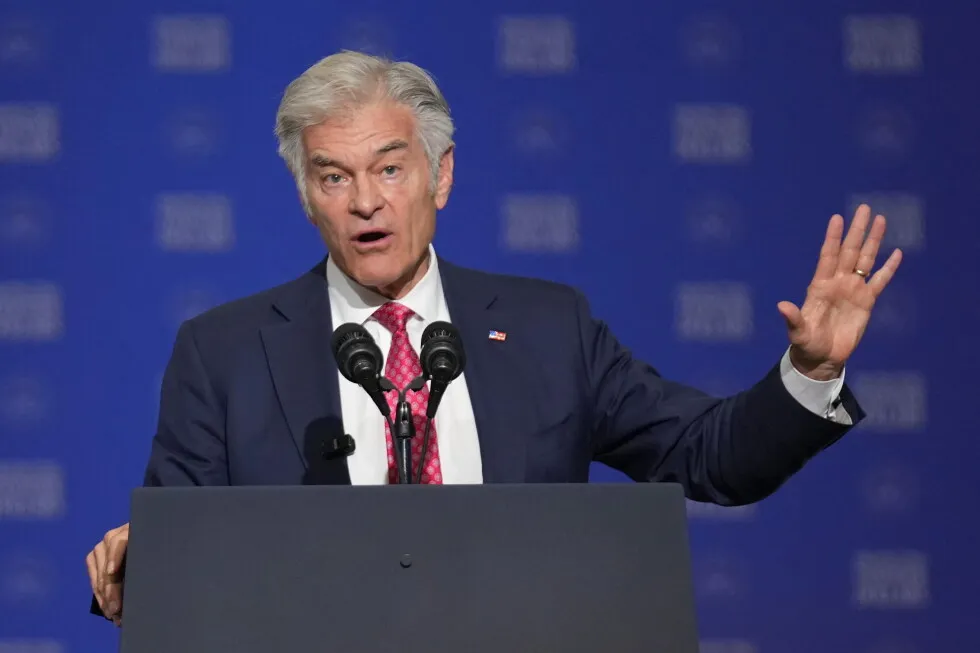
Centers for Medicare & Medicaid Services administrator Dr. Mehmet Oz speaks before Vice President JD Vance at the Wisconsin Air National Guard facility at Milwaukee Mitchell International Airport, Wednesday, July 8, 2026, in Milwaukee. (AP Photo/Mark Schiefelbein, Pool) Updated [hour]:[minute] [AMPM] [timezone], [monthFull] [day], [year] NEW YORK (AP) — Millions of older adults on Medicare prescription drug coverage could face steeper monthly costs in 2027, after the Trump administration concludes a temporary subsidy program that has helped offset premiums for the past two years.The Centers for Medicare & Medicaid Services this week announced it would wrap up the program, which was initially implemented by the Biden administration in 2024 to lower patients’ Medicare Part D prescription drug costs in response to effects of the 2022 Inflation Reduction Act.While federal officials insist the financial impact on Medicare beneficiaries will be minimal, the decision opens the Republican-led administration to potential political consequences in a high-stakes midterm election year. Voters have identified cost of living as a top concern, and many older adults, who tend to vote in high numbers, are on fixed incomes where every dollar counts. The roughly 25 million Americans with Medicare Part D plans will find out about their 2027 rates in the fall, when they are casting ballots in November’s elections. Democrats slammed CMS’s move as part of a pattern of federal attacks on healthcare affordability, alongside federal Medicaid cuts and the expiration of Affordable Care Act subsidies that had reduced premium costs for working-age Americans in that program.“The Trump administration is actively raising prescription drug costs for 25 million seniors,” Senate Minority Leader Chuck Schumer wrote on X in response to the news, which was first reported by The Wall Street Journal. “Heartless, cruel, and completely by choice.” 3 MIN READ 4 MIN READ 4 MIN READ CMS Administrator Dr. Mehmet Oz on Tuesday said ending the subsidy program would prevent billions of taxpayer dollars from being funneled to insurance companies. It cost the agency an estimated $3.6 billion in 2026. He said most Medicare beneficiaries would see less than a $10-per-month increase, and some would even see lower premiums than beforehand. “Every Medicare beneficiary still has access to low-cost plans, and we will continue to lower prescription drug prices for every American patient, from more MFN deals to our policy giving seniors access to GLP-1s for $50 a month,” he wrote on social media. Part D beneficiaries paid an average of $36 a month this year for their premiums with the subsidies in place, according to the healthcare research nonprofit KFF. The subsidies offset the average premium by $16 in 2026, according to the federal Medicare Payment Advisory Commission (MedPAC). It’s not yet known how many Americans the change will effect, or how much more they’ll pay. Older Americans have the opportunity to shop for plans each year, and prices vary widely between them. CMS has said it will release information about next year’s premiums in September.
SRCAssociated Press (AP)
LANGEN
LEANCenter
WORDS491
ENT12
THU · 2026-07-30 · 17:53 GMTBRIEF NSR-2026-0730-97590
NSR-2026-0730-97590News Report·EN·Economic Impact
The Trump administration is ending a Medicare drug subsidy program. Here’s how it could affect costs
The Trump administration will end a temporary Medicare Part D drug subsidy program in 2027, potentially increasing monthly prescription drug costs for millions of older adults. This program, implemented by the Biden administration in 2024, helped offset premiums following the 2022 Inflation Reduction Act.
By
ALI SWENSONAssociated Press (AP)Filed 2026-07-30 · 17:53 GMTLean · CenterRead · 2 min
Associated Press (AP)FIG 01
Reading time
2min
Word count
491words
Sources cited
4cited
Entities identified
12entities
Quality score
100%
§ 01
Briefing Summary
AI-generatedNEWSAR · AI
The Trump administration will end a temporary Medicare Part D drug subsidy program in 2027, potentially increasing monthly prescription drug costs for millions of older adults. This program, implemented by the Biden administration in 2024, helped offset premiums following the 2022 Inflation Reduction Act. While federal officials claim the impact will be minimal, with most beneficiaries seeing less than a $10 monthly increase, Democrats criticize the move as raising healthcare costs for seniors. CMS Administrator Dr. Mehmet Oz stated the program's termination would save billions in taxpayer dollars by preventing funds from going to insurance companies. Approximately 25 million Americans with Medicare Part D plans will learn their 2027 rates in the fall, coinciding with the midterm elections.
Confidence 0.90Sources 4Claims 5Entities 12
§ 02
Article analysis
Model · rule-basedFraming
Economic Impact
Political Strategy
Tone
Mixed Tone
AI-assessed
CalmNeutralAlarmist
Factuality
0.70 / 1.00
Factual
LowHigh
Sources cited
4
Well sourced
FewMany
§ 03
Key claims
5 extracted01
The subsidy program was initially implemented by the Biden administration in 2024 to lower patients’ Medicare Part D prescription drug costs.
factual
Confidence
1.00
02
The Trump administration is actively raising prescription drug costs for 25 million seniors.
quoteChuck Schumer
Confidence
0.90
03
Most Medicare beneficiaries would see less than a $10-per-month increase, and some would even see lower premiums than beforehand.
quoteDr. Mehmet Oz
Confidence
0.90
04
Ending the subsidy program would prevent billions of taxpayer dollars from being funneled to insurance companies.
quoteDr. Mehmet Oz
Confidence
0.90
05
Millions of older adults on Medicare prescription drug coverage could face steeper monthly costs in 2027 after the Trump administration ends a temporary subsidy program.
prediction
Confidence
0.80
§ 04
Full report
2 min read · 491 words§ 05
Entities
12 identifiedKey playerOppositionContextPositiveNeutralNegative
People3
Organizations6
§ 06
Keywords & salience
9 termsmedicare drug subsidy program
1.00
prescription drug costs
0.90
medicare part d
0.80
healthcare affordability
0.70
trump administration
0.60
inflation reduction act
0.50
cost of living
0.40
centers for medicare & medicaid services
0.40
taxpayer dollars
0.40
§ 07
Topic connections
Interactive graph Network visualization showing 51 related topics
View Full Graph Person Organization Location Event|Click node to navigate|Edge numbers = shared articles