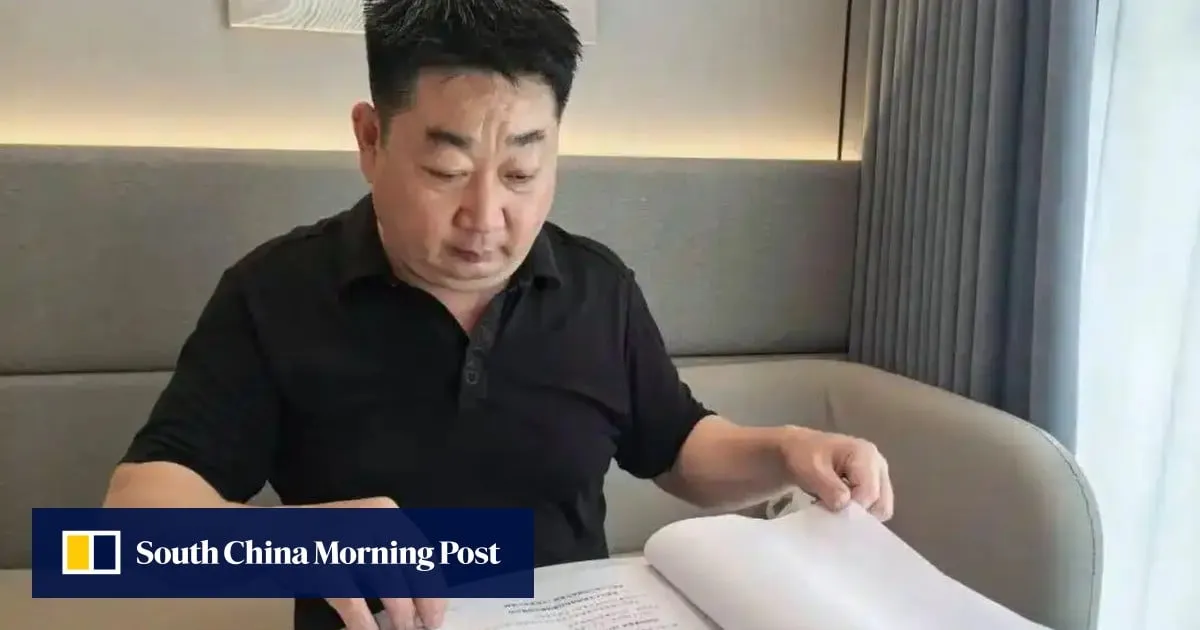
A father in central China, whose gaming-addicted son swallowed 18 fever pills in one go, has sued four mainland gaming companies, seeking a symbolic compensation of 10 yuan (US$1.5).However, his primary hope is that the court will supervise these companies to ensure they fulfil their obligation to prevent minors from overindulging in gaming.The father, whose surname is Qin, filed the lawsuit against domestic game companies – Tencent, NetEase, miHoYo, and 37 Interactive Entertainment – in a court located in Tanghe County, Henan province, where he lives, as reported by Shandian News.The lawsuit was initiated roughly one month after Qin’s son, who turned 18 at the beginning of this year, ingested 18 fever pills on the evening of May 23.Hours later, the young man vomited profusely and collapsed. He was rushed to the hospital, where he was diagnosed with drug poisoning. After receiving medical treatment, the boy returned home to recover.The lawsuit was filed roughly a month after Qin’s son, who recently turned 18, ingested the medication on May 23. Photo: BaiduHe has been unwilling to disclose to his family the reasons behind his excessive medication intake, particularly as he exhibited no symptoms of fever.Qin speculates that the boy’s actions may stem from feelings of guilt or dizziness resulting from prolonged gaming sessions.This incident prompted Qin to recognise the severity of his son’s gaming addiction.According to Qin, his son, a vocational school student, has been deeply engrossed in gaming for several years.When at home during weekends, he would spend all his time lying in bed playing games, often going to sleep between 3 and 4am This unhealthy lifestyle has led him to lose about 10kg.Data from a single gaming platform indicates that Qin junior had logged a total of 1,868 hours of gameplay since March 2024, averaging more than two hours of play per day.online gaming addiction is a global problem, and China is no exception. On weekends, Qin’s son spends all his time in bed, often gaming until 4am. Photo: Getty ImagesQin mentioned that he bought the mobile phone for his son to stay in contact, as he works in another city as a migrant worker.Further ReadingThe boy circumvented China’s anti-addiction regulations for minors by registering on gaming platforms using his adult sister’s identity card.These regulations permit underage players to game only during the hours of 8 to 9pm on Fridays, Saturdays, Sundays, and statutory holidays.Qin holds these gaming companies responsible for failing to enforce their duties in verifying player identities, despite possessing relevant technologies, such as facial recognition.“I hope the court can compel these companies to fulfil their responsibilities in preventing juvenile addiction. I also hope the trial is held publicly to shine a light on the industry’s management weaknesses,” he stated.Qin argues that these companies should be held accountable for not enforcing identity verification standards, using available technology like facial recognition. Photo: BaiduThe case was initially set to be heard on July 6, but the court informed Qin in early July of a postponement due to objections to jurisdiction raised by the four gaming companies, which are based in different mainland cities.“I will do everything I can to protect my son’s rights. Games have had a destructive impact on children of this generation. If I do not advocate for my child’s rights, I would not deserve to be called a parent,” said Qin.The case has garnered attention from millions.“I think he wants to shut down all games because every game company does this: turning a blind eye towards minor players,” commented one internet user.A second commenter supported Qin, saying: “I hope he wins the case so that game companies will enhance their regulations regarding minor players, thereby protecting children.”
SRCSouth China Morning Post
LANGEN
LEANCenter-Right
WORDS611
ENT10
FRI · 2026-07-31 · 02:29 GMTBRIEF NSR-2026-0731-97720
NSR-2026-0731-97720News Report·EN·Human Interest
Chinese dad sues online gaming companies for US$1.5 to force strict anti-addiction rules
A father in central China, identified as Qin, has sued four major domestic gaming companies, including Tencent and NetEase, seeking symbolic compensation of 10 yuan (US$1.5). The lawsuit, filed in Henan province, stems from his son's severe gaming addiction, which led the young man to ingest 18 fever pills.
Alice YanSouth China Morning PostFiled 2026-07-31 · 02:29 GMTLean · Center-RightRead · 3 min
South China Morning PostFIG 01
Reading time
3min
Word count
611words
Sources cited
1cited
Entities identified
10entities
Quality score
100%
§ 01
Briefing Summary
AI-generatedNEWSAR · AI
A father in central China, identified as Qin, has sued four major domestic gaming companies, including Tencent and NetEase, seeking symbolic compensation of 10 yuan (US$1.5). The lawsuit, filed in Henan province, stems from his son's severe gaming addiction, which led the young man to ingest 18 fever pills. Qin's primary goal is for the court to compel these companies to enforce anti-addiction rules and verify player identities, preventing minors from overindulging. His son, who recently turned 18, had circumvented regulations by using his adult sister's identity. The case, initially scheduled for July 6, was postponed due to jurisdictional objections from the gaming companies. Qin aims to highlight the industry's weaknesses in managing underage players.
Confidence 0.90Sources 1Claims 5Entities 10
§ 02
Article analysis
Model · rule-basedFraming
Human Interest
Legal & Judicial
Tone
Mixed Tone
AI-assessed
CalmNeutralAlarmist
Factuality
0.70 / 1.00
Factual
LowHigh
Sources cited
1
Limited
FewMany
§ 03
Key claims
5 extracted01
Qin's son logged 1,868 hours of gameplay since March 2024, averaging over two hours per day.
statisticarticle
Confidence
1.00
02
The father believes the gaming companies are responsible for failing to enforce identity verification despite having relevant technologies like facial recognition.
quoteQin
Confidence
1.00
03
The son circumvented minor anti-addiction regulations by using his adult sister's identity card for platform registration.
factualarticle
Confidence
1.00
04
The father's son, who recently turned 18, ingested 18 fever pills in an apparent overdose, leading to drug poisoning and hospitalization.
factualarticle
Confidence
1.00
05
A father in China is suing four major gaming companies for 10 yuan (US$1.5) to force stricter anti-addiction rules for minors.
factualarticle
Confidence
1.00
§ 04
Full report
3 min read · 611 words§ 05
Entities
10 identifiedKey playerOppositionContextPositiveNeutralNegative
People1
Organizations4
§ 06
Keywords & salience
9 termsonline gaming addiction
1.00
anti-addiction rules
0.90
gaming companies
0.80
minor protection
0.70
legal action
0.60
parental responsibility
0.50
drug poisoning
0.40
tencent
0.40
netease
0.40
§ 07
Topic connections
Interactive graph No topic relationship data available yet. This graph will appear once topic relationships have been computed.