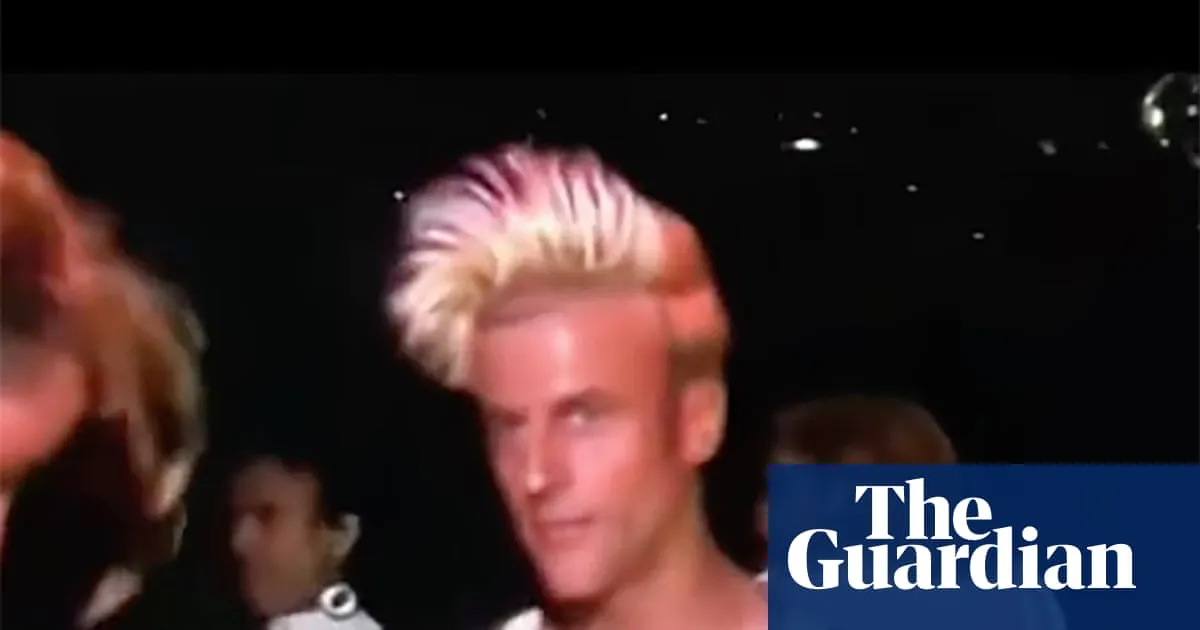
From apparently conspiring to steal elections to abusing staff or performing embarrassing dance moves, the last few years have seen plenty of fake content made about politicians intended to malign its targets and mislead the public.Now EU rules aim to stem the flood of this deceptive content: starting from Sunday, artificially generated images, audio and text designed to look authentic must be labelled.The rules, devised under the EU’s landmark AI Act, mean companies must ensure people know when they are interacting with an AI-powered chatbot or viewing a manipulated image or AI-generated text.Deep fakes have included fake audio of the Slovakian opposition leader, Michal Šimečka, conspiring with a journalist to rig election. Photograph: Radovan Stoklasa/ReutersThe rules apply to new AI systems on the EU market from 2 August, while existing ones have an extra four months to comply.“It is a matter not only of customer protection, it’s also a matter of democracy protection,” the Green MEP Sergey Lagodinsky, who helped negotiate the AI Act, told The Guardian. “Making transparent this information is something which we need to preserve our democracy and the authenticity of facts online.”Under the rules, synthetic text, images, video and audio designed to look truthful must be visibly marked as AI-generated and contain a digital watermark to show the artificial origins of the content.Texts on matters of public interest must also be labelled as AI-made if there is no human editorial oversight.Companies are encouraged to label AI-generated content pre-dating the rules, although this is not compulsory. The rules will not apply to users’ personal content and there is an exemption for “evidently artistic”, satirical and fictional works.Failure to comply could result in fines of up to €15m or 3% of a company’s worldwide global turnover.The EU executive has created black-and-white labels anyone can use, although companies can design their own.EU symbols to be used on content using AI. Illustration: EUDeep fakes have included audio purporting to reveal the Slovakian opposition leader Michal Šimečka conspiring with a journalist to rig elections, mocked-up videos of the French president, Emmanuel Macron, dancing in a 1980s nightclub, and fake footage of the then UK Labour leader Keir Starmer abusing party staff.The tech industry says it supports the quest to make deep fakes visible, but fears the rules will be interpreted too broadly and overwhelm internet users with banners and labels.The Computer and Communications Industry Association argues that EU guidelines published in July have expanded the definition of a deep fake far beyond the 2024 AI Act.“The label was meant to flag deceptive content,” CCIA Europe’s AI policy lead, Boniface de Champris, said. “That distinction has been removed, so now almost everything gets labelled – a landscape in an advert is the same as a manipulated political speech. Like cookie banners, once labels are everywhere, users stop noticing them. That doesn’t protect anyone, it just burdens commercial activity across the board.”He thinks the most visible change for the public will not be on social media, which “already labels most AI content” but “in areas where AI is already used at scale but people don’t know it – advertising, film, publishing”.“Expect a lot more labels in sectors not usually associated with AI, and the burden will fall hardest on those least versed in AI regulation,” De Champris said.Some of the world’s largest tech companies already have policies to inform users about AI-generated content.TikTok, for example, requires creators to label realistic AI-generated images, audio and video, and says it has helped label more than 3bn pieces of content.Google launched a tool called SynthID in 2023, which enables users to check if an image is AI-generated. The company says it has put an invisible digital watermark, which enables identification, on more than 100bn images and 60,000 years’ worth of audio.Google and Meta, which owns Facebook and Instagram, have signed a voluntary code of practice intended to help companies comply with the EU’s AI transparency rules.The European Commission said more than 180 organisations had signed the code, which was drawn up by independent experts under the supervision of the EU AI office.Signing the code is seen by regulators as a sign of good intent, while non-signatories must show they are meeting the rules in other ways.Meta launched policies in 2024 to help people identify AI-generated photo-realistic images. It says it has been developing industry-wide technical standards to identify AI audio and video.Announcing Meta’s intention to sign the EU code of practice earlier this week [28 July], vice president for public policy in Europe, Markus Reinisch, said: “We must avoid a situation where online content is subject to a growing array of different labels and disclosures that end up overwhelming people, while at the same time adding additional regulatory complexity for providers.”Lagodinsky, the EU lawmaker, said he believed the industry could find a way: “I have a deep respect for industry, but in all too many cases, they complain, and… then after things are implemented, it doesn’t look that burdensome to them. And there is always a solution.”The transparency rules are part of broader enforcement of the AI Act, starting from 2 August. The Commission’s lead official on tech policy, Henna Virkkunen, said AI was a “transformative technology” that can bring extraordinary benefits” but the most advanced models “create risks on an entirely new scale”.“Europe anticipated this development. With the AI Act, we established a clear, risk-based and durable framework for trustworthy AI —one that gives innovators legal certainty while protecting the public interest.”
SRCThe Guardian - World News
LANGEN
LEANCenter-Left
WORDS907
ENT12
FRI · 2026-07-31 · 09:46 GMTBRIEF NSR-2026-0731-97798
NSR-2026-0731-97798News Report·EN·Legal & Judicial
AI labels to be compulsory on authentic-looking content under EU rules
Starting Sunday, the European Union's AI Act mandates that companies must label artificially generated images, audio, and text that appear authentic. This rule aims to combat deceptive content, particularly concerning politicians and public discourse, and protect democracy.
Jennifer Rankin in BrusselsThe Guardian - World NewsFiled 2026-07-31 · 09:46 GMTLean · Center-LeftRead · 4 min
The Guardian - World NewsFIG 01
Reading time
4min
Word count
907words
Sources cited
3cited
Entities identified
12entities
Quality score
100%
§ 01
Briefing Summary
AI-generatedNEWSAR · AI
Starting Sunday, the European Union's AI Act mandates that companies must label artificially generated images, audio, and text that appear authentic. This rule aims to combat deceptive content, particularly concerning politicians and public discourse, and protect democracy. New AI systems must comply immediately, while existing ones have four months. Content must be visibly marked and digitally watermarked to indicate its artificial origin, with exceptions for artistic or satirical works. Failure to comply can result in significant fines. While some tech companies already have labeling policies, industry groups express concern that the broad interpretation of the rules could lead to an overwhelming number of labels, diminishing their effectiveness.
Confidence 0.90Sources 3Claims 5Entities 12
§ 02
Article analysis
Model · rule-basedFraming
Legal & Judicial
Technology
Tone
Measured
AI-assessed
CalmNeutralAlarmist
Factuality
0.80 / 1.00
Factual
LowHigh
Sources cited
3
Well sourced
FewMany
§ 03
Key claims
5 extracted01
Failure to comply with the rules could result in fines of up to €15m or 3% of a company’s worldwide global turnover.
factual
Confidence
1.00
02
Synthetic text, images, video, and audio designed to look truthful must be visibly marked as AI-generated and contain a digital watermark.
factual
Confidence
1.00
03
The rules, devised under the EU’s AI Act, require companies to ensure people know when they are interacting with AI or viewing manipulated content.
factual
Confidence
1.00
04
EU rules will make AI labels compulsory on authentic-looking AI-generated content starting Sunday.
factual
Confidence
1.00
05
The tech industry supports making deep fakes visible but fears the rules will be interpreted too broadly and overwhelm users with labels.
quoteComputer and Communications Industry Association
Confidence
0.90
§ 04
Full report
4 min read · 907 words§ 05
Entities
12 identifiedKey playerOppositionContextPositiveNeutralNegative
People4
Organizations3
§ 06
Keywords & salience
9 termseu ai act
1.00
ai labelling
1.00
deepfakes
0.90
synthetic content
0.80
content authenticity
0.70
democracy protection
0.60
digital watermark
0.50
misinformation
0.50
european union
0.40
§ 07
Topic connections
Interactive graph Network visualization showing 51 related topics
View Full Graph Person Organization Location Event|Click node to navigate|Edge numbers = shared articles