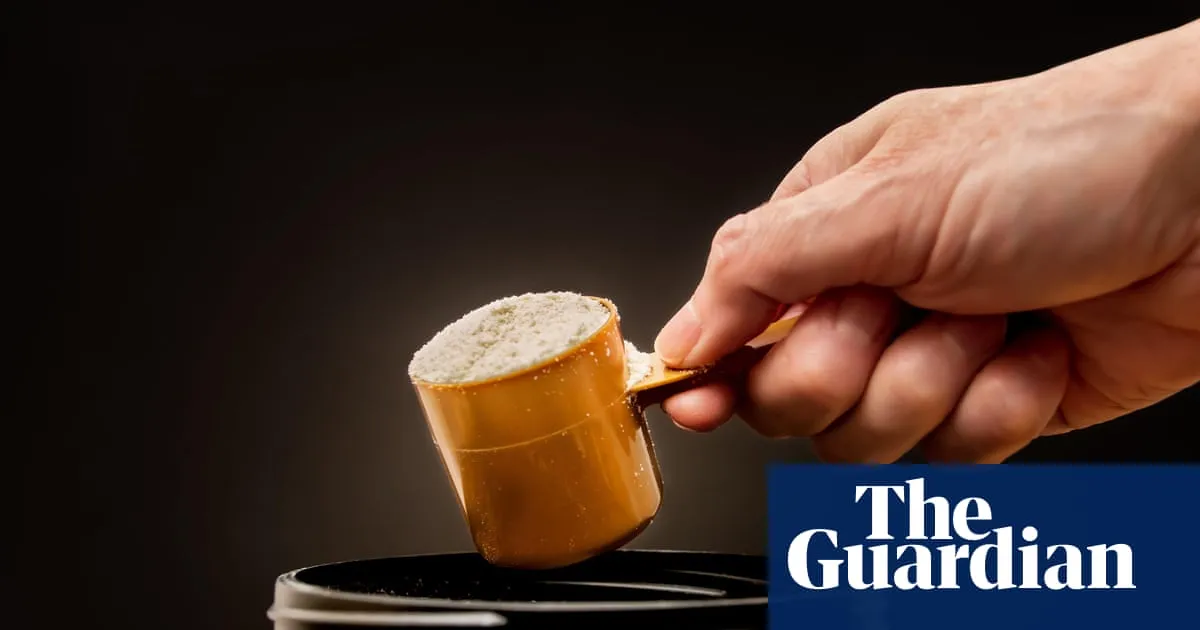
The rise of “proteinmaxxing” – a trend in which consumers try to eat as much protein as possible – could lead to higher prices for infant formula, experts warn.whey protein, a key ingredient in infant formula, has surged in popularity over the past year as health professionals emphasise the benefits of protein.The growing use of GLP-1 weight-loss medications, which suppress appetite, has also boosted demand for concentrated whey protein – often found in protein shakes and bars – as users seek to preserve muscle mass while losing weight.As demand rises, so do prices. Expana, a global market intelligence platform, said whey protein concentrate 80, with 80% pure protein, cost €11,733 (£10,050) per metric tonne in July 2025 and was now at €25,875.whey protein is a vital ingredient in infant formula where it is used to mimic human breast milk by adjusting the protein ratio and making it easier to digest. High-whey formulas are designed specifically for newborns and babies under one year old.Industry insiders warn that rising demand could soon be felt by consumers as infant formula manufacturers struggle to absorb higher ingredient costs. Office for National Statistics data shows the average price of baby formula has already increased by 4.8% over the past year with a 750g box now costing £12.11, up from £11.55 a year earlier.Dr Vicky Sibson, the director of the First Steps Nutrition Trust, an independent UK public health nutrition charity, said: “Whey is a major ingredient in infant formula, so significant increases in its price risk increasing the price of formula itself.”She added: “We know from the Competition and Markets Authority’s [CMA] report that infant formula manufacturers have passed any rise in input costs on to consumers, including during the cost of living crisis.”Sibson said it was “hugely concerning” because of “mounting evidence that many families using formula to feed their babies find it unaffordable, and the coping strategies they use – like watering down feeds – may be harmful”.She said a solution the CMA had proposed was for the government to impose a mandatory price or profit cap. “There is precedent for this from other countries including Greece and it’s warranted because the CMA’s work exposed high profit margins of between 50% and 75%. Companies should not be allowed to protect their margins at the expense of the wellbeing of mothers and babies,” she said.Jose Saiz, who covers the European dairy market at Expana, said: “Overall, higher ingredient costs have already led to higher consumer prices across many dairy and nutrition products, although the extent of cost pass-through varies by market and brand.”He said some infant formula manufacturers were reformulating products to use more D90 demineralised whey powder. D90, which has 90% of its minerals removed, helps manufacturers achieve the required whey-to-casein ratio while supplying both whey proteins and lactose. As more producers switch to the ingredient, demand has risen sharply, pushing up D90 prices as well.Saiz said: “Over the past six months, many manufacturers have reformulated their recipes in response to rising ingredient costs. One of the main responses has been to increase the use of demineralised whey powder 90 (D90), an ingredient used primarily in infant formula.”He added: “Infant formula manufacturers report that current high whey protein prices are becoming economically unsustainable at existing retail price levels. Many believe further consumer price increases will eventually be necessary unless raw material costs ease.”
SRCThe Guardian - World News
LANGEN
LEANCenter-Left
WORDS560
ENT10
SAT · 2026-08-01 · 05:00 GMTBRIEF NSR-2026-0801-98084
NSR-2026-0801-98084News Report·EN·Economic Impact
‘Proteinmaxxing’ could lead to higher prices for infant formula, say experts
Experts warn that the growing trend of "proteinmaxxing," where individuals consume high amounts of protein, is contributing to increased demand for whey protein. This surge in demand, also fueled by users of weight-loss drugs seeking to preserve muscle mass, has significantly driven up whey protein prices.
Sarah Marsh Consumer affairs correspondentThe Guardian - World NewsFiled 2026-08-01 · 05:00 GMTLean · Center-LeftRead · 3 min
The Guardian - World NewsFIG 01
Reading time
3min
Word count
560words
Sources cited
3cited
Entities identified
10entities
Quality score
100%
§ 01
Briefing Summary
AI-generatedNEWSAR · AI
Experts warn that the growing trend of "proteinmaxxing," where individuals consume high amounts of protein, is contributing to increased demand for whey protein. This surge in demand, also fueled by users of weight-loss drugs seeking to preserve muscle mass, has significantly driven up whey protein prices. Since whey protein is a crucial ingredient in infant formula, these rising costs are likely to be passed on to consumers, potentially making formula even less affordable for families. Infant formula manufacturers are already facing economically unsustainable ingredient costs and may need to implement further price increases. Some manufacturers are reformulating products to use alternative whey ingredients, which are also experiencing increased demand and prices.
Confidence 0.90Sources 3Claims 5Entities 10
§ 02
Article analysis
Model · rule-basedFraming
Economic Impact
Public Health
Tone
Mixed Tone
AI-assessed
CalmNeutralAlarmist
Factuality
0.70 / 1.00
Factual
LowHigh
Sources cited
3
Well sourced
FewMany
§ 03
Key claims
5 extracted01
The average price of baby formula has increased by 4.8% over the past year in the UK.
statisticOffice for National Statistics
Confidence
1.00
02
Whey protein concentrate 80 cost €25,875 per metric tonne in July 2025, up from €11,733.
statisticExpana
Confidence
1.00
03
CMA report exposed high profit margins of between 50% and 75% for infant formula companies.
statisticDr Vicky Sibson
Confidence
0.90
04
Infant formula manufacturers have passed input cost rises on to consumers.
quoteDr Vicky Sibson
Confidence
0.90
05
The rise of 'proteinmaxxing' could lead to higher prices for infant formula, experts warn.
predictionexperts
Confidence
0.80
§ 04
Full report
3 min read · 560 words§ 05
Entities
10 identifiedKey playerOppositionContextPositiveNeutralNegative
Organizations4
Locations1
§ 06
Keywords & salience
10 termsinfant formula
1.00
proteinmaxxing
1.00
whey protein
0.90
price increases
0.80
ingredient costs
0.80
consumer affordability
0.70
glp-1 medications
0.70
profit margins
0.60
competition and markets authority
0.50
dairy market
0.40
§ 07
Topic connections
Interactive graph No topic relationship data available yet. This graph will appear once topic relationships have been computed.