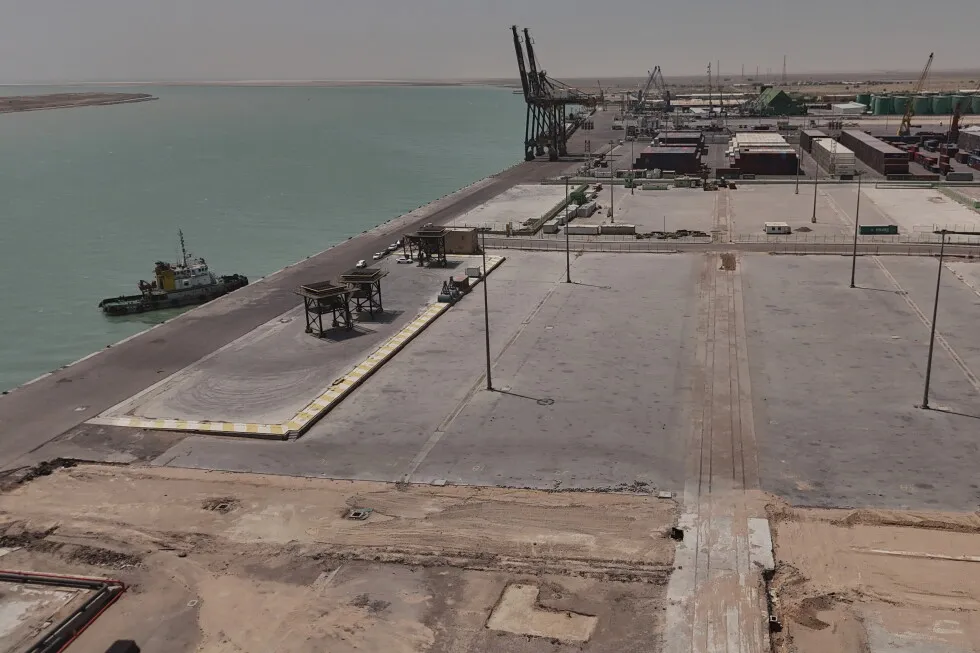
Iraq and Turkey strike a 1-year oil pipeline deal to boost exports during ongoing Hormuz closures 1 of 2 | This aerial photo shows the port of Umm Qasr empty of commercial ships and cargo ships, near the city of Basra, 340 miles (550 kilometers) southeast of Baghdad, Iraq, Tuesday, July 28, 2026. (AP Photo/Ali Rahim) 2 of 2 | Iraqi Prime Minister Ali al-Zaidi speaks at the U.S. Iraq Business Summit at the U.S. Chamber of Commerce, Friday, July 17, 2026, in Washington. (AP Photo/Rod Lamkey, Jr., file) 1 of 2 | This aerial photo shows the port of Umm Qasr empty of commercial ships and cargo ships, near the city of Basra, 340 miles (550 kilometers) southeast of Baghdad, Iraq, Tuesday, July 28, 2026. (AP Photo/Ali Rahim) 1 of 2 This aerial photo shows the port of Umm Qasr empty of commercial ships and cargo ships, near the city of Basra, 340 miles (550 kilometers) southeast of Baghdad, Iraq, Tuesday, July 28, 2026. (AP Photo/Ali Rahim) Add AP News on Google Add AP News as your preferred source to see more of our stories on Google. Share 2 of 2 | Iraqi Prime Minister Ali al-Zaidi speaks at the U.S. Iraq Business Summit at the U.S. Chamber of Commerce, Friday, July 17, 2026, in Washington. (AP Photo/Rod Lamkey, Jr., file) 2 of 2 Iraqi Prime Minister Ali al-Zaidi speaks at the U.S. Iraq Business Summit at the U.S. Chamber of Commerce, Friday, July 17, 2026, in Washington. (AP Photo/Rod Lamkey, Jr., file) Add AP News on Google Add AP News as your preferred source to see more of our stories on Google. Share Updated [hour]:[minute] [AMPM] [timezone], [monthFull] [day], [year] Baghdad (AP) — Iraq and Turkey signed a deal Saturday to increase oil exports through a pipeline to the Turkish Mediterranean port of Ceyhan, as Baghdad seeks to diversify its oil export routes and reduce reliance on Gulf shipping lanes.Iraqi Oil Minister Bassem Mohammed Khudair al-Abadi said in a statement that the agreement will remain in effect for one year while the two countries finalize a broader framework agreement covering cooperation in the oil, electricity and water resources sectors.The agreement comes as Iraq moves to strengthen the resilience of its oil export infrastructure following disruptions to shipping through the Strait of Hormuz since the U.S.-Iran war began in February.Al-Abadi said the deal provides for a minimum export volume of 750,000 barrels of Iraqi crude per day through the pipeline, which runs from Kirkuk in northern Iraq to Ceyhan. The Iraq-Turkey pipeline has been largely idle since 2023 after exports from Iraq’s semiautonomous Kurdish region were halted following legal and commercial disputes, although exports through it resumed in a limited capacity last year.Iraqi Prime Minister Ali al-Zaidi called the agreement “an important strategic milestone to ensure the uninterrupted flow of our oil exports and strengthen economic cooperation.” 6 MIN READ 3 MIN READ 4 MIN READ Before the conflict, Iraq was exporting around 3.5 million barrels of crude oil per day in total, with most of those exports shipped through its southern terminals via the Strait of Hormuz. The planned exports through the Turkey pipeline would represent part of that total export capacity. It would not reach prewar levels but would represent an increase from the current exports of around 200,000 barrels per day. Iraq relies heavily on oil revenues, which account for the vast majority of government income.The signing of the deal comes days after al-Zaidi visited Ankara for talks on security, trade, energy, transportation and water management, as well as joint infrastructure projects between the two neighbors.One project under consideration is a pipeline that would connect southern Iraq’s Basra to western Iraq’s Haditha and from there to the Ceyhan port in Turkey and the port of Baniyas on Syria’s coast.
SRCAssociated Press (AP)
LANGEN
LEANCenter
WORDS633
ENT12
SAT · 2026-08-01 · 17:53 GMTBRIEF NSR-2026-0801-98191
NSR-2026-0801-98191News Report·EN·Economic Impact
Iraq and Turkey strike a 1-year oil pipeline deal to boost exports during ongoing Hormuz closures
Iraq and Turkey have signed a one-year deal to increase oil exports through a pipeline to Turkey's Mediterranean port of Ceyhan. This agreement aims to diversify Iraq's export routes and reduce its reliance on the Strait of Hormuz, which has experienced disruptions due to the U.S.-Iran war.
By
QASSIM ABDUL-ZAHRAAssociated Press (AP)Filed 2026-08-01 · 17:53 GMTLean · CenterRead · 3 min
Associated Press (AP)FIG 01
Reading time
3min
Word count
633words
Sources cited
2cited
Entities identified
12entities
Quality score
100%
§ 01
Briefing Summary
AI-generatedNEWSAR · AI
Iraq and Turkey have signed a one-year deal to increase oil exports through a pipeline to Turkey's Mediterranean port of Ceyhan. This agreement aims to diversify Iraq's export routes and reduce its reliance on the Strait of Hormuz, which has experienced disruptions due to the U.S.-Iran war. The deal allows for a minimum export volume of 750,000 barrels of Iraqi crude per day. This move is considered a strategic milestone for ensuring uninterrupted oil exports and strengthening economic cooperation between the two nations. The pipeline, largely idle since 2023, saw limited exports resume last year. This agreement comes as Iraq seeks to bolster its oil export infrastructure resilience.
Confidence 0.90Sources 2Claims 5Entities 12
§ 02
Article analysis
Model · rule-basedFraming
Economic Impact
Diplomatic
Tone
Measured
AI-assessed
CalmNeutralAlarmist
Factuality
0.80 / 1.00
Factual
LowHigh
Sources cited
2
Limited
FewMany
§ 03
Key claims
5 extracted01
Iraq seeks to diversify its oil export routes and reduce reliance on Gulf shipping lanes.
factual
Confidence
1.00
02
The agreement is an important strategic milestone to ensure uninterrupted oil exports and strengthen economic cooperation.
quoteAli al-Zaidi
Confidence
1.00
03
The deal provides for a minimum export volume of 750,000 barrels of Iraqi crude per day through the pipeline.
statisticBassem Mohammed Khudair al-Abadi
Confidence
1.00
04
The agreement will remain in effect for one year while a broader framework agreement is finalized.
factualBassem Mohammed Khudair al-Abadi
Confidence
1.00
05
Iraq and Turkey signed a 1-year deal to increase oil exports through a pipeline to Ceyhan.
factual
Confidence
1.00
§ 04
Full report
3 min read · 633 words§ 05
Entities
12 identifiedKey playerOppositionContextPositiveNeutralNegative
Locations8
§ 06
Keywords & salience
9 termsiraq oil exports
1.00
oil pipeline deal
1.00
strait of hormuz
0.90
turkey
0.80
iraq
0.80
export routes
0.70
pipeline infrastructure
0.60
u.s.-iran war
0.50
energy cooperation
0.40
§ 07
Topic connections
Interactive graph Network visualization showing 51 related topics
View Full Graph Person Organization Location Event|Click node to navigate|Edge numbers = shared articles