The National Institutes of Health’s James Shannon building is seen on the agency’s campus in Bethesda, Md., Oct. 24, 2014. (AP Photo/Pablo Martinez Monsivais, File) Updated [hour]:[minute] [AMPM] [timezone], [monthFull] [day], [year] The Trump administration announced Thursday that human fetal tissue derived from abortions can no longer be used in research funded by the National Institutes of Health. The policy, long urged by anti-abortion groups, expands restrictions issued during President Donald Trump’s first term.The government has funded research involving fetal tissue for decades, under both Republican and Democratic administrations. The tissue, which otherwise would be thrown away, has been critical for certain research, including ways to fight HIV and cancer. Opponents of fetal tissue use say there are now alternatives, although many scientists say there aren’t always adequate substitutes.In a statement Thursday, NIH Director Jay Bhattacharya acknowledged the agency “has long maintained policies governing the responsible and limited use of human fetal tissue in biomedical research.” Its use has declined since 2019. The $47 billion agency counted just 77 projects funded in 2024 that included fetal tissue.The first Trump administration ended the use of fetal tissue on NIH’s campus and set up additional hurdles for non-government scientists seeking NIH funding, restrictions that were subsequently lifted by the Biden administration. Thursday’s new policy covers all NIH-funded research. NIH documents say the policy doesn’t end the use of “cell lines” created years ago from fetal cells. Those are cloned copies of cells, such as embryonic stem cells, adapted to grow continuously in labs. Bhattacharya’s statement said NIH will soon seek comment about potential ways “to reduce or potentially replace reliance on human embryonic stem cells.”___The Associated Press Health and Science Department receives support from the Howard Hughes Medical Institute’s Science and Educational Media Group and the Robert Wood Johnson Foundation. The AP is solely responsible for all content.
SRCAssociated Press (AP)
LANGEN
LEANCenter
WORDS306
ENT7
THU · 2026-01-22 · 21:23 GMTBRIEF NSR-2026-0122-9821
NSR-2026-0122-9821News Report·EN·Political Strategy
Trump administration halts use of human fetal tissue in NIH-funded research
The Trump administration announced a new policy on Thursday prohibiting the use of human fetal tissue derived from abortions in research funded by the National Institutes of Health (NIH). This expands restrictions implemented during Trump's first term, which were later lifted by the Biden administration.
By
THE ASSOCIATED PRESSAssociated Press (AP)Filed 2026-01-22 · 21:23 GMTLean · CenterRead · 2 min
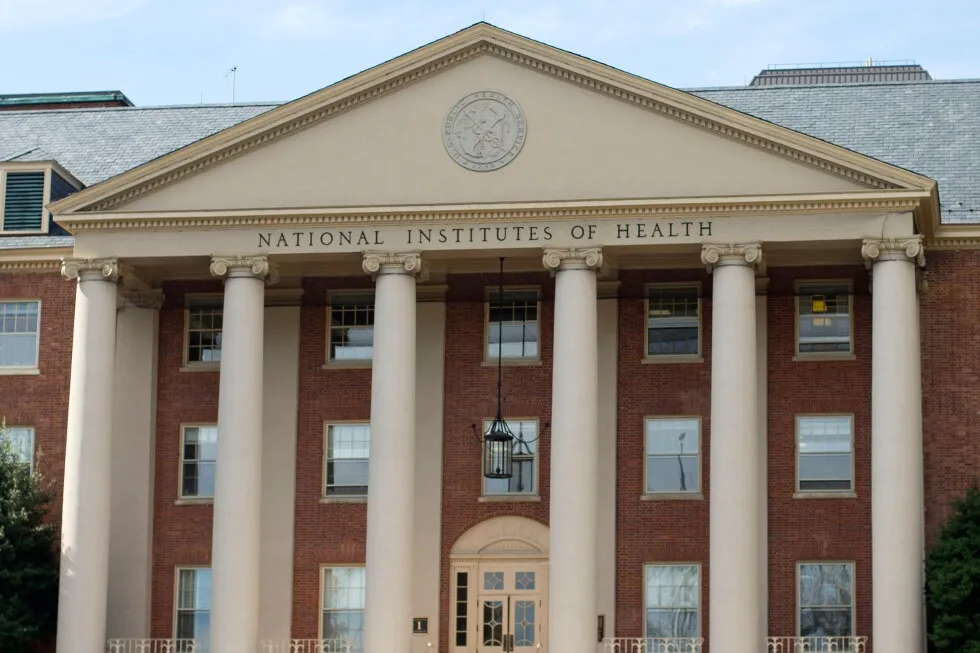
Associated Press (AP)FIG 01
Reading time
2min
Word count
306words
Sources cited
2cited
Entities identified
7entities
Quality score
100%
§ 01
Briefing Summary
AI-generatedNEWSAR · AI
The Trump administration announced a new policy on Thursday prohibiting the use of human fetal tissue derived from abortions in research funded by the National Institutes of Health (NIH). This expands restrictions implemented during Trump's first term, which were later lifted by the Biden administration. While the NIH has funded research involving fetal tissue for decades, its use has declined since 2019, with only 77 projects using it in 2024. According to the NIH, this policy does not end the use of existing fetal cell lines. The NIH will also seek input on ways to reduce or replace reliance on human embryonic stem cells.
Confidence 0.90Sources 2Claims 5Entities 7
§ 02
Article analysis
Model · rule-basedFraming
Political Strategy
Public Health
Tone
Measured
AI-assessed
CalmNeutralAlarmist
Factuality
0.80 / 1.00
Factual
LowHigh
Sources cited
2
Limited
FewMany
§ 03
Key claims
5 extracted01
The $47 billion agency counted just 77 projects funded in 2024 that included fetal tissue.
statisticArticle
Confidence
1.00
02
NIH Director Jay Bhattacharya acknowledged the agency “has long maintained policies governing the responsible and limited use of human fetal tissue in biomedical research.”
quoteJay Bhattacharya
Confidence
1.00
03
Opponents of fetal tissue use say there are now alternatives, although many scientists say there aren’t always adequate substitutes.
quoteArticle
Confidence
1.00
04
The government has funded research involving fetal tissue for decades, under both Republican and Democratic administrations.
factualArticle
Confidence
1.00
05
The Trump administration announced Thursday that human fetal tissue derived from abortions can no longer be used in research funded by the National Institutes of Health.
factualArticle
Confidence
1.00
§ 04
Full report
2 min read · 306 words§ 05
Entities
7 identifiedKey playerOppositionContextPositiveNeutralNegative
§ 06
Keywords & salience
10 termsfetal tissue research
1.00
national institutes of health
0.90
nih funding
0.80
abortion
0.70
trump administration
0.70
biomedical research
0.60
cell lines
0.50
embryonic stem cells
0.50
hiv
0.40
cancer
0.40
§ 07
Topic connections
Interactive graph Network visualization showing 9 related topics
View Full Graph Person Organization Location Event|Click node to navigate|Edge numbers = shared articles