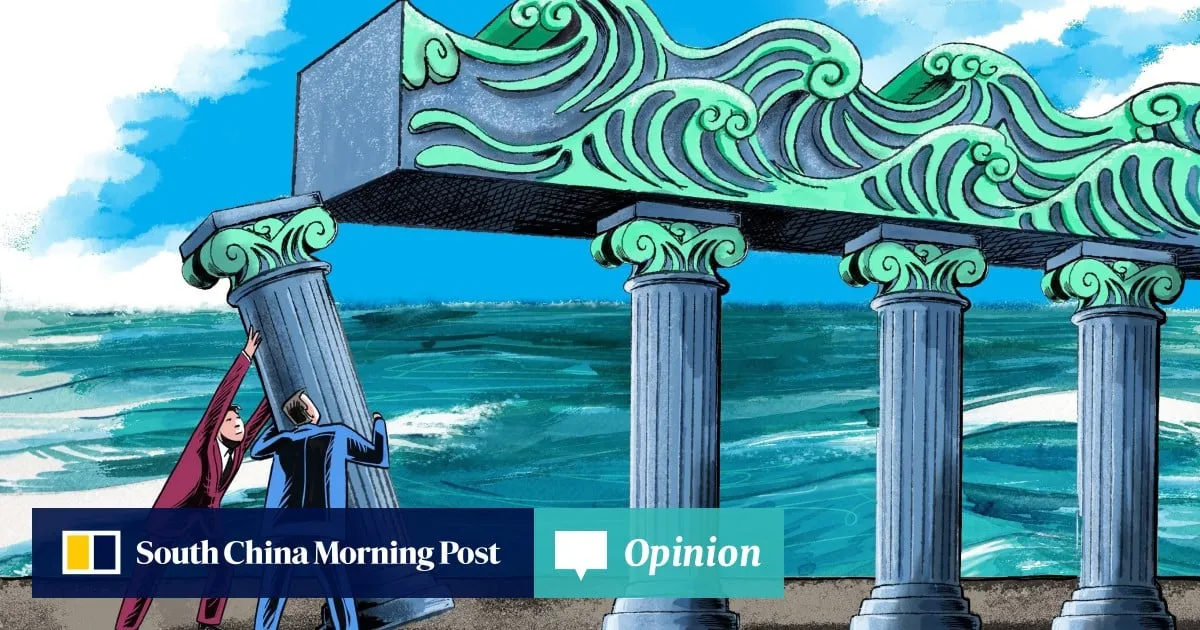
The United States’ abrupt withdrawal earlier this month from dozens of international institutions, including the UN Framework Convention on Climate Change, was more than another episode of diplomatic retrenchment. It was a reminder that the post-war architecture of global governance, particularly in environmental affairs, is under strain.Against this backdrop, China’s decision to nominate Xiamen as the host city for the secretariat of the new High Seas Treaty should not be read as a quest for prestige. It is a proposal about how the global commons ought to be governed when traditional pillars begin to wobble.The new High Seas Treaty, which entered into force on January 17, has finally closed a 40-year legal gap. For decades since the 1982 adoption of the United Nations Convention on the Law of the Sea, two-thirds of the world’s oceans existed in a regulatory vacuum, where fisheries and mining operations were conducted without coordinated oversight.The treaty is built around four pillars: equitable sharing of deep-sea genetic resources; binding marine protected areas; mandatory environmental impact assessments; and technology transfer to developing nations. But its true significance is in the institutional architecture that will enforce it.This requires a secretariat that turns policy into practice.Greenpeace activists display a 3D floor banner depicting high seas biodiversity, in front of the Brandenburg Gate in Berlin, Germany, on January 14. For the first time globally, the High Seas Treaty will allow the establishment of marine protected areas on the high seas. Photo: dpaThe contest between Brussels, Valparaiso and Xiamen – all candidates to host the secretariat’s headquarters – is often framed as a logistical or geopolitical choice. In reality, it reflects three distinct approaches to international governance.
SRCSouth China Morning Post
LANGEN
LEANCenter-Right
WORDS276
ENT10
THU · 2026-01-22 · 21:30 GMTBRIEF NSR-2026-0122-9828
NSR-2026-0122-9828Analysis·EN·Environmental
How China can strengthen High Seas Treaty governance
The article discusses the importance of the new High Seas Treaty, which aims to address the regulatory vacuum in international waters that has existed since 1982. The treaty focuses on equitable sharing of resources, marine protected areas, environmental impact assessments, and technology transfer.
Zhihua ZhengSouth China Morning PostFiled 2026-01-22 · 21:30 GMTLean · Center-RightRead · 2 min
South China Morning PostFIG 01
Reading time
2min
Word count
276words
Sources cited
1cited
Entities identified
10entities
Quality score
100%
§ 01
Briefing Summary
AI-generatedNEWSAR · AI
The article discusses the importance of the new High Seas Treaty, which aims to address the regulatory vacuum in international waters that has existed since 1982. The treaty focuses on equitable sharing of resources, marine protected areas, environmental impact assessments, and technology transfer. China's nomination of Xiamen as the host city for the treaty's secretariat is presented as a proposal for strengthening global governance in light of weakening traditional international structures. The selection of the secretariat's location, with Brussels and Valparaiso also in contention, represents different approaches to international governance and is crucial for effectively enforcing the treaty's provisions. The High Seas Treaty entered into force on January 17, marking a significant step towards coordinated oversight of activities on the high seas.
Confidence 0.90Sources 1Claims 5Entities 10
§ 02
Article analysis
Model · rule-basedFraming
Environmental
Political Strategy
Tone
Measured
AI-assessed
CalmNeutralAlarmist
Factuality
0.60 / 1.00
Mixed
LowHigh
Sources cited
1
Limited
FewMany
§ 03
Key claims
5 extracted01
The treaty is built around four pillars: equitable sharing of deep-sea genetic resources; binding marine protected areas; mandatory environmental impact assessments; and technology transfer.
factual
Confidence
1.00
02
The new High Seas Treaty entered into force on January 17.
factual
Confidence
1.00
03
The United States withdrew from dozens of international institutions, including the UN Framework Convention on Climate Change.
factual
Confidence
1.00
04
For decades, two-thirds of the world’s oceans existed in a regulatory vacuum.
factual
Confidence
0.90
05
China’s decision to nominate Xiamen as the host city for the secretariat of the new High Seas Treaty should not be read as a quest for prestige.
prediction
Confidence
0.60
§ 04
Full report
2 min read · 276 words§ 05
Entities
10 identifiedKey playerOppositionContextPositiveNeutralNegative
Organizations3
Locations6
§ 06
Keywords & salience
10 termshigh seas treaty
1.00
global governance
0.90
marine protected areas
0.70
environmental affairs
0.60
international institutions
0.60
environmental impact assessments
0.50
deep-sea genetic resources
0.50
united nations convention on the law of the sea
0.50
secretariat
0.40
china
0.40
§ 07
Topic connections
Interactive graph No topic relationship data available yet. This graph will appear once topic relationships have been computed.