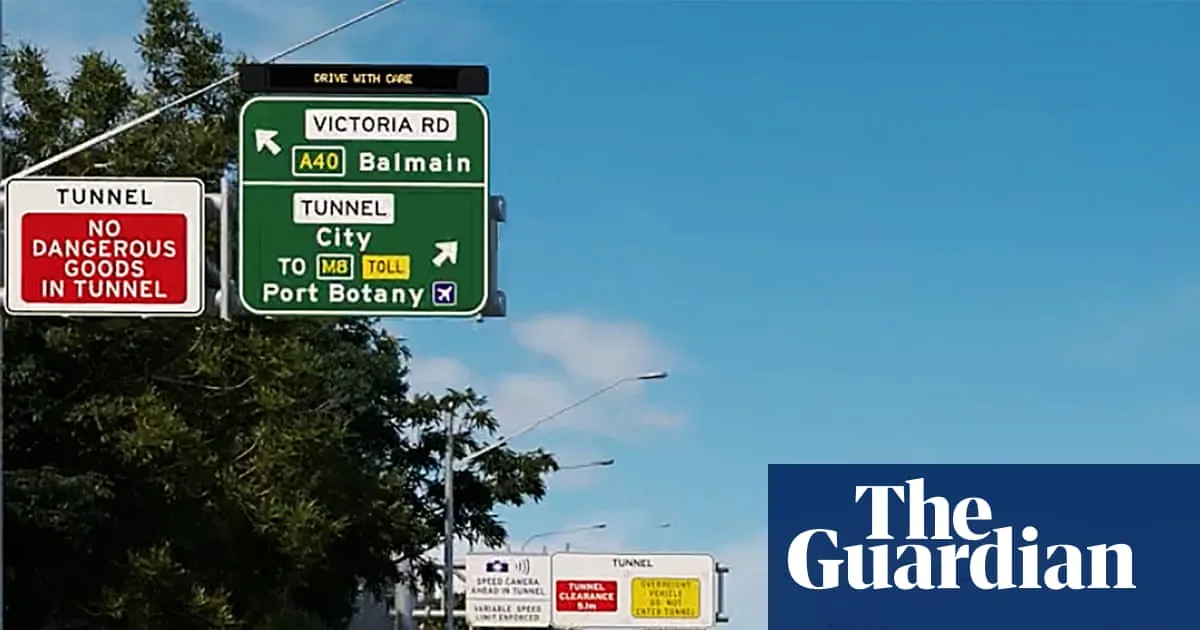
The Westconnex, which alone accounted for 359,000 trips a day by the end of 2025, will not get a toll reduction. Photograph: NSW Government View image in fullscreen The Westconnex, which alone accounted for 359,000 trips a day by the end of 2025, will not get a toll reduction. Photograph: NSW Government Most Sydney road tolls to keep rising after Transurban accused of blocking reforms Handful of tollroads to get one-off price cuts but Westconnex toll to keep rising at least 4% a year Get our breaking news email, free app or daily news podcast The cost of using Sydney’s biggest toll road will continue to rise at least 4% a year after the multinational private operator was accused of blocking the state government’s push for sweeping reforms. Only a handful of Sydney’s motorways will receive one-off toll cuts under a deal announced by the state Labor government on Monday, as the tolling bill footed by taxpayers surpasses $1bn. Eleven of Sydney’s toll roads are run by Transurban, a $47bn company with operations in Victoria, Queensland and the US, with most under contracts granting exclusive operating rights into the 2040s or later. The deal will see the state pay $850m to widen the M2-M7 tollway, boosting traffic flows, which Transurban expects will increase its toll revenue. The government will separately spend $143m to settle the deal, negotiated over two years. Under Monday’s deal, Transurban will cut some fares by 10% on the Lane Cove Tunnel and the M2 in July 2027 and the M7 in 2028. The cross-city tunnel toll will be cut by a one-off 20% in 2028 while the eastern distributor’s northbound fare will be cut and a southbound fare added. Those highways accounted for less than half of the 1m trips recorded each day on average across Transurban’s Sydney network, suggesting most tollway trips would not see a toll reduction. The Westconnex highway, which alone accounted for 359,000 trips a day by the end of 2025, and the NorthConnex will not get a reduction. The premier, Chris Minns, told reporters on Monday the government had failed to negotiate a deal for the excluded highways at an appropriate cost with Transurban. “We weren’t able to get the rate of the dollars that we wanted in exchange for, I guess, what we had to give up,” Minns said. “We need toll relief now and it’s better to have it at a lower base given the multiple increases that they have through the year.” Transurban’s chief executive, Michelle Jablko, told investors on Monday the state would have had to spend significant amounts to fund a Westconnex toll reduction. “Even a small change in Westconnex could cost taxpayers quite a lot,” Jablko said. Transurban data indicates the average Sydney customer spends nearly $650 a year on tolls. It costs $12.74 for a car to travel the full length of Westconnex and the motorway’s tolls increase by at least 4% each year. Allan Fels, a former chief of the Australian Competition and Consumer Commission, led the state’s 2024 tolling review and called for the different roads’ tolls to be standardised so toll burdens would be balanced between Sydney’s west and its wealthier north and east. Jabklo on Monday said sweeping reforms could worsen congestion. Fels, who was not directly involved in the government’s negotiations, said Monday’s toll reductions represented a “good start”. But he said Transurban had blocked reform and put profits over public interest. The company declined to comment. “It’s essentially a financial vehicle, that receives an enormous amount of money, and that’s what it’s all about,” Fels told Guardian Australia. “[Transurban’s demands] were excessive, completely out of the ballpark … Their whole approach to compensation ruled out some public interest reforms, including on Westconnex.” NSW taxpayers already pay Transurban more than $100m a year to cover Labor’s cap on tolls introduced in January 2024, covering the difference for motorists spending more than $60 each week. That figure will more than double to $211m in 2026-27 after the state budget temporarily lowered the cap to $50. Fels said commuter anger at growing toll bills would force the state to revisit the contracts in future. “The government deemed it was just too tough politically in the face of resistance by Transurban to deliver the whole package … [but] they hinted they might come back to this,” he said. Jablko did not directly answer when asked on Monday whether the government had promised it would not amend the contracts in future. “By working constructively with the government, we were able to deal into what was important to them today and protect the value of the contracts,” she said. “What government wants to do in the future is always going to be a question for them, but it was really important for us to show up in the right way.” Explore more on these topics Transport Sydney New South Wales Chris Minns New South Wales politics news Share Reuse this content
SRCThe Guardian - World News
LANGEN
LEANCenter-Left
WORDS827
ENT12
MON · 2026-08-03 · 15:00 GMTBRIEF NSR-2026-0803-98697
NSR-2026-0803-98697News Report·EN·Economic Impact
Most Sydney road tolls to keep rising after Transurban accused of blocking reforms
Sydney's largest toll road, WestConnex, will continue to see annual toll increases of at least 4%, despite a recent deal between the NSW government and toll operator Transurban. While a few select toll roads will receive one-off price cuts, the majority, including WestConnex and NorthConnex, will not.
Luca IttimaniThe Guardian - World NewsFiled 2026-08-03 · 15:00 GMTLean · Center-LeftRead · 4 min
The Guardian - World NewsFIG 01
Reading time
4min
Word count
827words
Sources cited
3cited
Entities identified
12entities
Quality score
100%
§ 01
Briefing Summary
AI-generatedNEWSAR · AI
Sydney's largest toll road, WestConnex, will continue to see annual toll increases of at least 4%, despite a recent deal between the NSW government and toll operator Transurban. While a few select toll roads will receive one-off price cuts, the majority, including WestConnex and NorthConnex, will not. The state government accused Transurban of blocking broader reforms aimed at reducing toll costs. The deal involves the state paying Transurban $850 million to widen the M2-M7 tollway and an additional $143 million to settle the agreement. Taxpayers are already contributing over $100 million annually to cap tolls.
Confidence 0.90Sources 3Claims 5Entities 12
§ 02
Article analysis
Model · rule-basedFraming
Economic Impact
Political Strategy
Tone
Measured
AI-assessed
CalmNeutralAlarmist
Factuality
0.70 / 1.00
Factual
LowHigh
Sources cited
3
Well sourced
FewMany
§ 03
Key claims
5 extracted01
Premier Chris Minns stated the government failed to negotiate a deal for excluded highways at an appropriate cost with Transurban.
quoteChris Minns
Confidence
1.00
02
Westconnex toll will keep rising at least 4% a year.
factual
Confidence
0.95
03
Transurban data indicates the average Sydney customer spends nearly $650 a year on tolls.
statisticTransurban
Confidence
0.90
04
The state will pay $850m to widen the M2-M7 tollway as part of a deal with Transurban.
factual
Confidence
0.90
05
Most Sydney road tolls will continue to rise after Transurban accused of blocking reforms.
factual
Confidence
0.90
§ 04
Full report
4 min read · 827 words§ 05
Entities
12 identifiedKey playerOppositionContextPositiveNeutralNegative
Organizations3
§ 06
Keywords & salience
10 termstransurban
1.00
road tolls
1.00
westconnex
0.90
toll reforms
0.80
toll increases
0.70
toll cuts
0.60
toll revenue
0.50
sydney
0.50
state government
0.40
private operator
0.40
§ 07
Topic connections
Interactive graph No topic relationship data available yet. This graph will appear once topic relationships have been computed.