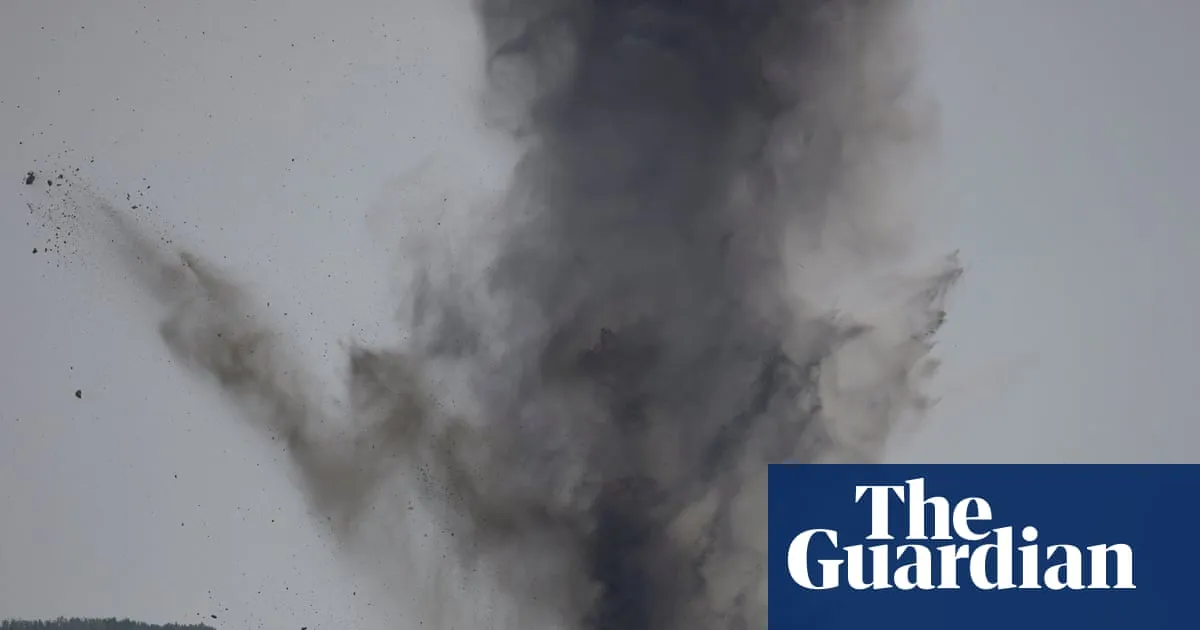
Romanian naval forces carried out a controlled explosion to help redirect vital cooling water from the drought-hit Danube to the country’s last working nuclear reactor, while neighbouring Hungary said it may be able to eke out two more days of power from its only atomic plant.Hungary and Romania have been forced to shut down nuclear reactors cooled by the Danube for the first time, as record-low water levels deepen fears of an energy crisis across the region.Romania has declared a nationwide state of emergency throughout August stemming from a decline in electricity production after record low Danube river levels led to the shutdown at the Cernavodǎ nuclear plant.The Danube operation used 180kg of explosives, the Adevărul newspaper reported, to move a large rock restricting the flow of water in a blast that sent a tower of water into the air. The extraordinary measure underlined the scale of the crisis in Europe, where heat and drought have lowered river levels and raised concerns about water supplies, river transport and power generation.“Any day past Wednesday or Thursday that the nuclear power plant functions is a gain,” Romania’s defence minister, Radu Miruțǎ, said on Monday. “A day of it functioning is three times more efficient than the costs of this operation.”The drought forced the shutdown of a reactor at Romania’s only nuclear plant at Cernavodǎ. Photograph: Andreea Alexandru/APExperts said the controlled explosion would allow authorities to build a temporary dam, diverting more water into the channel serving Cernavodǎ’s remaining reactor.With both countries’ sole nuclear plants at reduced capacity, Hungary and Romania are increasingly relying on expensive power imports as heatwave conditions increase demand for electricity. Both countries use water from the Danube as coolant for their reactors.At Paks, Hungary’s Soviet-era nuclear power station, output has been reduced. The 44-year-old plant, which normally generates almost half of the country’s electricity, is operating at less than half its capacity. Authorities earlier said they might have to shut Paks as early as Sunday, but later said it could operate at its reduced capacity until Monday or Tuesday, offering a small reprieve for the power supply.Hungary’s prime minister, Péter Magyar, said the plant was expected to be fully shut down next week. With the Danube forecast to remain too shallow for the reactors’ cooling systems, the closure could last for several weeks.“An energy crisis situation could arise beginning Monday,” he posted on X. “Coordinated steps and restraint will be needed to avoid more severe consequences. We are counting on everyone!”He added: “Today and maybe tomorrow the last turbine producing 240 megawatts can keep working. This is very good news, as the complete shutdown of the plant can be avoided on one of the days with the highest consumption.”The partially dried-up Danube outside the Paks nuclear plant in Hungary. Photograph: Bernadett Szabó/ReutersMagyar earlier said voluntary cuts in power usage had reduced demand by 700MW on Sunday, significantly easing pressure on the grid.Adding to voluntary cuts by other companies, the pharmaceuticals company Richter said on Mondayit would reduce its electricity consumption by more than 50% in the next three weeks.In Serbia, record-low Danube levels have pushed the country’s key hydroelectric plant to operate with only 20% of its capacity, prompting the prime minister, Djuro Macut, to preside over an emergency meeting on Monday focusing on energy problems.Water levels are not expected to rise on the Danube in the coming days or even weeks as no significant rainfall is forecast. The river passes through 10 countries. In some stretches it has fallen to levels never previously recorded. The river’s retreat has revealed rocks, shipwrecks, a second world war bomb and the remains of a woolly mammoth.The prehistoric bones were discovered on the exposed riverbed by a resident of Ryahovo, a village in northern Bulgaria. Experts from the regional history museum in the nearby city of Ruse were sent to examine the rare find.Associated Press and Reuters contributed to this report
SRCThe Guardian - World News
LANGEN
LEANCenter-Left
WORDS650
ENT12
MON · 2026-08-03 · 14:40 GMTBRIEF NSR-2026-0803-98700
NSR-2026-0803-98700News Report·EN·Economic Impact
Romania blasts rock to divert water from drought-hit Danube to nuclear reactor
Romania has used controlled explosions to blast rocks in the Danube River, aiming to redirect vital cooling water to its sole operating nuclear reactor. This extraordinary measure was taken as record-low river levels have forced both Romania and Hungary to reduce output from their nuclear power plants, deepening fears of an energy crisis.
Lorenzo Tondo and agenciesThe Guardian - World NewsFiled 2026-08-03 · 14:40 GMTLean · Center-LeftRead · 3 min
The Guardian - World NewsFIG 01
Reading time
3min
Word count
650words
Sources cited
3cited
Entities identified
12entities
Quality score
100%
§ 01
Briefing Summary
AI-generatedNEWSAR · AI
Romania has used controlled explosions to blast rocks in the Danube River, aiming to redirect vital cooling water to its sole operating nuclear reactor. This extraordinary measure was taken as record-low river levels have forced both Romania and Hungary to reduce output from their nuclear power plants, deepening fears of an energy crisis. Hungary's nuclear plant may operate for a few more days at reduced capacity, but a full shutdown is expected next week. Both nations rely on the Danube for cooling their reactors, and the drought has led to increased reliance on expensive power imports. Serbia's hydroelectric plant is also operating at significantly reduced capacity due to low Danube levels.
Confidence 0.90Sources 3Claims 5Entities 12
§ 02
Article analysis
Model · rule-basedFraming
Economic Impact
Environmental
Tone
Mixed Tone
AI-assessed
CalmNeutralAlarmist
Factuality
0.80 / 1.00
Factual
LowHigh
Sources cited
3
Well sourced
FewMany
§ 03
Key claims
5 extracted01
Hungary's prime minister stated an energy crisis could arise beginning Monday and that the Paks plant might shut down for several weeks.
quotePéter Magyar
Confidence
0.95
02
Record-low water levels in the Danube have forced Hungary and Romania to shut down nuclear reactors cooled by the river for the first time.
factual
Confidence
0.95
03
Romania declared a state of emergency in August due to declining electricity production caused by low Danube levels.
factual
Confidence
0.90
04
Romanian naval forces used a controlled explosion with 180kg of explosives to redirect water from the Danube to a nuclear reactor.
factualAdevărul newspaper
Confidence
0.90
05
The controlled explosion will allow authorities to build a temporary dam to divert more water to the Cernavodǎ nuclear plant.
factualExperts
Confidence
0.85
§ 04
Full report
3 min read · 650 words§ 05
Entities
12 identifiedKey playerOppositionContextPositiveNeutralNegative
Organizations1
Locations5
Events1
§ 06
Keywords & salience
10 termsdanube river
1.00
nuclear reactor
1.00
drought
0.90
energy crisis
0.90
cooling water
0.80
controlled explosion
0.70
power generation
0.60
romania
0.50
hungary
0.50
cernavodǎ nuclear plant
0.50
§ 07
Topic connections
Interactive graph Network visualization showing 51 related topics
View Full Graph Person Organization Location Event|Click node to navigate|Edge numbers = shared articles