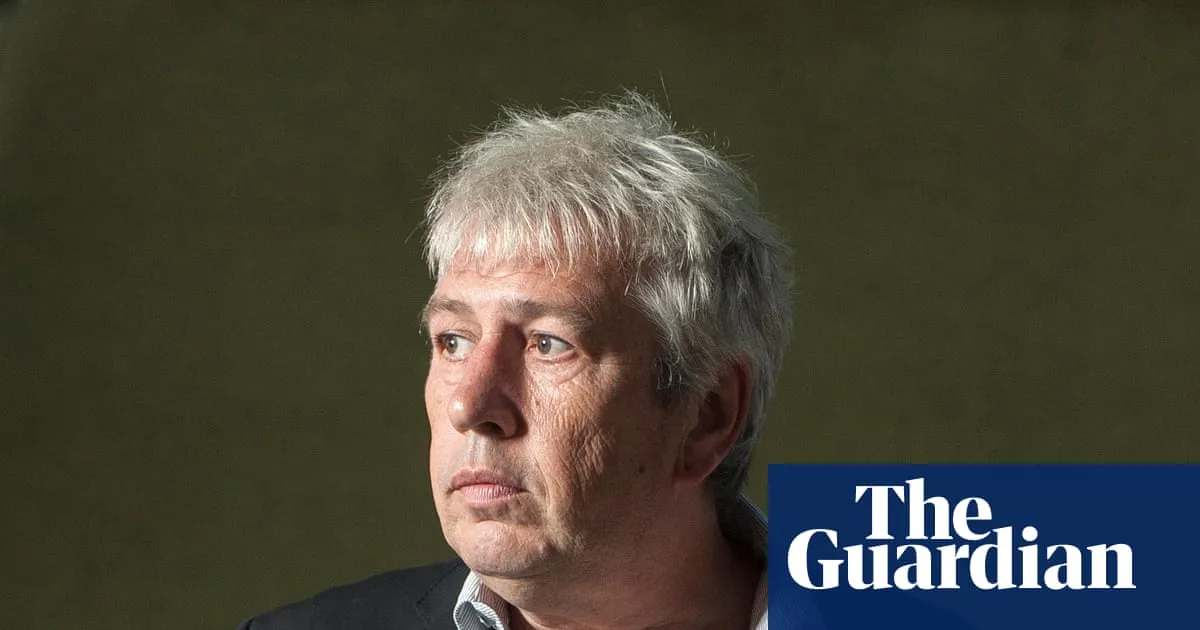
The writer and broadcaster Rod Liddle, a prominent columnist for The Sunday Times and The Sun, has died after a short illness. He was 66.Liddle, whose provocative style attracted praise and criticism, also wrote for The Spectator magazine and earlier in his career edited BBC Radio 4’s Today programme.Liddle worked as a speechwriter for the Labour party in the 1980s, but his later writing often critiqued and criticised the left.Tributes to Liddle were paid by Piers Morgan, the former Sunday Times editor Andrew Neil and the Today programme presenter Justin Webb, who described Liddle as brilliant, kind and funny.The former Sun editor David Yelland said Liddle “morphed into a brilliant and gifted writer who I could rarely agree with but always turned to first”.He said: “It was because he was so talented he was able to behave so badly and write so (it has to be said) abhorrently on many occasions. And he knew this. It was his essence. RIP Rod.”Rod Liddle (right) with the then Conservative party leader, David Cameron, campaigning with his home affairs spokesperson, David Davis. Photograph: Christopher Thomond/The GuardianLiddle died at the James Cook university hospital in Middlesbrough on Sunday evening. His children, Wilder, Tyler and Emmy, said in a statement: “We’re all very saddened and shocked at the sudden passing of our wonderful father.“He raised us much as you might imagine, to be inquisitive, brave and always humorous. Even in hospital in the last few weeks, he consistently held the room and never let the awful situation show.“He has left a legacy that we are all incredibly proud of, he will always be our guide on how to live an extraordinary life.”Rod Liddle at The Spectator summer party in 2011 with his second wife, Alicia Monckton. Photograph: Alan Davidson/ShutterstockLiddle was no stranger to controversy. In 2010 he became the first blogger to be censured by the Press Complaints Commission, for incorrectly stating in a Spectator piece that the “overwhelming majority” of violent crime in London was carried out by young African-Caribbean men.Liddle left as editor of Today in 2002. At the time, it was reported that his departure followed a disagreement with the BBC’s then director general, Greg Dyke, about a regular column he wrote for the Guardian.In one column Liddle had criticised Countryside Alliance marchers as “Mill on the Floss extras” and “those who own the countryside, or run it, together with a forelock-tugging menagerie of their better-paid servants”.Rod Liddle during his time as producer of BBC Radio 4’s Today programme. Photograph: Graham Turner/The GuardianIt was during his tenure at Today that Liddle hired Andrew Gilligan, the journalist whose 2003 report claimed the UK government had “sexed up” its dossier on Iraq’s weapons of mass destruction. Liddle left the BBC before Gilligan’s report was broadcast.Liddle also presented a programme about infidelity, arguing that men were genetically pre-programmed to be unfaithful. His former wife had written about his adultery in a series of newspaper features.Rebekah Brooks, the chief executive of News UK, which publishes The Sunday Times and The Sun, said everyone at the company had been “deeply shocked and saddened” to learn of his sudden death.“Rod was an inimitable journalistic force, brilliant, provocative and immensely talented, whose sharp wit and uncompromising voice graced our pages and airwaves for decades,” she said. “He challenged conventional thinking and left an indelible mark on British journalism.”Ben Taylor, the editor of The Sunday Times, said: “Rod Liddle had a wonderful way with words and used his unique talent to speak for the readers, highlighting the cant and absurdity that bedevils modern life. He was also supremely entertaining and for years his column was the first that many turned to every Sunday. We will miss him desperately.”Victoria Newton, the editor-in-chief of The Sun, said: “A champion of press freedom, no topic was off-limits, and his writing – as funny as it was excoriating – was simply exceptional. A terrific observer of the frailties of our political class, he will be remembered for his razor sharp wit and for his huge intellect.”
SRCThe Guardian - World News
LANGEN
LEANCenter-Left
WORDS672
ENT12
MON · 2026-08-03 · 14:53 GMTBRIEF NSR-2026-0803-98703
NSR-2026-0803-98703News Report·EN·Human Interest
Sunday Times and Sun columnist Rod Liddle dies aged 66
Journalist and broadcaster Rod Liddle has died at the age of 66 after a short illness. Liddle was a prominent columnist for the Sunday Times and the Sun, and also wrote for the Spectator.
Michael Savage Media editorThe Guardian - World NewsFiled 2026-08-03 · 14:53 GMTLean · Center-LeftRead · 3 min
The Guardian - World NewsFIG 01
Reading time
3min
Word count
672words
Sources cited
5cited
Entities identified
12entities
Quality score
100%
§ 01
Briefing Summary
AI-generatedNEWSAR · AI
Journalist and broadcaster Rod Liddle has died at the age of 66 after a short illness. Liddle was a prominent columnist for the Sunday Times and the Sun, and also wrote for the Spectator. He previously edited BBC Radio 4’s Today programme and worked as a speechwriter for the Labour party. Known for his provocative style, Liddle attracted both praise and criticism throughout his career, and was censured by the Press Complaints Commission in 2010 for a piece in the Spectator. Tributes have been paid by industry colleagues, who remembered him as brilliant, kind, funny, and a talented writer. Liddle died on Sunday evening at James Cook university hospital in Middlesbrough.
Confidence 0.90Sources 5Claims 5Entities 12
§ 02
Article analysis
Model · rule-basedFraming
Human Interest
Social Justice
Tone
Measured
AI-assessed
CalmNeutralAlarmist
Factuality
0.70 / 1.00
Factual
LowHigh
Sources cited
5
Well sourced
FewMany
§ 03
Key claims
5 extracted01
David Yelland stated Liddle was a talented writer who could also behave badly and write abhorrently.
quoteDavid Yelland
Confidence
1.00
02
Piers Morgan, Andrew Neil, and Justin Webb paid tribute to Liddle, describing him as brilliant, kind, and funny.
quotePiers Morgan, Andrew Neil, Justin Webb
Confidence
1.00
03
In 2010, Liddle was censured by the Press Complaints Commission for incorrectly stating that the majority of violent crime in London was by young African-Caribbean men.
factual
Confidence
1.00
04
Liddle's writing style was provocative, attracting both praise and criticism.
factual
Confidence
1.00
05
Rod Liddle, a writer and broadcaster for the Sunday Times and the Sun, has died at the age of 66.
factual
Confidence
1.00
§ 04
Full report
3 min read · 672 words§ 05
Entities
12 identifiedKey playerOppositionContextPositiveNeutralNegative
People6
Organizations5
§ 06
Keywords & salience
10 termsrod liddle
1.00
columnist
0.90
sunday times
0.80
sun
0.80
writer
0.70
broadcaster
0.70
controversy
0.60
provocative style
0.50
spectator
0.40
labour party
0.40
§ 07
Topic connections
Interactive graph No topic relationship data available yet. This graph will appear once topic relationships have been computed.