Young women in England who later develop breast cancer are not being referred for early tests or preventive treatment because current guidelines used by GPs miss 95% of patients, research suggests.The National Institute for Health and Care Excellence (Nice) criteria used to decide who should be referred by family doctors for further breast cancer risk assessment and specialist care is failing to spot the vast majority of women under 50 who will go on to develop the disease in the next 10 years, according to the University of Cambridge and the Institute of Cancer Research, London (ICR).The findings, published in the British Journal of Cancer, prompted calls for a review of the criteria.breast cancer is the most common cancer worldwide. It accounts for about one in four cases of cancer and is one of the leading causes of death in women under 50. Identifying women at higher risk early can pave the way for additional screening or preventive treatment.But the current criteria given to GPs in England to refer women at risk of breast cancer for further tests or specialist care miss up to 95% of patients under 50 who go on to develop the disease within a decade, the analysis suggests.Spotting those at the highest risk earlier would give doctors a better chance at treating or even preventing breast cancer, experts said.In England, women at a higher risk of the disease are referred by GPs for further assessment and specialist care. This is based on family history, as well as criteria set by Nice.Comparing the current guidelines with a new risk assessment system developed by Cambridge and funded by Cancer Research UK, called Boadicea, experts identified eight times as many women in the age group who would develop breast cancer.The researchers said the Nice criteria miss up to 95% of women aged under 50 with a higher-than-average risk of breast cancer, and 95% of women who go on to develop the disease within 10 years.A major reason for the disparity is because almost three-quarters of women (73%) under 50 who develop breast cancer within 10 years have no family history of breast cancer, the key criteria in the Nice guidelines.Boadicea also looked in detail at other factors such as reproductive history, lifestyle and genetics.Dr Juliet Usher-Smith, of the University of Cambridge, said: “We need to get better at identifying women at highest risk of breast cancer so that we can intervene early, when there are more options for treating, or even preventing, their disease.“The current Nice criteria used in general practice are missing up to 95% of women under 50 who will go on to develop breast cancer. It’s time to look again at these criteria in the light of our findings.”Prof Montserrat García-Closas, of the ICR, said: “There will be a balance to strike: the Nice criteria are much easier to implement, but miss a large proportion of women at elevated risk. But a full risk assessment including genetic testing will place a heavy burden on resources.“Ultimately, it will be a trade-off between the practical, resource, and cost implications of data collection and risk assessment, and the potential benefits and harms associated with accurate and inaccurate classification of women.”Dr Simon Vincent, chief scientific officer at breast cancer Now, which supported the study, said new ways to identify women at increased risk could help prevent some breast cancers or detect them earlier, when treatment was more likely to be successful.“These findings highlight the limitations of Nice’s current referral criteria, and so this research must now be carefully considered as part of the current review of its family history guidelines.“However, it’s equally important that any changes come with the needed investment in family history services, so they can be implemented effectively and fairly across the NHS.”A Nice spokesperson said: “Nice welcomes the findings of this study and recognises the potential of multifactorial risk models in improving the identification of women at increased risk of breast cancer in the future.“However, the current evidence does not warrant a change to our existing familial breast cancer guideline at this time. Nice remains committed to reviewing new evidence and will consider further updates as more data on feasibility and clinical outcomes become available.”
SRCThe Guardian - World News
LANGEN
LEANCenter-Left
WORDS699
ENT10
TUE · 2026-08-04 · 05:00 GMTBRIEF NSR-2026-0804-98872
NSR-2026-0804-98872News Report·EN·Public Health
GPs’ breast cancer guidelines ‘miss’ 95% of women who will develop disease
Research from the University of Cambridge and the Institute of Cancer Research suggests that current National Institute for Health and Care Excellence (Nice) guidelines used by GPs in England miss up to 95% of women under 50 who will develop breast cancer within a decade. These guidelines primarily rely on family history, which is absent in a majority of young women diagnosed with the disease.
Andrew Gregory Health editorThe Guardian - World NewsFiled 2026-08-04 · 05:00 GMTLean · Center-LeftRead · 3 min
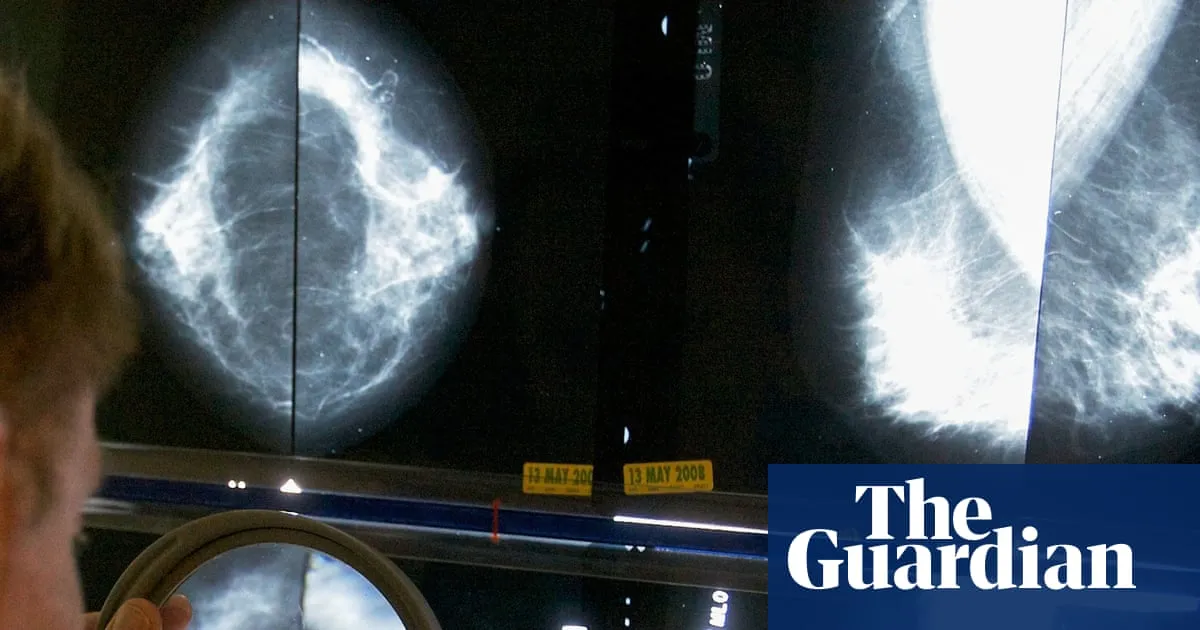
The Guardian - World NewsFIG 01
Reading time
3min
Word count
699words
Sources cited
3cited
Entities identified
10entities
Quality score
100%
§ 01
Briefing Summary
AI-generatedNEWSAR · AI
Research from the University of Cambridge and the Institute of Cancer Research suggests that current National Institute for Health and Care Excellence (Nice) guidelines used by GPs in England miss up to 95% of women under 50 who will develop breast cancer within a decade. These guidelines primarily rely on family history, which is absent in a majority of young women diagnosed with the disease. A new risk assessment system, Boadicea, which considers reproductive history, lifestyle, and genetics, identified eight times as many women at higher risk. These findings have prompted calls for a review of the Nice criteria to improve early detection and preventive treatment for younger women. Nice acknowledges the potential of multifactorial risk models but states current evidence does not warrant immediate changes to existing guidelines.
Confidence 0.90Sources 3Claims 5Entities 10
§ 02
Article analysis
Model · rule-basedFraming
Public Health
Human Interest
Tone
Mixed Tone
AI-assessed
CalmNeutralAlarmist
Factuality
0.80 / 1.00
Factual
LowHigh
Sources cited
3
Well sourced
FewMany
§ 03
Key claims
5 extracted01
Breast cancer is the most common cancer worldwide and a leading cause of death in women under 50.
factual
Confidence
1.00
02
The current Nice criteria are missing up to 95% of women under 50 who will go on to develop breast cancer.
quoteDr Juliet Usher-Smith (University of Cambridge)
Confidence
0.90
03
Almost three-quarters of women (73%) under 50 who develop breast cancer within 10 years have no family history of breast cancer.
statisticUniversity of Cambridge and the Institute of Cancer Research, London (ICR)
Confidence
0.90
04
Current guidelines used by GPs miss 95% of women under 50 who will develop breast cancer in the next 10 years.
statisticUniversity of Cambridge and the Institute of Cancer Research, London (ICR)
Confidence
0.90
05
A new risk assessment system called Boadicea identified eight times as many women at risk compared to current Nice criteria.
statisticUniversity of Cambridge and the Institute of Cancer Research, London (ICR)
Confidence
0.80
§ 04
Full report
3 min read · 699 words§ 05
Entities
10 identifiedKey playerOppositionContextPositiveNeutralNegative
Organizations5
§ 06
Keywords & salience
9 termsbreast cancer
1.00
early detection
0.90
risk assessment
0.80
gp guidelines
0.70
women under 50
0.60
preventive treatment
0.50
family history
0.40
boadicea
0.40
nice criteria
0.40
§ 07
Topic connections
Interactive graph Network visualization showing 5 related topics
View Full Graph Person Organization Location Event|Click node to navigate|Edge numbers = shared articles