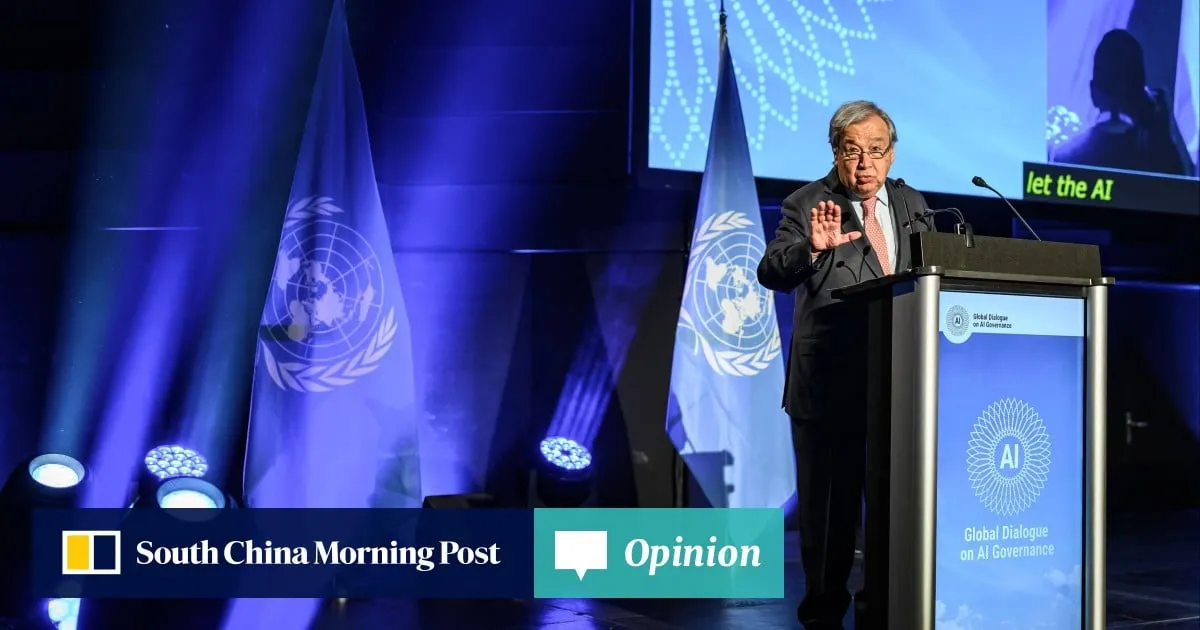
The global AI race is becoming a contest over the international order. In June, the US convened the second summit under the 24-economy Pax Silica around secure supply chains, AI infrastructure and trusted technology partnerships. In July, all 193 UN member states met in Geneva for the inaugural Global Dialogue on AI Governance.Days later, 29 countries signed the agreement establishing the World Artificial Intelligence Cooperation Organization (WAICO) in Shanghai. Together, these developments reveal an emerging structure: American-secured diffusion, Chinese developmental multilateralism and a still-fragmented functional track led by middle powers and international institutions.The American pathway is built around control of the technological frontier. US companies dominate advanced chip design, cloud platforms, proprietary models and much of the software used to train and deploy AI. Washington is organising these assets through Pax Silica, full-stack export packages, public finance, semiconductor partnerships and cybersecurity networks. Access is widened among trusted partners while the most consequential capabilities remain subject to restrictions.
SRCSouth China Morning Post
LANGEN
LEANCenter-Right
WORDS157
ENT8
TUE · 2026-08-04 · 12:30 GMTBRIEF NSR-2026-0804-99004
NSR-2026-0804-99004Analysis·EN·Political Strategy
As US and China compete over AI, middle powers can craft a third path
The global AI race is evolving into a contest for international order, with distinct approaches emerging. In June, the US hosted the Pax Silica summit, focusing on secure supply chains and trusted technology partnerships.
Hao NanSouth China Morning PostFiled 2026-08-04 · 12:30 GMTLean · Center-RightRead · 1 min
South China Morning PostFIG 01
Reading time
1min
Word count
157words
Sources cited
0cited
Entities identified
8entities
Quality score
100%
§ 01
Briefing Summary
AI-generatedNEWSAR · AI
The global AI race is evolving into a contest for international order, with distinct approaches emerging. In June, the US hosted the Pax Silica summit, focusing on secure supply chains and trusted technology partnerships. In July, the UN held its inaugural Global Dialogue on AI Governance in Geneva, followed by 29 countries establishing the World Artificial Intelligence Cooperation Organization (WAICO) in Shanghai. These events highlight three emerging structures: American-secured diffusion, Chinese developmental multilateralism, and a fragmented functional track led by middle powers. The US approach prioritizes control of advanced AI technologies, organizing its assets through Pax Silica and restricting access to consequential capabilities among its trusted partners.
Confidence 0.90Claims 5Entities 8
§ 02
Article analysis
Model · rule-basedFraming
Political Strategy
Technology
Tone
Measured
AI-assessed
CalmNeutralAlarmist
Factuality
0.70 / 1.00
Factual
LowHigh
Sources cited
0
No named sources
FewMany
§ 03
Key claims
5 extracted01
29 countries signed the agreement establishing the World Artificial Intelligence Cooperation Organization (WAICO) in Shanghai.
factual
Confidence
1.00
02
In July, 193 UN member states met in Geneva for the inaugural Global Dialogue on AI Governance.
factual
Confidence
1.00
03
The US convened the second summit under the 24-economy Pax Silica around secure supply chains, AI infrastructure and trusted technology partnerships in June.
factual
Confidence
1.00
04
US companies dominate advanced chip design, cloud platforms, proprietary models and much of the software used to train and deploy AI.
factual
Confidence
0.90
05
The global AI race is becoming a contest over the international order.
factual
Confidence
0.90
§ 04
Full report
1 min read · 157 words§ 05
Entities
8 identifiedKey playerOppositionContextPositiveNeutralNegative
Organizations3
Locations4
§ 06
Keywords & salience
10 termsartificial intelligence
1.00
us china competition
0.90
middle powers
0.80
ai governance
0.70
international order
0.60
waico
0.50
pax silica
0.50
trusted technology
0.40
semiconductor partnerships
0.40
ai infrastructure
0.40
§ 07
Topic connections
Interactive graph Network visualization showing 51 related topics
View Full Graph Person Organization Location Event|Click node to navigate|Edge numbers = shared articles