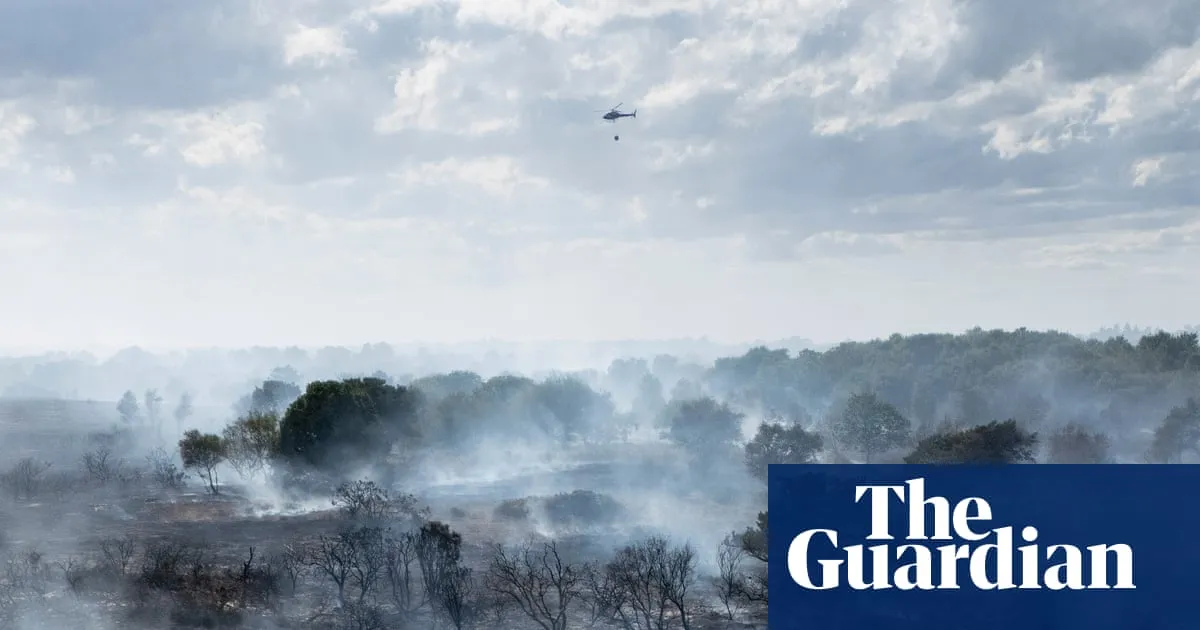
Farmers and landowners are calling for a temporary ban on disposable barbecues in England and Wales, as they warn of the risk of igniting wildfires.The call, which has also been made by firefighters and is backed by the Liberal Democrats and many Labour MPs, comes as much of England faces further hot dry weather, despite rain in some areas.The deputy president of the National Farmers Union, , said wildfires were an urgent concern as farmers counted the cost of lost or poor harvests driven by record heatwaves supercharged by the climate crisis over the last three months and the worst drought in many areas since 1976. Dry conditions have meant vegetation is much more prone to ignition through carelessness or deliberate fire-starting.Paul Tompkins said: “A stray match or single spark, and months of hard work can be wiped out in just minutes; crops destroyed and harvest ruined, vital machinery and infrastructure damaged and livestock put at serious risk.“Beyond the immediate losses, there could be long-term consequences for soil health, grassland productivity and confidence of farm businesses already facing significant pressures.”A wildfire in Essex, whose origin was traced back to a roadside lay-by. Photograph: Justin Kase z12z/AlamyHe called for retailers to remove disposable barbecues from sale, and for local authorities to issue public space protection orders prohibiting the lighting of barbecues, campfires and camping stoves.The MP for High Peak in Derbyshire, Jon Pearce, also wrote to retailers this week, asking them to stop selling disposable barbecues. Most major supermarkets have already halted sales of disposable models, and some have not sold them for years.But they are still widely available in smaller shops, from some hardware and DIY stores and online.Wildfires have affected every region of the UK this year, with more than 20,000 hectares (50,000 acres) estimated to have burned. There have been fires in the Rhondda Valley in Wales this week and the Cairngorms in Scotland last week, while a blaze in Suffolk came within a few miles of the Sizewell B nuclear plant. Fires have been going on for months. Blazes hit the Mourne Mountains in Northern Ireland, areas near Aberdeen, and the Brecon Beacons national park in Wales.A helicopter carries water collected from the sea near Sizewell B nuclear power station to drop on a nearby wildfire last week. Photograph: Joe Giddens/PATompkins also called for more grazing in moorland areas to reduce vegetation, but conservationists are wary of over-grazing in delicate habitats.skip past newsletter promotionafter newsletter promotionSome observers have blamed rewilding for the increasing wildfire risk, a claim rebuffed by experts who said rewilding land could vastly reduce risky conditions. The financier and conservationist Ben Goldsmith pointed to the reintroduction of beavers in some rivers, which has increased the surrounding land’s ability to store water and helped to avoid some of the worst impacts of the drought.The Country Land and Business Association (CLA), which represents landowners, also called for a ban on disposable barbecues, but at the same time a lifting of the ban on controlled burning. It is currently banned in England to protect wildlife and habitats, and to reduce carbon emissions.The CLA’s president, Gavin Lane, said: “Controlled burning is one of several proven ways to reduce the danger. Done properly, it clears the vegetation that feeds a wildfire and slows its spread. Natural England must lift the ban on controlled burning and look seriously at how it could prevent further loss.”Rain fell in the north of England and Scotland on Tuesday, while thundery showers in Northern Ireland and scattered showers in Wales brought some relief. South-east England was mainly dry despite overcast skies.
SRCThe Guardian - World News
LANGEN
LEANCenter-Left
WORDS597
ENT12
TUE · 2026-08-04 · 17:46 GMTBRIEF NSR-2026-0804-99133
NSR-2026-0804-99133News Report·EN·Environmental
Calls to ban disposable barbecues in England and Wales over wildfire risk
Farmers, landowners, firefighters, the Liberal Democrats, and many Labour MPs are calling for a temporary ban on disposable barbecues in England and Wales due to the risk of igniting wildfires. This plea comes amidst hot, dry weather across much of England, exacerbating drought conditions and making vegetation highly susceptible to fire.
Fiona Harvey Environment editorThe Guardian - World NewsFiled 2026-08-04 · 17:46 GMTLean · Center-LeftRead · 3 min
The Guardian - World NewsFIG 01
Reading time
3min
Word count
597words
Sources cited
4cited
Entities identified
12entities
Quality score
100%
§ 01
Briefing Summary
AI-generatedNEWSAR · AI
Farmers, landowners, firefighters, the Liberal Democrats, and many Labour MPs are calling for a temporary ban on disposable barbecues in England and Wales due to the risk of igniting wildfires. This plea comes amidst hot, dry weather across much of England, exacerbating drought conditions and making vegetation highly susceptible to fire. Wildfires have impacted every UK region this year, causing significant damage to crops, infrastructure, and livestock, with some blazes nearing critical sites like the Sizewell B nuclear plant. While major supermarkets have stopped selling disposable barbecues, they remain available in smaller shops and online. Some also advocate for lifting the ban on controlled burning to reduce vegetation fuel for wildfires.
Confidence 0.90Sources 4Claims 5Entities 12
§ 02
Article analysis
Model · rule-basedFraming
Environmental
Economic Impact
Tone
Mixed Tone
AI-assessed
CalmNeutralAlarmist
Factuality
0.70 / 1.00
Factual
LowHigh
Sources cited
4
Well sourced
FewMany
§ 03
Key claims
5 extracted01
Wildfires were an urgent concern as farmers counted the cost of lost or poor harvests driven by record heatwaves and drought.
quoteDeputy president of the National Farmers Union
Confidence
0.95
02
Most major supermarkets have already halted sales of disposable barbecues.
factual
Confidence
0.90
03
Farmers and landowners are calling for a temporary ban on disposable barbecues in England and Wales due to wildfire risk.
factualFarmers and landowners
Confidence
0.90
04
More than 20,000 hectares (50,000 acres) are estimated to have burned in UK wildfires this year.
statistic
Confidence
0.85
05
Experts rebuffed claims that rewilding land increases wildfire risk, stating it could reduce risky conditions.
factualExperts
Confidence
0.80
§ 04
Full report
3 min read · 597 words§ 05
Entities
12 identifiedKey playerOppositionContextPositiveNeutralNegative
Organizations3
Locations6
Events1
§ 06
Keywords & salience
10 termswildfire risk
1.00
disposable barbecues
1.00
climate crisis
0.90
hot dry weather
0.80
farmers
0.70
firefighters
0.60
landowners
0.60
drought
0.50
harvests
0.40
retailers
0.40
§ 07
Topic connections
Interactive graph Network visualization showing 51 related topics
View Full Graph Person Organization Location Event|Click node to navigate|Edge numbers = shared articles