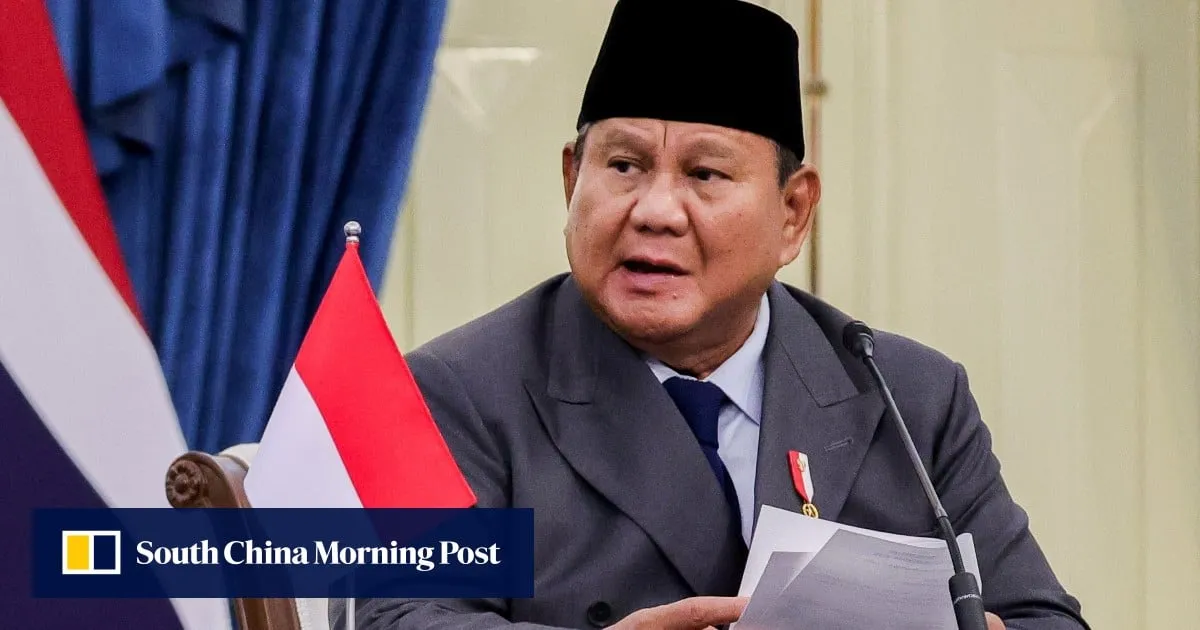
Indonesian President Prabowo Subianto’s push to reorganise Southeast Asia’s largest economy around a stronger, more interventionist state has put him increasingly at odds, analysts say, with the country’s so-called Nine Dragons.Known locally as Sembilan Naga, the label is a loose shorthand for some of Indonesia’s richest tycoon families – many of them Chinese Indonesian – with interests spanning banking, tobacco, property, palm oil, mining and consumer goods.It has never referred to a formally confirmed group but is widely used in public discussion of powerful conglomerates associated with business empires such as Djarum, Salim Group, Lippo Group, Golden Agri-Resources, Barito Pacific and Agung Sedayu.
SRCSouth China Morning Post
LANGEN
LEANCenter-Right
WORDS103
ENT10
WED · 2026-08-05 · 00:00 GMTBRIEF NSR-2026-0805-99189
NSR-2026-0805-99189Analysis·EN·Political Strategy
Are Indonesia’s Prabowo and ultra rich ‘9 Dragons’ on a collision course?
Indonesian President Prabowo Subianto's policies aimed at strengthening state intervention in the economy are reportedly creating friction with powerful business families, referred to as the "Nine Dragons" or "Sembilan Naga." This informal term describes some of Indonesia's wealthiest tycoon families, many of Chinese Indonesian descent, who hold significant interests across various sectors including banking, property, and natural resources. These conglomerates, such as Djarum, Salim Group, and Lippo Group, are widely recognized in public discourse.
Johannes NugrohoSouth China Morning PostFiled 2026-08-05 · 00:00 GMTLean · Center-RightRead · 1 min
South China Morning PostFIG 01
Reading time
1min
Word count
103words
Sources cited
1cited
Entities identified
10entities
Quality score
100%
§ 01
Briefing Summary
AI-generatedNEWSAR · AI
Indonesian President Prabowo Subianto's policies aimed at strengthening state intervention in the economy are reportedly creating friction with powerful business families, referred to as the "Nine Dragons" or "Sembilan Naga." This informal term describes some of Indonesia's wealthiest tycoon families, many of Chinese Indonesian descent, who hold significant interests across various sectors including banking, property, and natural resources. These conglomerates, such as Djarum, Salim Group, and Lippo Group, are widely recognized in public discourse. Analysts suggest that Prabowo's approach to economic reorganization is leading to increasing disagreements with these influential business groups.
Confidence 0.85Sources 1Claims 4Entities 10
§ 02
Article analysis
Model · rule-basedFraming
Political Strategy
Economic Impact
Tone
Mixed Tone
AI-assessed
CalmNeutralAlarmist
Factuality
0.40 / 1.00
Mixed
LowHigh
Sources cited
1
Limited
FewMany
§ 03
Key claims
4 extracted01
These families have interests spanning banking, tobacco, property, palm oil, mining, and consumer goods.
factual
Confidence
0.90
02
The 'Nine Dragons' (Sembilan Naga) is a loose term for powerful, wealthy tycoon families in Indonesia.
factual
Confidence
0.90
03
The 'Nine Dragons' label is widely used in public discussion of powerful conglomerates.
factual
Confidence
0.80
04
President Prabowo Subianto's policies are putting him at odds with Indonesia's wealthiest families.
factualanalysts
Confidence
0.80
§ 04
Full report
1 min read · 103 words§ 05
Entities
10 identifiedKey playerOppositionContextPositiveNeutralNegative
Organizations6
§ 06
Keywords & salience
8 termsnine dragons
1.00
prabowo subianto
1.00
indonesian economy
0.90
interventionist state
0.80
tycoon families
0.70
conglomerates
0.60
chinese indonesian
0.50
business empires
0.40
§ 07
Topic connections
Interactive graph Network visualization showing 40 related topics
View Full Graph Person Organization Location Event|Click node to navigate|Edge numbers = shared articles