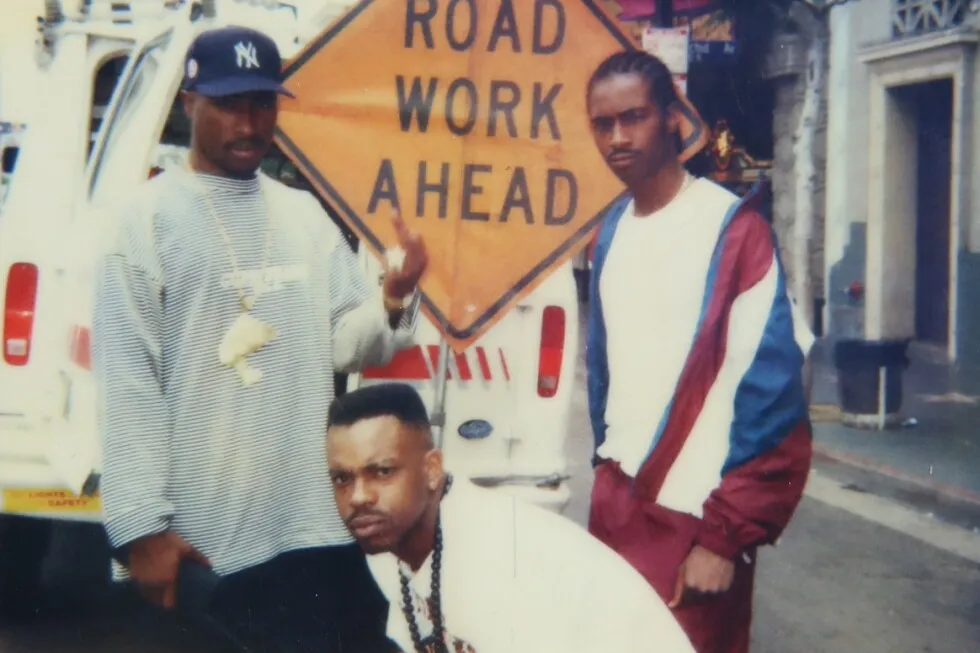
Duane ‘Keffe D’ Davis, charged with organizing the 1996 killing of Tupac Shakur, is on trial 0 seconds of 1 minute, 23 secondsVolume 0% Press shift question mark to access a list of keyboard shortcuts Keyboard ShortcutsEnabledDisabled Shortcuts Open/Close/ or ? Play/PauseSPACE Increase Volume↑ Decrease Volume↓ Seek Forward→ Seek Backward← Captions On/Offc Fullscreen/Exit Fullscreenf Mute/Unmutem Decrease Caption Size- Increase Caption Size+ or = Seek %0-9 Next Up Superrealist Carole A. Feuerman aims to inspire with her iconic art 01:59 Subtitle Settings OffEnglish(US)_v Font Color White Font Opacity 100% Font Size 100% Font Family Arial Character Edge None Edge Color Black Background Color Black Background Opacity 50% Window Color Black Window Opacity 0% Reset WhiteBlackRedGreenBlueYellowMagentaCyan 100%75%50%25% 200%175%150%125%100%75%50% ArialCourierGeorgiaImpactLucida ConsoleTahomaTimes New RomanTrebuchet MSVerdana NoneRaisedDepressedUniformDrop Shadow WhiteBlackRedGreenBlueYellowMagentaCyan WhiteBlackRedGreenBlueYellowMagentaCyan 100%75%50%25%0% WhiteBlackRedGreenBlueYellowMagentaCyan 100%75%50%25%0% 00:00 01:23 01:23 More Videos 01:59 Superrealist Carole A. Feuerman aims to inspire with her iconic art 00:44 John Carpenter's 'Cathedral' album and graphic novel are a family project 00:46 'Every car has its own character': Retro and prototype cars festival at Moscow's VDNKh 00:39 Hundreds of migrants who had crossed into Ceuta have returned to Morocco 01:33 Trump says Pirro 'choked' and 'folded like an umbrella' 01:33 Trump discusses Europe's migration crisis and UK energy policy 02:14 Why is the Spanish territory of Ceuta a flashpoint for migration from Africa? 01:32 Some Tibetans embrace native language despite China's 'ethnic unity' law Close 1 of 3 | Nearly 30 years after Tupac Shakur’s death, Duane “Keffe D” Davis is set to go on trial over allegations of orchestrating the rap icon’s killing. 2 of 3 | This undated photo provided by Maurice “Mopreme” Shakur on Wednesday, July 22, 2026, shows, from left, Tupac Shakur, Mike Cooley, and Mopreme Shakur, posing for a photo in Los Angeles. (Mopreme Shakur via AP) 3 of 3 | Duane Davis, right, talks with attorney Michael Sanft as he appears in district court for a pretrial hearing Tuesday, July 28, 2026, in Las Vegas. (Sam Morris/Las Vegas Review-Journal via AP, Pool) By JESSICA HILL Updated 6:12 AM MESZ, August 5, 2026 Add AP News on Google Add AP News as your preferred source to see more of our stories on Google. Share Share Facebook Copy Link copied Print Email X LinkedIn Bluesky Flipboard Pinterest Reddit Las Vegas (AP) — The man who prosecutors say orchestrated the 1996 killing of rap icon Tupac Shakur is scheduled to go to trial Monday, almost 30 years after the fatal drive-by shooting in Las Vegas. Duane “Keffe D” Davis, 63, faces a single count of murder with a deadly weapon with the intent to promote, further or assist a criminal gang in Shakur’s death. He’s been jailed since late 2023 and has pleaded not guilty. For decades, Shakur’s unsolved killing has gripped hip-hop fans. He’s considered one of the most influential rappers of all time with songs that speak to the human experience of love, heartache and familial relationships. When Shakur died, he was in the midst of a fierce battle for dominance in a music scene increasingly shaped by rival gangs. The trial, which is expected to last about a month, likely won’t reveal who pulled the trigger. Instead, prosecutors hope to prove that Davis was the shot caller and provided the weapon. Gunfire came from the Cadillac that Davis was in, and he’s one of the only people there that night who is still alive. Prosecutors say if Davis hadn’t written explicitly about the killing, or talked about it in interviews, it’s likely no one would have been charged. On Sept. 7, 1996, Shakur was in the passenger seat of a black BMW and Death Row Records co-founder Marion “Suge” Knight was driving. They had just watched Mike Tyson knock out Bruce Seldon and were headed to a nightclub where Shakur was scheduled to perform. But at a red light near the Las Vegas Strip, a white Cadillac pulled up beside them, and gunfire erupted. Tupac Shakur was killed in Las Vegas in 1996. Here’s who was there that night 5 MIN READ Judge allows use of police interview in trial for man accused of killing Tupac Shakur 2 MIN READ This week in court: 6 high-profile cases from the Tate brothers to D4vd 2 MIN READ Shakur was shot multiple times and died six days later, while Knight survived with minor injuries. Knight is serving a 28-year prison sentence for a fatal hit-and-run. The case went cold until Davis began making public statements about his involvement as a leader of the South Side Compton Crips. In 2019, he published a tell-all memoir. The book, along with interviews Davis gave, revived the police investigation. Davis’ defense attorneys argue there is no evidence he directed the shooting and the state relies on witnesses who weren’t there. The defense said Davis left the narcotics trade in 2009 and worked a steady job before illness forced him to retire in 2014. For Shakur’s family, the last 30 years have been exhausting and stressful, his stepbrother Maurice “Mopreme” Shakur said. Sitting through the trial will be retraumatizing, Shakur said, but he’s “cautiously optimistic” justice will come. “I hope that the trial is fair, and we find out the truth,” he said. Shakur’s death a result of longstanding gang feud, witnesses say Hundreds of pages of grand jury transcripts portray Tupac Shakur’s shooting as a culmination of a longstanding feud between rival record labels — Death Row Records and Bad Boy Records — and rival gang sects Mob Piru and South Side Compton Crips. Witnesses said South Side Compton Crips hung out with and provided protection to Bad Boy Records, which was founded by Sean “Diddy” Combs and included rappers like The Notorious B.I.G., or Christopher Wallace. Mob Piru, part of the larger Bloods gang, was associated with Death Row Records, which featured rappers like Shakur, Snoop Dogg and Dr. Dre. The rival gangs fought and retaliated against each other both before and after Shakur’s death. Prosecutors allege Davis orchestrated the shooting to get revenge after Shakur and his entourage beat up Davis’ nephew, Orlando “Baby Lane” Anderson, at the MGM Grand hours before Shakur was killed. The prosecutors’ case relies on “Compton Street Legend,” the book Davis co-authored about the shooting and his time in the Crips, as well as police and media interviews he participated in. Davis’ attorneys unsuccessfully fought to block the use of the book and a recording of a 2008 police interview in the trial. They argued the book was fictionalized and had a co-author, making it impossible to know which parts Davis wrote. They also argued Davis’ interview with a federal task force investigating the deaths of Wallace and Shakur was supposed to be confidential and not used against him. The memoir says that Shakur and his entourage “crossed the line” when they beat up Anderson. “We couldn’t let no record company studio gangsters do us like that,” the book says. Davis was in the passenger seat of the Cadillac and passed a gun to the back seat earlier that night, according to the book. When they encountered Shakur and Knight, Davis claimed to see Shakur reach for a weapon and wrote that “one of my guys from the back seat grabbed the Glock and started bustin’ back.” No weapon was found in Knight and Shakur’s car, according to retired Las Vegas police Detective Clifford Mogg, who was assigned to the investigation in early 2018. Mopreme Shakur said nothing would bring back his stepbrother. “That would be justice for me,” he said. “But we all know that is unattainable.” Mopreme Shakur said he wants allegations that Combs was involved to be explored further. In his book, Davis claims that Combs wanted Knight and Shakur killed. Combs has denied having any involvement in Shakur’s death. He’s serving roughly four years in prison after being convicted of prostitution-related charges. Combs’ attorney did not return emailed requests from The Associated Press for comment. Shakur sold over 75 million records worldwide with hits like “California Love,” “Changes” and “Dear Mama.” His songs spanned from party anthems to deep social commentary. The issues he discussed still resonate with people 30 years later, history professor Jeffrey O.G. Ogbar said. “I can’t think of anyone else in the history of hip-hop who’s had a greater impact in such a short period of time,” said Ogbar, who is the founding director of the Center for the Study of Popular Music at the University of Connecticut.
SRCAssociated Press (AP)
LANGEN
LEANCenter
WORDS1 409
ENT10
WED · 2026-08-05 · 04:23 GMTBRIEF NSR-2026-0805-99241
NSR-2026-0805-99241News Report·EN·Legal & Judicial
Duane ‘Keffe D’ Davis, charged with organizing the 1996 killing of Tupac Shakur, is on trial
Duane "Keffe D" Davis is on trial in Las Vegas for his alleged role in orchestrating the 1996 murder of rap icon Tupac Shakur. Prosecutors claim Davis, a leader of the South Side Compton Crips, was the "shot caller" and provided the weapon in the drive-by shooting that killed Shakur.
Associated Press (AP)Filed 2026-08-05 · 04:23 GMTLean · CenterRead · 6 min
Associated Press (AP)FIG 01
Reading time
6min
Word count
1 409words
Sources cited
3cited
Entities identified
10entities
Quality score
100%
§ 01
Briefing Summary
AI-generatedNEWSAR · AI
Duane "Keffe D" Davis is on trial in Las Vegas for his alleged role in orchestrating the 1996 murder of rap icon Tupac Shakur. Prosecutors claim Davis, a leader of the South Side Compton Crips, was the "shot caller" and provided the weapon in the drive-by shooting that killed Shakur. The trial, expected to last a month, will likely focus on proving Davis's involvement rather than identifying the shooter. Davis's own memoir and interviews, which detailed the events and his alleged participation, are central to the prosecution's case, despite defense arguments that the book is fictionalized. Shakur's family hopes the trial will bring truth and justice after decades of the case remaining unsolved.
Confidence 0.90Sources 3Claims 4Entities 10
§ 02
Article analysis
Model · rule-basedFraming
Legal & Judicial
Human Interest
Tone
Measured
AI-assessed
CalmNeutralAlarmist
Factuality
0.90 / 1.00
Factual
LowHigh
Sources cited
3
Well sourced
FewMany
§ 03
Key claims
4 extracted01
The fatal drive-by shooting occurred in Las Vegas.
factual
Confidence
1.00
02
Davis has been jailed since late 2023.
factual
Confidence
1.00
03
Davis faces a single count of murder with a deadly weapon with the intent to promote, further or assist a criminal gang.
factualProsecutors
Confidence
1.00
04
Duane 'Keffe D' Davis is on trial for organizing the 1996 killing of Tupac Shakur.
factualProsecutors
Confidence
1.00
§ 04
Full report
6 min read · 1 409 words§ 05
Entities
10 identifiedKey playerOppositionContextPositiveNeutralNegative
People5
Organizations1
§ 06
Keywords & salience
8 termsduane 'keffe d' davis
1.00
tupac shakur killing
1.00
orchestrating murder
0.90
rap icon
0.80
trial
0.70
1996 killing
0.60
legal proceedings
0.50
las vegas
0.40
§ 07
Topic connections
Interactive graph No topic relationship data available yet. This graph will appear once topic relationships have been computed.