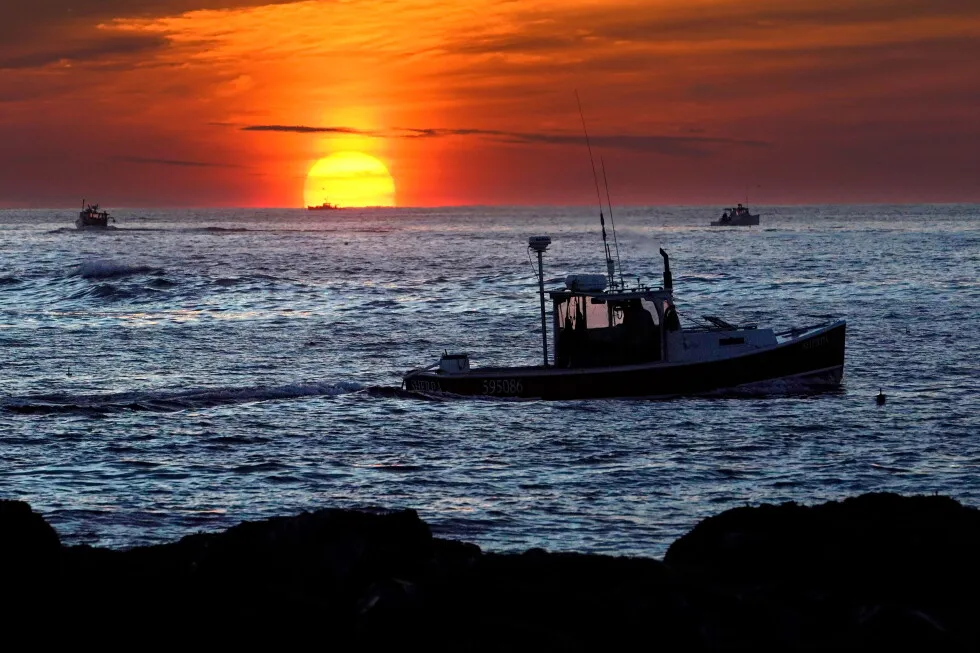
Lobster fishermen work at sunrise, Sept. 8, 2022, off Kennebunkport, Maine. (AP Photo/Robert F. Bukaty, File) Updated [hour]:[minute] [AMPM] [timezone], [monthFull] [day], [year] SCARBOROUGH, Maine (AP) — A federal appeals court signaled that it might not allow a lawsuit brought by fishing industry businesses and trade groups against a California aquarium to proceed because of the case’s potential impact on free speech.The New England-based plaintiffs sued the Monterey Bay Aquarium for defamation after the aquarium’s Seafood Watch conservation program placed American and Canadian lobster on its do-not-eat “red list” in 2022. The Boston-based 1st U.S. Circuit Court of Appeals is deciding whether the lawsuit can go forward.One of the appellate judges, Judge Seth Aframe, said during oral arguments on July 26 that it doesn’t strike him as a defamation claim and that he finds the case troubling “from a First Amendment perspective.”“The more you broaden the class of people that fall within this, the more it feels like everybody can sue,” Aframe said. Seafood Watch placed lobster on its list of seafood to avoid because of the threat posed to rare whales, such as the North Atlantic right whale, by potential entanglement in fishing gear.The lobster fishing industry, based mostly in Maine, has pushed back, saying the claim inaccurately portrays it as a threat to whales and constitutes defamation that has caused economic harm. It claims that the whales face greater threats from other fishing industries, including the Canadian snow crab fishery.Conservation groups have long made the case that lobster and crab fisheries are both dangerous to the whales, and government agencies have acknowledged that entanglement in fishing gear is a critical threat to the giant animals. 4 MIN READ 2 MIN READ 6 MIN READ The industry is sticking to that claim despite the judges’ comments during oral arguments, Kevin Lipson, an attorney for the plaintiffs, said Wednesday. “Monterey Bay Aquarium in their Seafood Watch report didn’t disclose any of the countervailing evidence. In fact, they hid that evidence,” Lipson said.Seafood Watch is one of the most cited sustainability reports about seafood, and many restaurants and stores use it to inform which products to carry. Some major retailers, including Whole Foods, announced they were pulling Gulf of Maine lobster after the red listing. A representative for Monterey Bay Aquarium declined to comment Wednesday. During oral arguments, Amy Saharia, an attorney for the aquarium, said that Seafood Watch didn’t single out any of the plaintiffs with a direct reference.The case has lingered because of ongoing legal machinations. A lower level federal court ruled last year that the lawsuit could proceed after the aquarium had requested it be tossed.Maine fishermen caught more than 78 million pounds (35 million kilograms) of lobster last year — a down year by the industry’s recent standards. The crustaceans were worth more than $460 million at the docks and are a key piece of the economy and culture in the state. Whittle is an Associated Press reporter based in Portland, Maine. He focuses on the environment and oceans.
SRCAssociated Press (AP)
LANGEN
LEANCenter
WORDS502
ENT12
WED · 2026-08-05 · 17:23 GMTBRIEF NSR-2026-0805-99477
NSR-2026-0805-99477News Report·EN·Legal & Judicial
Appeals court says fishermen’s claim in lobster defamation suit raises First Amendment questions
A federal appeals court is considering whether a defamation lawsuit filed by lobster fishermen against the Monterey Bay Aquarium can proceed, citing potential First Amendment concerns. The fishermen sued after the aquarium's Seafood Watch program listed American and Canadian lobster as "red list" items due to threats to North Atlantic right whales from fishing gear entanglement.
By
PATRICK WHITTLEAssociated Press (AP)Filed 2026-08-05 · 17:23 GMTLean · CenterRead · 3 min
Associated Press (AP)FIG 01
Reading time
3min
Word count
502words
Sources cited
3cited
Entities identified
12entities
Quality score
100%
§ 01
Briefing Summary
AI-generatedNEWSAR · AI
A federal appeals court is considering whether a defamation lawsuit filed by lobster fishermen against the Monterey Bay Aquarium can proceed, citing potential First Amendment concerns. The fishermen sued after the aquarium's Seafood Watch program listed American and Canadian lobster as "red list" items due to threats to North Atlantic right whales from fishing gear entanglement. A judge expressed doubt about the defamation claim, suggesting it could allow too many people to sue. The industry argues the report inaccurately portrays them as a threat and has caused economic harm, while conservation groups maintain entanglement is a critical danger. The aquarium's attorney stated Seafood Watch did not directly name any plaintiffs.
Confidence 0.90Sources 3Claims 5Entities 12
§ 02
Article analysis
Model · rule-basedFraming
Legal & Judicial
Environmental
Tone
Measured
AI-assessed
CalmNeutralAlarmist
Factuality
0.70 / 1.00
Factual
LowHigh
Sources cited
3
Well sourced
FewMany
§ 03
Key claims
5 extracted01
Judge Seth Aframe expressed concern that the case could allow 'everybody to sue' and raises First Amendment issues.
quoteJudge Seth Aframe
Confidence
1.00
02
The New England-based plaintiffs sued the Monterey Bay Aquarium for defamation after its Seafood Watch program put American and Canadian lobster on a 'red list'.
factualAP
Confidence
0.95
03
The lobster fishing industry claims whales face greater threats from other fisheries, including the Canadian snow crab fishery.
factualAP
Confidence
0.90
04
Seafood Watch placed lobster on its red list due to threats to North Atlantic right whales from fishing gear entanglement.
factualAP
Confidence
0.90
05
A federal appeals court may not allow a lawsuit by fishing industry businesses against an aquarium to proceed due to free speech concerns.
factualAP
Confidence
0.90
§ 04
Full report
3 min read · 502 words§ 05
Entities
12 identifiedKey playerOppositionContextPositiveNeutralNegative
Organizations4
§ 06
Keywords & salience
9 termsfirst amendment
1.00
seafood watch
0.90
defamation suit
0.90
lobster fishing industry
0.80
free speech
0.70
north atlantic right whale
0.70
whale entanglement
0.60
economic harm
0.50
sustainability reports
0.40
§ 07
Topic connections
Interactive graph No topic relationship data available yet. This graph will appear once topic relationships have been computed.