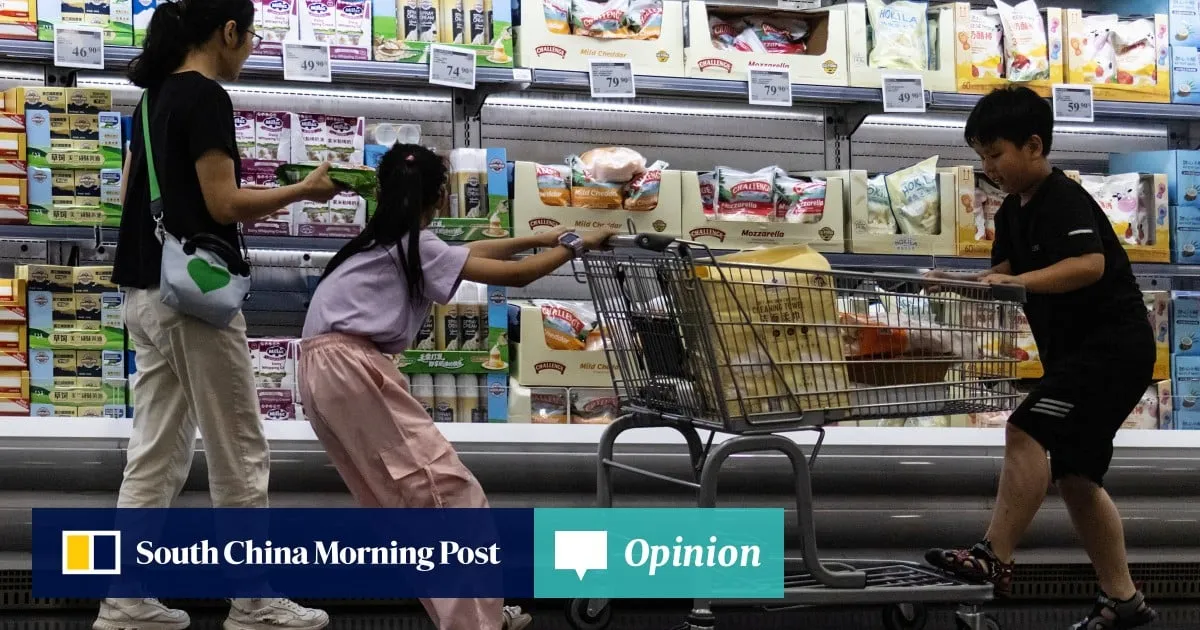
China’s national childcare subsidy is an encouraging acknowledgement of a simple truth: raising children is expensive.This year, the central government allocated 99.9 billion yuan (US$14.8 billion) to the programme, which provides families with 3,600 yuan annually for each child under three. According to state media, the families of more than 25 million babies have received the subsidy as of last month.For families struggling with the cost of nappies, milk, clothes and healthcare, any assistance is welcome. The programme is also significant because it establishes a nationwide system rather than leaving support to a patchwork of local initiatives.However, if China hopes the subsidy will persuade more couples to have children, 300 yuan a month will not be enough. The true cost of motherhood is measured not only in money, but also in time, lost opportunities and damage to a woman’s career.China’s birth rate has continued to fall despite the replacement of the one-child policy with a two-child policy in 2016 and a three-child policy in 2021. This should have taught policymakers an important lesson: permission to have children is not the same as the ability or desire to have them.Many women are not rejecting motherhood itself. They are rejecting the unequal terms on which motherhood is too often offered.
SRCSouth China Morning Post
LANGEN
LEANCenter-Right
WORDS208
ENT8
WED · 2026-08-05 · 21:30 GMTBRIEF NSR-2026-0805-99536
NSR-2026-0805-99536Analysis·EN·Social Justice
China’s baby boom depends on gender equality, not cash handouts
China's central government has allocated 99.9 billion yuan (US$14.8 billion) to a national childcare subsidy program, providing 3,600 yuan annually per child under three. This initiative aims to acknowledge the high cost of raising children and has reached over 25 million babies.
Lijia ZhangSouth China Morning PostFiled 2026-08-05 · 21:30 GMTLean · Center-RightRead · 1 min
South China Morning PostFIG 01
Reading time
1min
Word count
208words
Sources cited
0cited
Entities identified
8entities
Quality score
100%
§ 01
Briefing Summary
AI-generatedNEWSAR · AI
China's central government has allocated 99.9 billion yuan (US$14.8 billion) to a national childcare subsidy program, providing 3,600 yuan annually per child under three. This initiative aims to acknowledge the high cost of raising children and has reached over 25 million babies. However, the article suggests that this financial aid alone is unlikely to significantly boost China's declining birth rate. Policymakers are reminded that permission to have children does not equate to the ability or desire, and that women's decisions are influenced by the unequal burdens of motherhood, including career impacts and lost opportunities, rather than solely financial concerns.
Confidence 0.90Claims 5Entities 8
§ 02
Article analysis
Model · rule-basedFraming
Social Justice
Economic Impact
Tone
Measured
AI-assessed
CalmNeutralAlarmist
Factuality
0.60 / 1.00
Mixed
LowHigh
Sources cited
0
No named sources
FewMany
§ 03
Key claims
5 extracted01
China's birth rate has continued to fall despite policy changes allowing more children.
factualarticle
Confidence
1.00
02
The program provides families with 3,600 yuan annually for each child under three.
factualarticle
Confidence
1.00
03
China's national childcare subsidy allocates 99.9 billion yuan (US$14.8 billion) annually.
statisticstate media
Confidence
1.00
04
Gender equality, not cash handouts, is key to China's baby boom.
factualarticle
Confidence
0.90
05
Women are rejecting motherhood due to unequal terms, not motherhood itself.
factualarticle
Confidence
0.80
§ 04
Full report
1 min read · 208 words§ 05
Entities
8 identifiedKey playerOppositionContextPositiveNeutralNegative
Locations1
§ 06
Keywords & salience
7 termsgender equality
1.00
childcare subsidy
0.90
birth rate
0.80
motherhood
0.70
career
0.60
one-child policy
0.50
financial assistance
0.40
§ 07
Topic connections
Interactive graph Network visualization showing 51 related topics
View Full Graph Person Organization Location Event|Click node to navigate|Edge numbers = shared articles