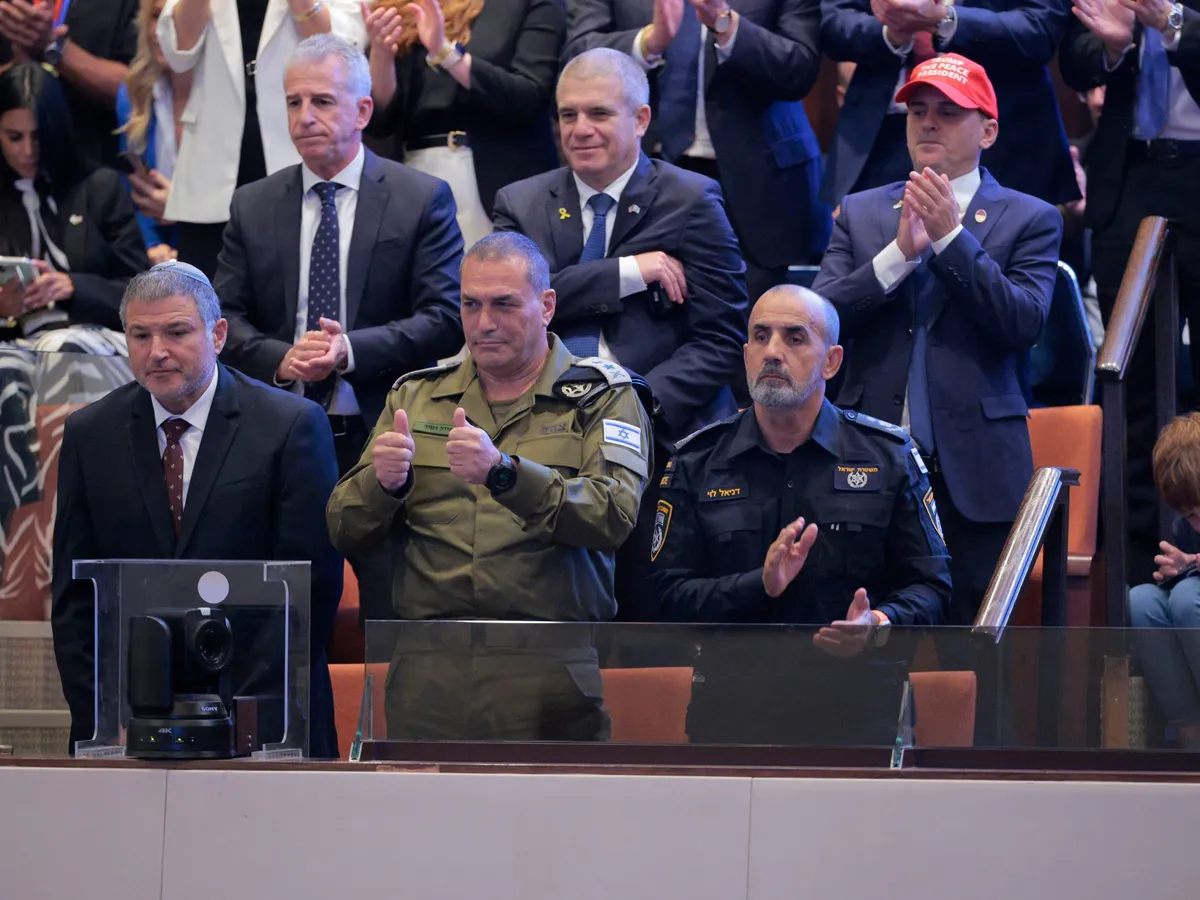
The Katz-Zamir clash exposes how prolonged conflict has upended the relationship between political authority and military judgement.Palestinian political analyst and researcher from inside Israel.Published On 6 Aug 2026For most of Israel’s history, disagreements between political leaders and the military remained largely private. Arguments over strategy, timing or risk were real, but they were managed away from the public eye. Citizens saw a country that, whatever its internal tensions, could present a coherent face in wartime.That quiet arrangement has frayed. Nearly three years after the October 7 attacks, open clashes between ministers and senior officers have become almost routine. The latest began when Defence Minister Israel-katz" class="entity-link entity-person" data-entity-id="4249" data-entity-type="person">Israel Katz criticised Major-General Avi Bluth, the commander of Israeli forces in the occupied West Bank, for seeking to extend the detention of an extremist settler. Katz then announced on live television that Bluth would be replaced, only for Chief of Staff Eyal Zamir to push back publicly, insisting that the general would remain in his post and that the proper procedures must be followed. What was once contained now plays out in full view.This exchange, like many before it, is not the real story. The real story is what these repeated public ruptures reveal about a country still at war. The campaign that began with a demand for national unity has gradually redefined the relationship between those who set the direction and those who must turn it into reality. The disagreement is no longer mainly about tactics. It is about something more fundamental: Who has the right to define victory, to set the aims of the war, and to decide what is possible.This change is bigger than a simple loss of discipline or a personal clash. Israel was never a state in which the army merely carried out orders. From the state’s earliest years, the military was a partner in shaping security policy, not a pure executive arm. David Ben-Gurion built the Israeli military as a central national institution. Later leaders – Yitzhak Rabin, Ehud Barak, Ariel Sharon, Benny Gantz, Yoav Gallant – rose from its ranks. The boundary between political authority and military judgement was always porous. The army did not simply implement policy; it helped define the realistic limits of what politics could demand.
SRCAl Jazeera
LANGEN
LEANCenter
WORDS371
ENT12
THU · 2026-08-06 · 13:04 GMTBRIEF NSR-2026-0806-99743
NSR-2026-0806-99743Analysis·EN·Political Strategy
The old pact between Israel’s government and military has broken down
Israel's long-standing, private accord between its government and military has broken down, with public clashes between ministers and senior officers becoming frequent. This shift, evident in a recent dispute between Defense Minister Israel Katz and Chief of Staff Eyal Zamir over the replacement of a West Bank commander, signifies a deeper issue.
Ehab JabareenAl JazeeraFiled 2026-08-06 · 13:04 GMTLean · CenterRead · 2 min
Al JazeeraFIG 01
Reading time
2min
Word count
371words
Sources cited
0cited
Entities identified
12entities
Quality score
100%
§ 01
Briefing Summary
AI-generatedNEWSAR · AI
Israel's long-standing, private accord between its government and military has broken down, with public clashes between ministers and senior officers becoming frequent. This shift, evident in a recent dispute between Defense Minister Israel Katz and Chief of Staff Eyal Zamir over the replacement of a West Bank commander, signifies a deeper issue. The prolonged conflict has led to disagreements not just on tactics, but on fundamental questions of who defines victory and war aims. Historically, the Israeli military has been a partner in shaping security policy, with a porous boundary between political authority and military judgment. This new public discord reveals a redefinition of this relationship, moving beyond mere discipline issues to a struggle over the core direction and possibilities of the ongoing war.
Confidence 0.90Claims 5Entities 12
§ 02
Article analysis
Model · rule-basedFraming
Political Strategy
Conflict
Tone
Measured
AI-assessed
CalmNeutralAlarmist
Factuality
0.40 / 1.00
Mixed
LowHigh
Sources cited
0
No named sources
FewMany
§ 03
Key claims
5 extracted01
Israel's military has historically been a partner in shaping security policy, not just an executive arm.
factual
Confidence
0.90
02
Chief of Staff Eyal Zamir pushed back publicly against Defence Minister Israel Katz's decision to replace Major-General Avi Bluth.
factual
Confidence
0.90
03
Defence Minister Israel Katz criticized Major-General Avi Bluth for seeking to extend the detention of an extremist settler.
factual
Confidence
0.90
04
Open clashes between Israeli ministers and senior officers have become almost routine.
factual
Confidence
0.90
05
The disagreement between Israeli political authority and military judgement is now about who defines victory and war aims, not just tactics.
factual
Confidence
0.80
§ 04
Full report
2 min read · 371 words§ 05
Entities
12 identifiedKey playerOppositionContextPositiveNeutralNegative
People8
Organizations1
§ 06
Keywords & salience
10 termsmilitary judgement
1.00
political authority
1.00
prolonged conflict
0.90
government-military relations
0.90
public ruptures
0.80
defining victory
0.70
security policy
0.60
october 7 attacks
0.50
israel
0.40
david ben-gurion
0.40
§ 07
Topic connections
Interactive graph Network visualization showing 51 related topics
View Full Graph Person Organization Location Event|Click node to navigate|Edge numbers = shared articles