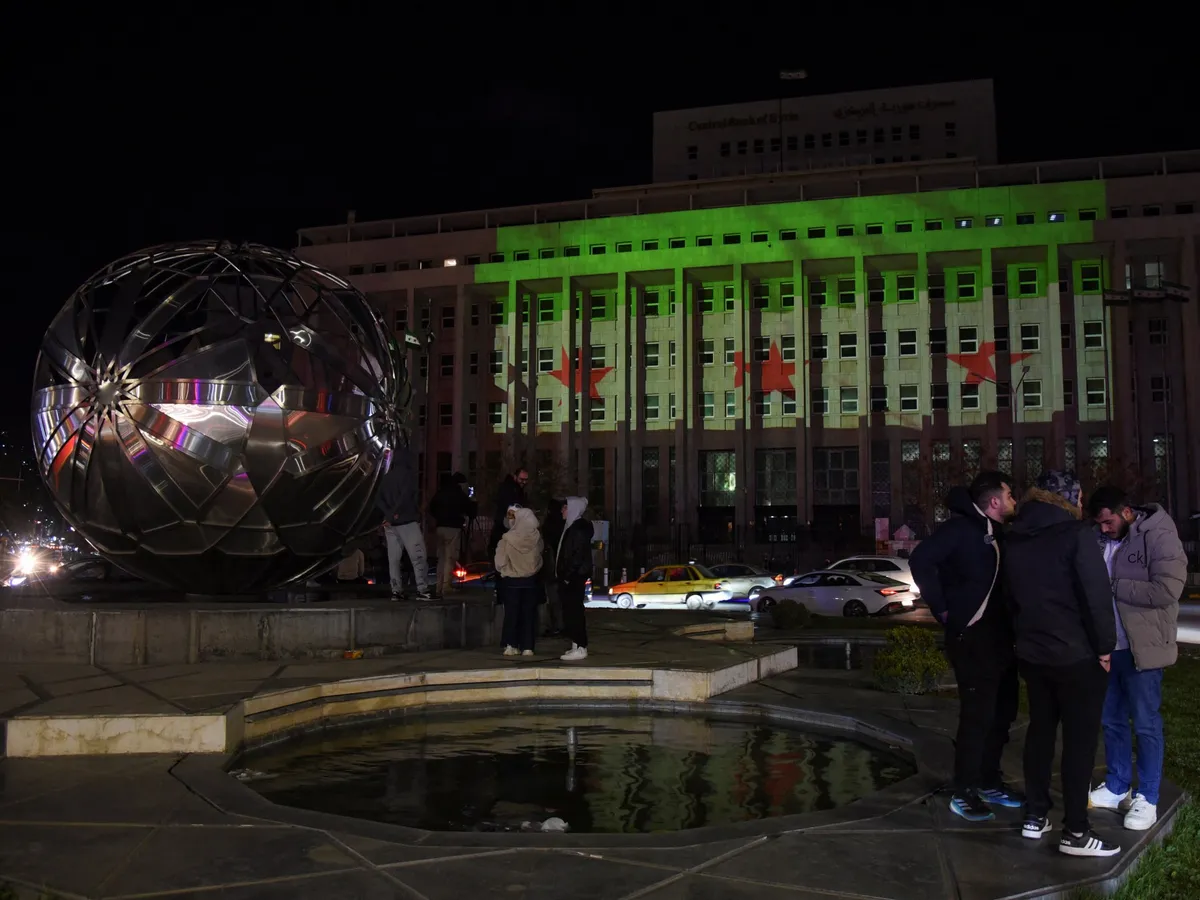
Exhausted by war, Damascus longs for unity as ceasefire sparks hope. But questions of integration and stability remain.Published On 23 Jan 2026Damascus, Syria – Damascus had breathed a sigh of relief when a ceasefire between the Syrian government and the Kurdish-led Syrian Democratic Forces (SDF) was announced on the night of January 18. Fireworks lit up the sky, car horns blared and Syrians gathered in Umayyad Square to dance in jubilation.The hope was that the conflict that flared up in the past few weeks in northern Syria was now over, and that the country had resolved one of the major issues still dividing it in the year since the overthrow of longtime leader President Bashar al-Assad.Recommended Stories list of 3 itemslist 1 of 3US envoy meets SDF commander, calls for Syria ceasefire to be upheldlist 2 of 3Day one of Syria’s ceasefire marked by violation claimslist 3 of 3Israel bombs four Syria-Lebanon border crossings; kills 2 in south Lebanonend of list“It’s a beautiful feeling, and I am sure it exists in every Syrian … we wish for all of Syria to be united,” said one Damascus resident, Saria Shammiri.Yet the celebration was short-lived.Fighting resumed the next morning as the government’s lightning push forced SDF leader Mazloum Abdi to accept less favourable terms: a withdrawal from Raqqa and Deir Az Zor, in northeastern Syria, further east towards Hasakah, a new ceasefire, and a four-day ultimatum for the SDF to fully integrate into state structures.Anger towards the SDFAs the clock ticks down on that deadline, in Damascus and other areas outside SDF control, frustration towards the Kurdish-led forces has hardened after 15 years of division.“The terrorist SDF doesn’t belong to this land … they are not Kurdish. They are occupiers,” said Maamoun Ramadan, a 75-year-old Syrian Kurd living in Damascus.For many here, the SDF is no longer seen primarily as a force that fought ISIL (ISIS) at the height of Syria’s war, but as an actor that entrenched a parallel authority backed by foreign powers, such as the United States, keeping large parts of the country beyond the central government’s reach.
SRCAl Jazeera
LANGEN
LEANCenter
WORDS349
ENT11
FRI · 2026-01-23 · 11:17 GMTBRIEF NSR-2026-0123-9976
NSR-2026-0123-9976News Report·EN·Political Strategy
Anxiety, anger, and hope in Syria’s Damascus after SDF ceasefire
In Damascus, Syria, a ceasefire between the Syrian government and the Kurdish-led Syrian Democratic Forces (SDF) was announced on January 18, sparking jubilation among residents. The ceasefire was seen as a potential solution to one of the country's major divisions since President Bashar al-Assad's overthrow in 2011.
Ayman OghannaAl JazeeraFiled 2026-01-23 · 11:17 GMTLean · CenterRead · 2 min
Al JazeeraFIG 01
Reading time
2min
Word count
349words
Sources cited
3cited
Entities identified
11entities
Quality score
100%
§ 01
Briefing Summary
AI-generatedNEWSAR · AI
In Damascus, Syria, a ceasefire between the Syrian government and the Kurdish-led Syrian Democratic Forces (SDF) was announced on January 18, sparking jubilation among residents. The ceasefire was seen as a potential solution to one of the country's major divisions since President Bashar al-Assad's overthrow in 2011. However, fighting resumed the next morning after the SDF leader accepted less favorable terms, including withdrawing from Raqqa and Deir Az Zor, and integrating into state structures within four days. Residents express frustration towards the SDF, viewing it as an occupying force backed by foreign powers. The SDF's role in fighting ISIS has shifted to being seen as a parallel authority. As the deadline approaches, anger towards the SDF grows, with some residents calling for its removal from the country.
Confidence 0.90Sources 3Claims 5Entities 11
§ 02
Article analysis
Model · rule-basedFraming
Political Strategy
Human Interest
Tone
Measured
AI-assessed
CalmNeutralAlarmist
Factuality
0.70 / 1.00
Factual
LowHigh
Sources cited
3
Well sourced
FewMany
§ 03
Key claims
5 extracted01
"The terrorist SDF doesn’t belong to this land … they are not Kurdish. They are occupiers,"
quoteMaamoun Ramadan
Confidence
1.00
02
Fighting resumed the next morning after the ceasefire announcement.
factualArticle
Confidence
1.00
03
A ceasefire between the Syrian government and the Kurdish-led Syrian Democratic Forces (SDF) was announced on January 18.
factualArticle
Confidence
1.00
04
The government's push forced SDF leader Mazloum Abdi to accept less favourable terms.
factualArticle
Confidence
0.90
05
The SDF is seen by some as an actor that entrenched a parallel authority backed by foreign powers.
factualArticle
Confidence
0.80
§ 04
Full report
2 min read · 349 words§ 05
Entities
11 identifiedKey playerOppositionContextPositiveNeutralNegative
Organizations2
§ 06
Keywords & salience
10 termssyria
1.00
ceasefire
0.90
syrian democratic forces
0.80
damascus
0.70
sdf integration
0.70
stability
0.60
unity
0.60
conflict
0.50
kurdish-led forces
0.50
political division
0.40
§ 07
Topic connections
Interactive graph Network visualization showing 51 related topics
View Full Graph Person Organization Location Event|Click node to navigate|Edge numbers = shared articles