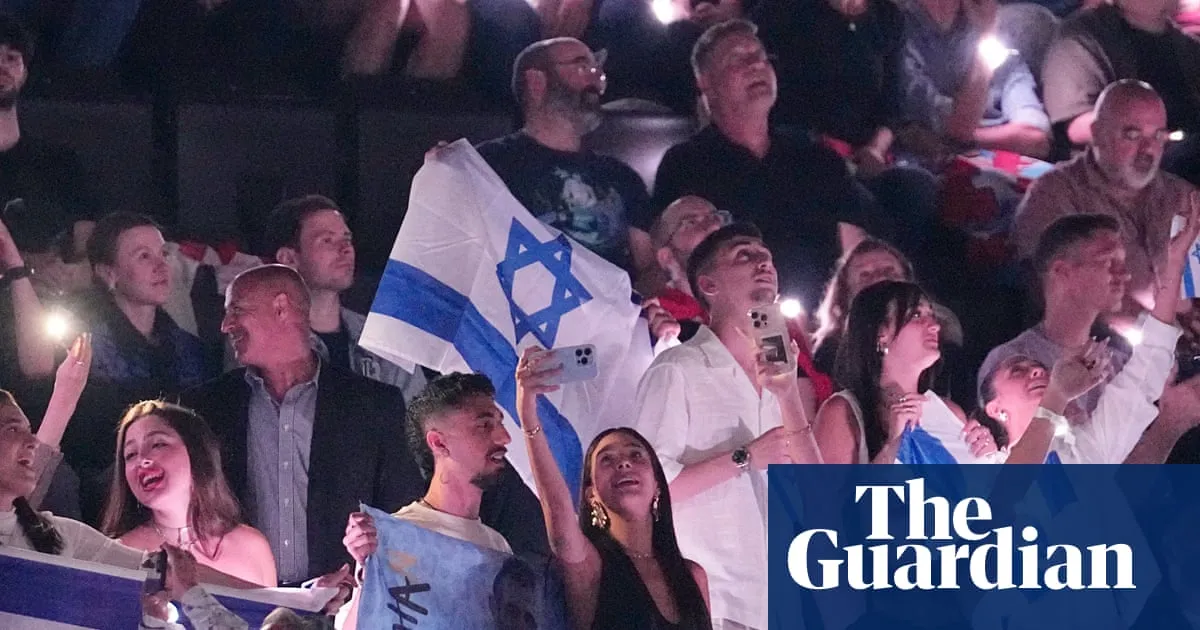
Ireland, Spain, Slovenia and the Netherlands will boycott next year’s Eurovision after Israel was given the all-clear to compete in the 2026 song contest despite calls by several participating broadcasters for its exclusion over the war in Gaza.No vote on Israel’s participation was held on Thursday at the general assembly of the European Broadcasting Union (EBU), the body that organises the competition.Instead, participating broadcasters voted only to introduce new rules designed to stop governments and third parties from disproportionately promoting songs to influence voters.“A large majority of members agreed that there was no need for a further vote on participation and that the Eurovision song contest 2026 should proceed as planned, with the additional safeguards in place,” the EBU said in a statement.In response, the Irish broadcaster RTÉ said it would not participate in the 2026 contest or broadcast the competition. “RTÉ feels that Ireland’s participation remains unconscionable given the appalling loss of lives in Gaza and the humanitarian crisis there, which continues to put the lives of so many civilians at risk,” the broadcaster said in a statement.The Spanish broadcaster RTVE also said it would not broadcast the contest or the semi-finals in Vienna next year, describing the process of decision-making as “insufficient” and engendering “distrust”.The BBC indicated it would broadcast next year’s competition, saying: “We support the collective decision made by members of the EBU. This is about enforcing the rules of the EBU and being inclusive,” it said. The German broadcaster SWR confirmed it would participate.The Spanish national broadcaster, along with seven other countries, had formally requested a secret ballot at a summit of broadcasters in Geneva on Thursday.“The EBU presidency has denied RTVE’s request for a specific vote on Israel’s participation. This decision increases RTVE’s distrust of the festival’s organisation and confirms the political pressure surrounding it,” it said in a statement.Delegates leave the headquarters of the European Broadcasting Union after the first day of a two-day general assembly on Thursday. Photograph: Fabrice Coffrini/AFP/Getty ImagesSpain’s culture minister, Ernest Urtasun, backed the boycott. He said: “You can’t whitewash Israel given the genocide in Gaza. Culture should be on the side of peace and justice. I’m proud of an RTVE that puts human rights before any economic interest.”In a statement released on Thursday afternoon, the Dutch broadcaster Avrotros said it would also withdraw from next year’s contest. “After weighing all perspectives, Avrotros concludes that, under the current circumstances, participation cannot be reconciled with the public values that are fundamental to our organisation.”The Slovenian national broadcaster, RTVSLO – the first to threaten a boycott this summer – said participation “would conflict with its values of peace, equality and respect”.At the meeting on Thursday, EBU members discussed new rules designed to stop governments and third parties from promoting songs to influence voters.Some countries had raised concerns over undue promotion methods after Israel topped the public vote at the contest in May, finishing second overall after the jury votes were taken into consideration.The proposed rule changes were seen as an olive branch to broadcasters critical of Israel, but appear to have been deemed insufficient to most of the nations who had signalled their willingness to boycott the event.skip past newsletter promotionafter newsletter promotionSixty-five per cent of delegates voted in favour of the changes to the song contest and no further discussion on participation of Israel, while 23% voted against and 10% abstained.Those in favour of the changes included broadcasters from Norway, Sweden, Finland, Denmark and Iceland, who all said they would continue to support the song contest.In a joint statement, they said they “supported” the EBU’s decision to “address critical shortcomings” in the voting system, but believed it was “important that we maintain an ongoing dialogue about how we safeguard the credibility of the EBU and the Eurovision song contest moving forward”.Israel’s president, Isaac Herzog, welcomed the decision on his country’s participation, saying Israel “deserves to be represented on every stage around the world”.“I am pleased that Israel will once again participate in the Eurovision song contest, and I hope that the competition will remain one that champions culture, music, friendship between nations, and cross-border cultural understanding,” he wrote on X.The 2026 edition of the world’s largest live music event, the 70th in its history, will be held in Vienna, after this year’s win for the Austrian singer JJ.In Germany, leading politicians had proposed that SWR withdraw in solidarity if Israel were to be excluded. ORF, the Austrian host broadcaster, had also said it wanted Israel to compete.SWR said before the meeting that Israel was entitled to compete in the contest. It said the contest, for decades, was “a competition organised by EBU broadcasters, not by governments” and “the Israeli broadcaster Kan meets all the requirements associated with participation” for 2026.Russia was banned from Eurovision after its full-scale invasion of Ukraine in 2022. Israel, which has won the contest four times since its debut in 1973, has competed for the past two years despite disputes over its participation.
SRCThe Guardian - World News
LANGEN
LEANCenter-Left
WORDS827
ENT7
THU · 2025-12-04 · 19:25 GMTBRIEF NSR-2025-1204-998
NSR-2025-1204-998News Report·EN·Political Strategy
Four countries to boycott Eurovision 2026 as Israel cleared to compete
Following the European Broadcasting Union's (EBU) decision to allow Israel to compete in the 2026 Eurovision Song Contest, Ireland, Spain, Slovenia, and the Netherlands have announced their boycott of the event. The EBU's general assembly voted to introduce new rules preventing undue influence on voters but did not hold a vote on Israel's participation.
Philip Oltermann and Lisa O’CarrollThe Guardian - World NewsFiled 2025-12-04 · 19:25 GMTLean · Center-LeftRead · 4 min
The Guardian - World NewsFIG 01
Reading time
4min
Word count
827words
Sources cited
8cited
Entities identified
7entities
Quality score
100%
§ 01
Briefing Summary
AI-generatedNEWSAR · AI
Following the European Broadcasting Union's (EBU) decision to allow Israel to compete in the 2026 Eurovision Song Contest, Ireland, Spain, Slovenia, and the Netherlands have announced their boycott of the event. The EBU's general assembly voted to introduce new rules preventing undue influence on voters but did not hold a vote on Israel's participation. Broadcasters from Ireland and Spain cited the ongoing conflict in Gaza and a lack of trust in the EBU's decision-making process as reasons for their withdrawal. While some countries like Germany will participate, Spain's culture minister supported the boycott, citing human rights concerns. The BBC indicated it would broadcast the competition, supporting the EBU's collective decision.
Confidence 0.90Sources 8Claims 5Entities 7
§ 02
Article analysis
Model · rule-basedFraming
Political Strategy
Human Rights
Tone
Measured
AI-assessed
CalmNeutralAlarmist
Factuality
0.80 / 1.00
Factual
LowHigh
Sources cited
8
Well sourced
FewMany
§ 03
Key claims
5 extracted01
You can’t whitewash Israel given the genocide in Gaza.
quoteErnest Urtasun, Spain’s culture minister
Confidence
1.00
02
The EBU presidency has denied RTVE’s request for a specific vote on Israel’s participation.
quoteRTVE
Confidence
1.00
03
RTÉ feels that Ireland’s participation remains unconscionable given the appalling loss of lives in Gaza.
quoteRTÉ
Confidence
1.00
04
No vote on Israel’s participation was held at the general assembly of the European Broadcasting Union (EBU).
factual
Confidence
1.00
05
Ireland, Spain, Slovenia and the Netherlands will boycott Eurovision 2026 after Israel was given the all-clear to compete.
factual
Confidence
1.00
§ 04
Full report
4 min read · 827 words§ 05
Entities
7 identifiedKey playerOppositionContextPositiveNeutralNegative
Organizations1
§ 06
Keywords & salience
9 termseurovision
1.00
boycott
0.90
israel
0.90
gaza
0.80
european broadcasting union
0.70
rtve
0.60
participation
0.50
broadcasters
0.50
humanitarian crisis
0.40
§ 07
Topic connections
Interactive graph Network visualization showing 51 related topics
View Full Graph Person Organization Location Event|Click node to navigate|Edge numbers = shared articles