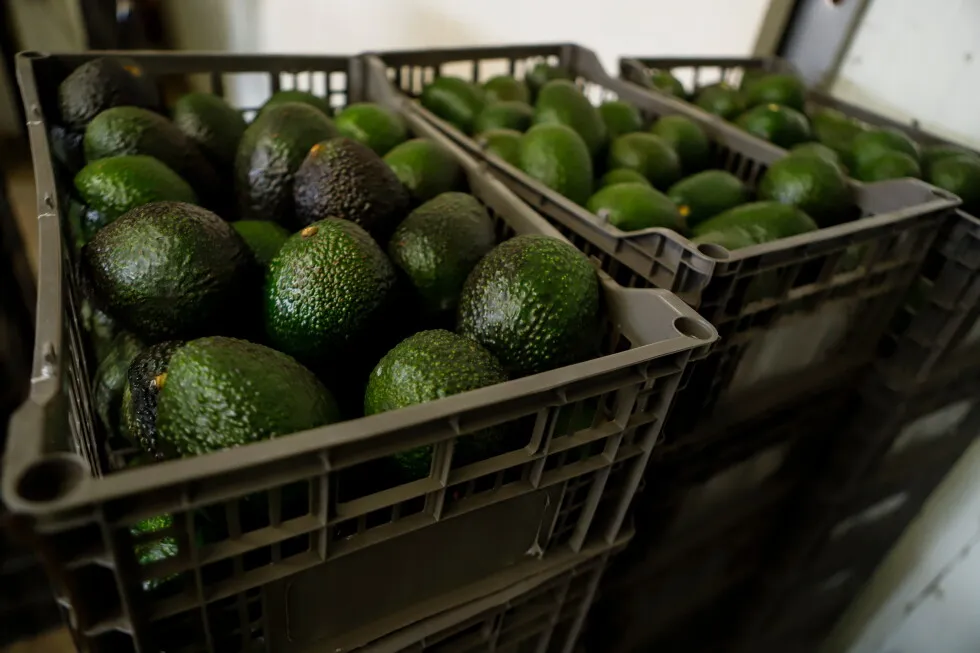
Crates of avocados wait to be processed at a packing plant in Uruapan, Mexico, Feb. 16, 2022. (AP Photo/Armando Solis, File) POR MARÍA VERZA Updated 9:48 PM MESZ, August 6, 2026 Add AP News on Google Add AP News as your preferred source to see more of our stories on Google. Share Share Facebook Copy Link copied Print Email X LinkedIn Bluesky Flipboard Pinterest Reddit Mexico CITY (AP) — Mexico began sending 1,500 more troops to the western state of Michoacan on Thursday, a day after the U.S. announced the suspension of government operations in that region — including halting avocado inspections required for their export — because of a non-specific threat to U.S. interests. Mexican President Claudia Sheinbaum announced the increase of security in avocado production areas to spur the resumption of the exports as soon as possible and to prevent any serious impact on Mexico’s economy or U.S. supply. The United States is a major consumer of Mexican avocados: More than 80% of the avocados consumed come from its southern neighbor, amounting to $3.7 billion in sales for Mexico in 2025. But before export, U.S. Department of Agriculture inspectors verify the quality on-site to prevent pests from entering the country. Without inspections, imports stop and prices in the U.S. may increase. These agricultural inspections were suspended on Wednesday for security reasons in Michoacan, the main avocado producer and an area with high cartel activity. It’s not the first time the exports have been halted — a pause in early 2022 on the eve of the Super Bowl lasted a week, though it didn’t impact game day guacamole consumption because those avocadoes had already been shipped. Here’s a look at what’s driving the shutdown: US suspends avocado inspections in Mexican state of Michoacan due to threat 5 MIN READ US designates 2 new Mexican cartels as foreign terrorist organizations 2 MIN READ EEUU suspende verificaciones de aguacates en Michoacán por motivos de seguridad 2 MIN READ Why are exports paused from time to time? Numerous cartels operate in Michoacan, which is the main state exporting avocadoes to the United States and one of just two states authorized to do so. In Michoacan, the cartels produce and traffic drugs and engage in violence and extortion across multiple industries, including the avocado industry where payments to the cartels can impact prices of the fruit. Previous pauses on exports were triggered by violence against U.S. inspectors — in 2024, two USDA employees were assaulted and temporarily held by assailants in Michoacan. This time, no specific incident was reported, and Michoacan authorities stated that the suspension was “preventive” due to recent arrests linked to extortion cases. Mexican analyst David Saucedo believes that issues with avocado exports are among the reasons the Trump administration has designated four cartels operating in Michoacán as terrorist organizations. Generally, the situation is resolved within a matter of days because export pauses hurt both Mexico and the U.S. — and the cartels. In Michoacan, the main producer, the industry employs about 200,000 people. Lengthy pauses could lead to shortages or price increases. And if the avocados aren’t moving, criminals can’t collect their extortion payments. A producer from Michoacan told the AP this week that he pays 1 peso per kilo exported in extortion fees and exports about 90 metric tons a day, which amounts to more than $5,000 in daily payments for him. He spoke on condition of anonymity out of fear for his safety. When inspections are halted, Mexican authorities typically respond with offers of increased security, as Sheinbaum announced on Thursday. She also suggested that Mexican officials could do the inspections. This option has been considered in the past, but the USDA remained in charge of the verifications, albeit with Mexican security forces accompanying them. Although the situation generally calms down quickly, producers say that doesn’t mean the extortion stops. Are exports from other states in Mexico continuing? Yes. The suspension only affects avocados grown in Michoacan, but only one other Mexican state, Jalisco, is authorized by the USDA to export to the United States since 2022, and its volume is much smaller. MARÍA VERZA Verza has focused on immigration, violence and human rights stories in Mexico and Central America for more than a decade twitter instagram mailto
SRCAssociated Press (AP)
LANGEN
LEANCenter
WORDS711
ENT10
THU · 2026-08-06 · 19:53 GMTBRIEF NSR-2026-0806-99880
NSR-2026-0806-99880News Report·EN·Economic Impact
Why Mexican avocado exports to the US have once again been stopped
The U.S. has suspended government operations, including avocado inspections, in Mexico's Michoacan state due to a non-specific threat to U.S.
Associated Press (AP)Filed 2026-08-06 · 19:53 GMTLean · CenterRead · 3 min
Associated Press (AP)FIG 01
Reading time
3min
Word count
711words
Sources cited
2cited
Entities identified
10entities
Quality score
100%
§ 01
Briefing Summary
AI-generatedNEWSAR · AI
The U.S. has suspended government operations, including avocado inspections, in Mexico's Michoacan state due to a non-specific threat to U.S. interests. This action halts avocado exports, which account for over 80% of U.S. consumption. Mexico is deploying 1,500 additional troops to Michoacan, the primary avocado-producing region, to ensure security and facilitate the resumption of exports. This is not the first time exports have been paused; previous suspensions were due to violence against U.S. inspectors, while this current halt is described as preventive amid recent arrests linked to extortion. The cartels operating in Michoacan engage in violence and extortion, impacting various industries including avocados. While export pauses generally resolve within days due to mutual economic impact, extortion payments continue for producers. Exports from Jalisco, the only other authorized Mexican state, are unaffected.
Confidence 0.90Sources 2Claims 5Entities 10
§ 02
Article analysis
Model · rule-basedFraming
Economic Impact
Conflict
Tone
Measured
AI-assessed
CalmNeutralAlarmist
Factuality
0.80 / 1.00
Factual
LowHigh
Sources cited
2
Limited
FewMany
§ 03
Key claims
5 extracted01
Previous avocado export pauses were triggered by violence against U.S. inspectors, including an assault and temporary detainment in 2024.
factualAP News
Confidence
1.00
02
Over 80% of avocados consumed in the U.S. come from Mexico, amounting to $3.7 billion in sales for Mexico in 2025.
statisticAP News
Confidence
1.00
03
Mexico sent 1,500 more troops to Michoacan to spur resumption of avocado exports.
factualMexican President Claudia Sheinbaum
Confidence
1.00
04
U.S. suspends avocado inspections in Michoacan, Mexico, due to non-specific threat to U.S. interests.
factualAP News
Confidence
1.00
05
Mexican analyst David Saucedo believes avocado export issues contribute to the U.S. designating cartels as terrorist organizations.
factualDavid Saucedo
Confidence
0.90
§ 04
Full report
3 min read · 711 words§ 05
Entities
10 identifiedKey playerOppositionContextPositiveNeutralNegative
§ 06
Keywords & salience
10 termsavocado exports
1.00
us agricultural inspections
0.90
michoacan
0.90
cartel activity
0.80
security reasons
0.70
us supply chain
0.60
mexico economy
0.60
extortion
0.50
drug trafficking
0.50
usda inspectors
0.40
§ 07
Topic connections
Interactive graph Network visualization showing 4 related topics
View Full Graph Person Organization Location Event|Click node to navigate|Edge numbers = shared articles