For example, they said new viruses with the potential to cause disease "should not be pursued".The researchers themselves took steps to maximise safety. They excluded viruses that could infect complex organisms from the training database, performed the research on phage rather than viruses that infect people and it all took place in a secure laboratory.Hie argues even existing safeguards go a long way towards "ensuring that the technology is used for good".From computers bits to atomsViruses are not alive and it would take another significant leap for AI to generate living organisms.The genetic code of the phage is around 5,400 base pairs (letters) long. The smallest genome of a living cell is around 500,000 base pairs. The human genome is three billion base pairs.Hie says "it would probably be a lot of work, but not impossible" to attempt some simple organisms and they were "definitely interested in working towards" that.Prof Marc Güell, from the synthetic biology lab at Pompeu Fabra University in Spain, said the study was a "very significant turning point" because for the "first time in history, we are beginning to design biology on a computer".
SRCBBC News - World
LANGEN
LEANCenter
WORDS188
ENT5
THU · 2026-08-06 · 18:01 GMTBRIEF NSR-2026-0806-99892
NSR-2026-0806-99892News Report·EN·Technology
Artificial Intelligence used to design brand new viruses
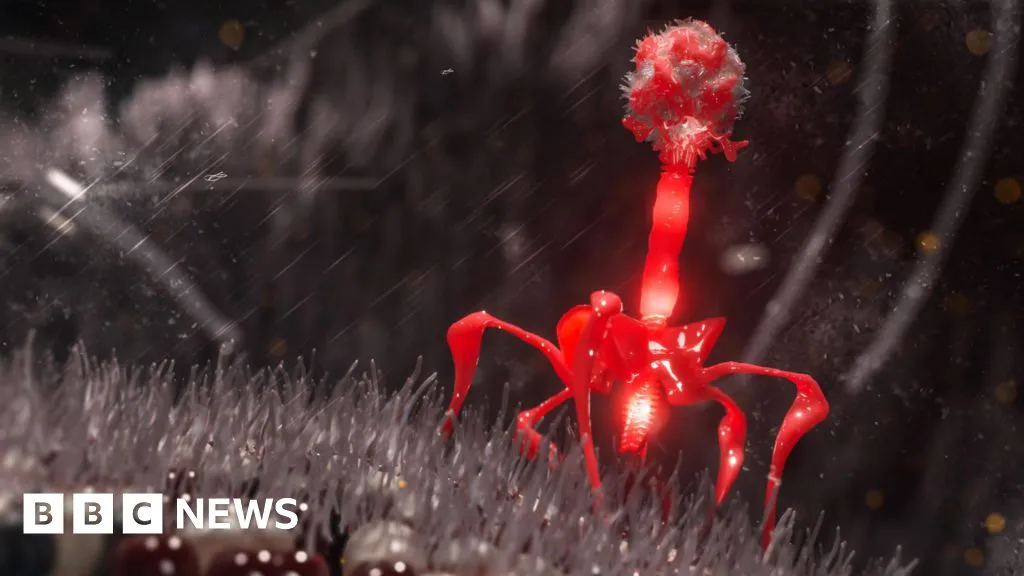
Scientists have successfully used artificial intelligence to design the genetic code for 16 novel viruses. This research, conducted in a secure laboratory using phages rather than human-infecting viruses, represents a significant advancement in designing biology via computer.
2 hours agoShareSaveAdd as preferred on GoogleJames GallagherHealth and science correspondentBBC News - WorldFiled 2026-08-06 · 18:01 GMTLean · CenterRead · 1 min
BBC News - WorldFIG 01
Reading time
1min
Word count
188words
Sources cited
2cited
Entities identified
5entities
Quality score
100%
§ 01
Briefing Summary
AI-generatedNEWSAR · AI
Scientists have successfully used artificial intelligence to design the genetic code for 16 novel viruses. This research, conducted in a secure laboratory using phages rather than human-infecting viruses, represents a significant advancement in designing biology via computer. The researchers took safety precautions, excluding viruses that infect complex organisms from the AI's training data. While the AI designed viruses, the scientists acknowledge that creating living organisms would require substantial further work. They expressed interest in exploring the design of simple organisms in the future, emphasizing that existing safeguards aim to ensure responsible use of this technology.
Confidence 0.90Sources 2Claims 5Entities 5
§ 02
Article analysis
Model · rule-basedFraming
Technology
Public Health
Tone
Mixed Tone
AI-assessed
CalmNeutralAlarmist
Factuality
0.70 / 1.00
Factual
LowHigh
Sources cited
2
Limited
FewMany
§ 03
Key claims
5 extracted01
For the first time in history, we are beginning to design biology on a computer.
quoteProf Marc Güell
Confidence
1.00
02
It would probably be a lot of work, but not impossible to attempt some simple organisms.
quoteHie
Confidence
0.90
03
The research was performed on phage rather than viruses that infect people.
factualarticle
Confidence
0.90
04
Researchers excluded viruses that could infect complex organisms from the training database.
factualarticle
Confidence
0.90
05
AI has been used to design novel viruses.
factualarticle
Confidence
0.90
§ 04
Full report
1 min read · 188 words§ 05
Entities
5 identifiedKey playerOppositionContextPositiveNeutralNegative
Organizations1
Locations1
§ 06
Keywords & salience
8 termsartificial intelligence
1.00
designing biology
0.90
new viruses
0.80
synthetic biology
0.70
computer design
0.60
genetic code
0.50
phage
0.40
secure laboratory
0.40
§ 07
Topic connections
Interactive graph Network visualization showing 51 related topics
View Full Graph Person Organization Location Event|Click node to navigate|Edge numbers = shared articles