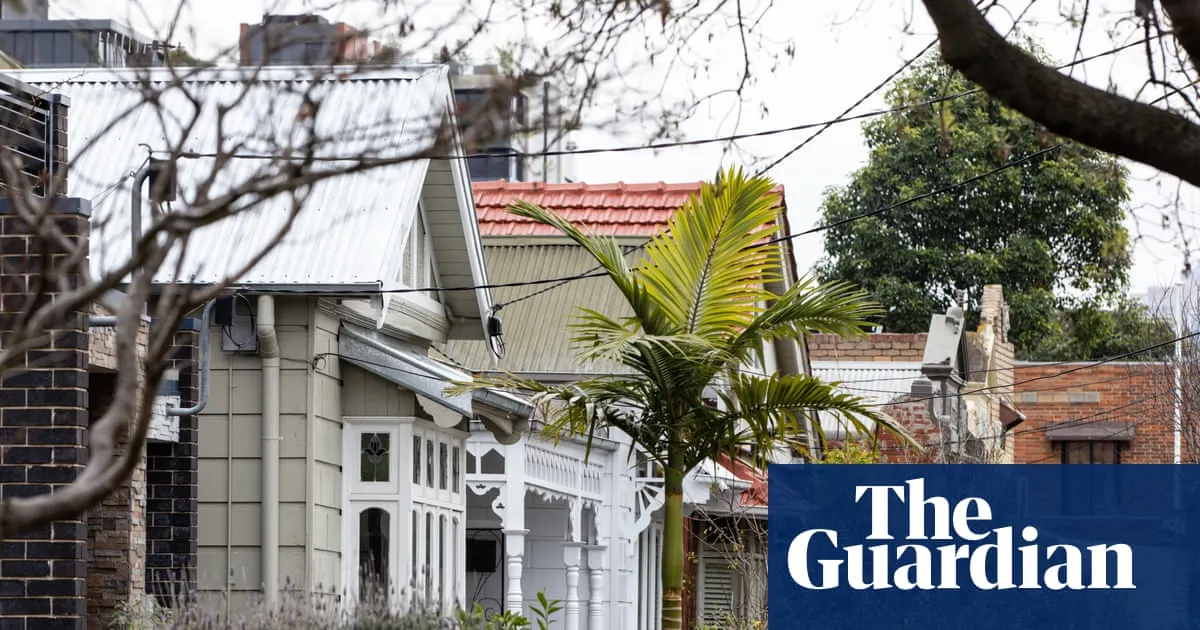
Less generous tax settings for property investors has made betting on rising home prices less attractive. Where this will settle is impossible to predict. Photograph: Diego Fedele/AAP View image in fullscreen Less generous tax settings for property investors has made betting on rising home prices less attractive. Where this will settle is impossible to predict. Photograph: Diego Fedele/AAP Analysis Can Australia make housing affordable while avoiding a major market crash? We may soon find out Patrick Commins Politicians’ fever dreams of ‘sustainable price increases’ – where values keep rising but by less than wages – could happen Follow our Australia news live blog for latest updates Get our breaking news email, free app or daily news podcast The Reserve Bank has hiked interest rates and the property market is in retreat. So far, so normal. There is a sense that this year’s fall in home prices feels different from previous episodes. The data tells another story. Over the past four decades there have been seven property market downturns of varying length and depth, according to analysis put together by Shane Oliver, AMP’s chief economist. They are often triggered by interest rate hikes, which make home loans more expensive, but they also occur during crises and policy changes. For instance, there was a short-lived fall from April 2020 during the Covid-19 pandemic lockdowns, when the average capital city home value fell by 1.5% over three months. Two years later, and at the tail end of a massive boom, there was a much steeper decline after the RBA started its rearguard battle against roaring inflation. Between April 2022 and January 2023, prices dropped by 8.1%. The largest downturn in property prices in recent memory started in September 2017, when average capital city home values declined by 8.2% – albeit over a much longer 19 months. That time it was a regulatory crackdown on investor lending in an attempt to squash some of the speculative fervour that had gripped the market. Oliver forecasts that average prices across the capital cities will keep falling until about April next year, capping a 7.8% drop from top to bottom. That would certainly make it among the steepest falls in the past four decades – UBS says the average since the early 1990s has been a 5% decline over 13 months. Oliver says this year’s home price declines started with the three straight interest rate hikes but are now more about the shift in sentiment triggered by the government’s changes to property investor taxes – a psychological twist that makes it harder to predict how things will turn out from here. “So far it looks similar to past cyclical downturns, but I think it’s early days yet,” he says. It’s also worth noting that the downturn looks very different depending on where you are in the country, as analysis from NAB shows. For example, the bank’s economists predict the peak-to-trough declines in Sydney and Melbourne will be in the order of 10%, versus 2% to 4% falls across the mid-sized capitals. And looking at performance by calendar year – instead of just the periods where prices are falling – values in Brisbane, Perth, Adelaide and Hobart are predicted to be higher in 2026. They expect prices to level out in early 2027 before beginning to grow “modestly” through the second half of next year thanks to lower interest rates and improving sentiment. “Ultimately, we see house prices continuing to be well supported by the imbalance of supply and demand,” they note. Still, change is in the air. Less generous tax settings for property investors has changed the maths and made betting on rising home prices less attractive. Where this will settle is impossible to predict. interest rates are expected to be structurally higher than they were before the pandemic. That means mainstream politicians’ fever dreams of “sustainable price increases” – where values keep rising but by less than wages – may happen. NAB forecasts pretty stagnant property price growth next year. Will that be the new normal? And if it is, surely that is a step in the right direction on the long, long road to achieving a more affordable property market without a major crash? In the meantime, expect the government to cop plenty of flak for “attacking aspiration” or “deliberately crashing Australians’ wealth”. But as Oliver says, despite all the angst and outrage, politicians of all stripes profess to want more affordable homes. Slashing immigration, turbocharging building or hiking taxes – or some combination of these – all lead to a situation where house prices would come off and be more stagnant over time. That may well be where we are heading now. It’s hardly a solution to our housing mess but it’s a start. Patrick Commins is Guardian Australia’s economics editor Explore more on these topics Housing interest rates Reserve Bank of Australia Australian economy Australian politics Tax analysis Share Reuse this content
SRCThe Guardian - World News
LANGEN
LEANCenter-Left
WORDS819
ENT12
THU · 2026-08-06 · 15:00 GMTBRIEF NSR-2026-0806-99918
NSR-2026-0806-99918Analysis·EN·Economic Impact
Can Australia make housing affordable while avoiding a major market crash? We may soon find out
Australia's property market is experiencing a downturn, with home prices falling due to Reserve Bank interest rate hikes and changes to property investor tax settings. This current decline, triggered by interest rate increases and a shift in investor sentiment, is potentially one of the steepest in four decades.
Patrick ComminsThe Guardian - World NewsFiled 2026-08-06 · 15:00 GMTLean · Center-LeftRead · 4 min
The Guardian - World NewsFIG 01
Reading time
4min
Word count
819words
Sources cited
3cited
Entities identified
12entities
Quality score
100%
§ 01
Briefing Summary
AI-generatedNEWSAR · AI
Australia's property market is experiencing a downturn, with home prices falling due to Reserve Bank interest rate hikes and changes to property investor tax settings. This current decline, triggered by interest rate increases and a shift in investor sentiment, is potentially one of the steepest in four decades. While some economists forecast prices to continue falling until early next year, others predict a leveling out and modest growth in the latter half of 2024, supported by supply and demand imbalances. The less generous tax environment for investors has made betting on rising prices less attractive, potentially leading to "sustainable price increases" where values rise slower than wages. This shift, though potentially unpopular, could be a step towards a more affordable housing market without a major crash.
Confidence 0.90Sources 3Claims 5Entities 12
§ 02
Article analysis
Model · rule-basedFraming
Economic Impact
Political Strategy
Tone
Measured
AI-assessed
CalmNeutralAlarmist
Factuality
0.70 / 1.00
Factual
LowHigh
Sources cited
3
Well sourced
FewMany
§ 03
Key claims
5 extracted01
The Reserve Bank has hiked interest rates and the property market is in retreat.
factual
Confidence
0.95
02
UBS says the average since the early 1990s has been a 5% decline over 13 months.
statisticUBS
Confidence
0.90
03
Less generous tax settings for property investors has made betting on rising home prices less attractive.
factual
Confidence
0.90
04
Shane Oliver forecasts that average prices across the capital cities will keep falling until about April next year, capping a 7.8% drop from top to bottom.
predictionShane Oliver (AMP chief economist)
Confidence
0.80
05
NAB economists predict the peak-to-trough declines in Sydney and Melbourne will be in the order of 10%, versus 2% to 4% falls.
predictionNAB economists
Confidence
0.75
§ 04
Full report
4 min read · 819 words§ 05
Entities
12 identifiedKey playerOppositionContextPositiveNeutralNegative
Locations1
§ 06
Keywords & salience
10 termshousing affordability
1.00
market crash
0.90
interest rates
0.80
property market
0.80
home prices
0.70
reserve bank
0.60
investor lending
0.50
tax settings
0.50
shane oliver
0.40
inflation
0.40
§ 07
Topic connections
Interactive graph Network visualization showing 51 related topics
View Full Graph Person Organization Location Event|Click node to navigate|Edge numbers = shared articles