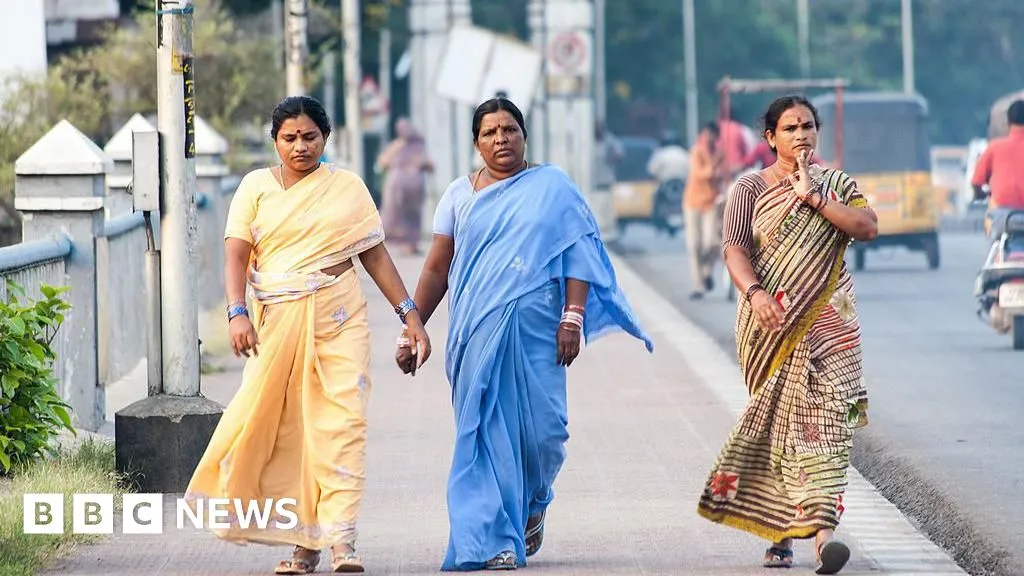
Pedestrians are also the second-largest group of road accident victims after two-wheeler riders. In Delhi and Mumbai, they account for more than half of all road deaths. According to a World Bank study, crashes already cost India an estimated 3-5% of its GDP each year through lost productivity, healthcare costs and disability.The Supreme Court case arose from one such tragedy: a five-year-old boy crushed by a truck while walking to school with his father.The judges responded with unusual eloquence. Walking, Justice PS Narasimha wrote, is "the simplest of the simple human activity, inextricably connected to life". Roads therefore impose a corresponding duty on the state to provide safe footpaths. "The fundamental right to walk on demarcated footpaths shall override the privilege of a motorised vehicle," he declared.The judgment challenges decades of Indian urban planning, where progress has often been measured in kilometres of expressways, flyovers and elevated corridors. Streets were engineered to move vehicles as quickly as possible, while the one road user every citizen inevitably becomes - the pedestrian - largely disappeared from planners' imagination."People know about the latest cars, but walking has become invisible," says Rishi Aggarwal, who has spent more than a decade trying to change that mindset in Mumbai.Through city walks and public talks, his advocacy group, Walking Project, encourages residents to notice what they have stopped seeing: broken pavements, blocked crossings and unsafe junctions - and compare them with the standards pedestrians are entitled to expect. "When people become apathetic, they stop observing the street," he says.NurPhoto via Getty ImagesZebra crossings - like this one in Kolkata - are treated as little more than road markings In a city where an estimated 15 million walking trips are made every day, Aggarwal argues, it is not just footpaths that have disappeared from view, but also the millions of people who depend on them.
SRCBBC News - World
LANGEN
LEANCenter
WORDS307
ENT12
THU · 2026-08-06 · 22:39 GMTBRIEF NSR-2026-0807-99935
NSR-2026-0807-99935News Report·EN·Human Rights
India is a nation of walkers - but its cities forgot them
India's Supreme Court has highlighted the critical issue of unsafe footpaths and the neglect of pedestrians in Indian cities. Pedestrians are the second-largest group of road accident victims, accounting for over half of road deaths in Delhi and Mumbai.
1 hour agoShareSaveAdd as preferred on GoogleSoutik BiswasIndia correspondentBBC News - WorldFiled 2026-08-06 · 22:39 GMTLean · CenterRead · 2 min
BBC News - WorldFIG 01
Reading time
2min
Word count
307words
Sources cited
2cited
Entities identified
12entities
Quality score
100%
§ 01
Briefing Summary
AI-generatedNEWSAR · AI
India's Supreme Court has highlighted the critical issue of unsafe footpaths and the neglect of pedestrians in Indian cities. Pedestrians are the second-largest group of road accident victims, accounting for over half of road deaths in Delhi and Mumbai. The court's ruling, stemming from a tragic accident involving a child, emphasizes the state's duty to provide safe walking infrastructure, stating the right to walk on footpaths overrides the privilege of motorized vehicles. This judgment challenges decades of urban planning that prioritized vehicle speed over pedestrian safety, leading to the disappearance of safe walking spaces and the invisibility of pedestrians in planners' considerations. Advocacy groups are working to raise awareness about the poor state of footpaths and the needs of the millions who rely on them for daily travel.
Confidence 0.90Sources 2Claims 5Entities 12
§ 02
Article analysis
Model · rule-basedFraming
Human Rights
Legal & Judicial
Tone
Measured
AI-assessed
CalmNeutralAlarmist
Factuality
0.70 / 1.00
Factual
LowHigh
Sources cited
2
Limited
FewMany
§ 03
Key claims
5 extracted01
The fundamental right to walk on demarcated footpaths shall override the privilege of a motorised vehicle.
quoteJustice PS Narasimha
Confidence
1.00
02
Road crashes cost India an estimated 3-5% of its GDP each year.
statisticWorld Bank study
Confidence
0.90
03
In Delhi and Mumbai, pedestrians account for more than half of all road deaths.
statistic
Confidence
0.90
04
Pedestrians are the second-largest group of road accident victims after two-wheeler riders in India.
statistic
Confidence
0.90
05
Indian urban planning has historically prioritized vehicle movement over pedestrian safety.
factual
Confidence
0.80
§ 04
Full report
2 min read · 307 words§ 05
Entities
12 identifiedKey playerOppositionContextPositiveNeutralNegative
Organizations3
§ 06
Keywords & salience
8 termspedestrian safety
1.00
urban planning
0.90
road accidents
0.80
right to walk
0.70
supreme court
0.60
vehicle infrastructure
0.50
world bank
0.40
advocacy group
0.40
§ 07
Topic connections
Interactive graph Network visualization showing 51 related topics
View Full Graph Person Organization Location Event|Click node to navigate|Edge numbers = shared articles