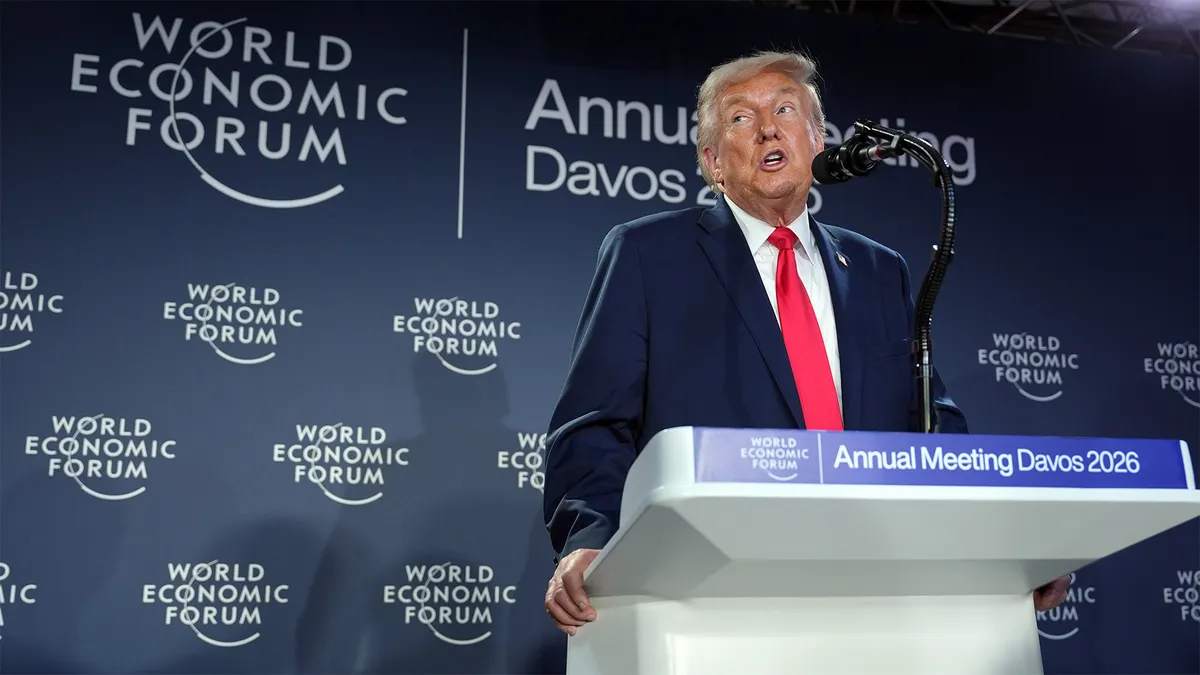
Counting the CostFor decades, the World Economic Forum in Davos was a symbol of global cooperation. Today, its relevance is questioned.The annual pilgrimage of the world’s political and corporate elite to the World Economic Forum in Davos has come at a critical point. Geopolitical tensions are at fever pitch.The US is led by a president openly sceptical of multi-lateral cooperation and open trade.Donald Trump is using tariffs as a tool for economic and political leverage, threatening to dismantle the global order.Critics say the summit is long on talk and short on action.But supporters say keeping rivals talking may help contain some of the world’s biggest problems.And who pays to rebuild Gaza?Plus, Iran’s economic crisis.Published On 23 Jan 2026
SRCAl Jazeera
LANGEN
LEANCenter
WORDS118
ENT6
FRI · 2026-01-23 · 14:30 GMTBRIEF NSR-2026-0123-10001
NSR-2026-0123-10001News Report·EN·Political Strategy
Does the World Economic Forum still matter in a fractured global economy?
The World Economic Forum (WEF) in Davos, an annual gathering of global political and corporate leaders, is facing questions about its relevance in a fractured global economy. Occurring in January 2026, the summit takes place amidst heightened geopolitical tensions and a US president who is skeptical of multilateral cooperation and open trade.
Al JazeeraFiled 2026-01-23 · 14:30 GMTLean · CenterRead · 1 min
Al JazeeraFIG 01
Reading time
1min
Word count
118words
Sources cited
0cited
Entities identified
6entities
Quality score
100%
§ 01
Briefing Summary
AI-generatedNEWSAR · AI
The World Economic Forum (WEF) in Davos, an annual gathering of global political and corporate leaders, is facing questions about its relevance in a fractured global economy. Occurring in January 2026, the summit takes place amidst heightened geopolitical tensions and a US president who is skeptical of multilateral cooperation and open trade. Critics argue that the WEF is long on talk but short on action, while supporters maintain that it provides a crucial platform for dialogue that can help manage global challenges. The forum's role is being debated as the world grapples with issues such as rebuilding Gaza and Iran's economic crisis. The WEF's ability to foster cooperation is being tested by increasing global divisions.
Confidence 0.85Claims 5Entities 6
§ 02
Article analysis
Model · rule-basedFraming
Political Strategy
Economic Impact
Tone
Measured
AI-assessed
CalmNeutralAlarmist
Factuality
0.60 / 1.00
Mixed
LowHigh
Sources cited
0
No named sources
FewMany
§ 03
Key claims
5 extracted01
Critics say the summit is long on talk and short on action.
quoteCritics
Confidence
0.90
02
Donald Trump is using tariffs as a tool for economic and political leverage.
factualArticle's own claim
Confidence
0.90
03
Supporters say keeping rivals talking may help contain some of the world’s biggest problems.
quoteSupporters
Confidence
0.80
04
The World Economic Forum in Davos was a symbol of global cooperation.
factualArticle's own claim
Confidence
0.80
05
Geopolitical tensions are at fever pitch.
factualArticle's own claim
Confidence
0.70
§ 04
Full report
1 min read · 118 words§ 05
Entities
6 identifiedKey playerOppositionContextPositiveNeutralNegative
Organizations1
§ 06
Keywords & salience
9 termsworld economic forum
1.00
global cooperation
0.80
davos
0.70
geopolitical tensions
0.60
multi-lateral cooperation
0.60
open trade
0.50
global order
0.50
tariffs
0.40
economic crisis
0.40
§ 07
Topic connections
Interactive graph Network visualization showing 11 related topics
View Full Graph Person Organization Location Event|Click node to navigate|Edge numbers = shared articles