The UK and France are not seeking confrontation with Iran in the US-Israeli war largely rejected by Europe, say analysts.People gather on a beach, with a vessel in the Strait of Hormuz in the background, near Bandar Abbas, Iran, on May 31, 2026 [Amirhosein Khorgooi/ISNA/WANA via Reuters]Published On 7 Aug 2026The United States has spent months trying to forge an international naval coalition to escort vessels through the embattled Strait of Hormuz.But Washington’s European allies, including the United Kingdom and France, who previously agreed to head such a mission in the event of a sustainable truce, appear reluctant to move forward, even as ongoing disruption in the vital waterway strains the global economy.Recommended Stories list of 4 itemslist 1 of 4Why is Pakistan PM Shehbaz Sharif visiting Saudi Arabia amid Gulf tensions?list 2 of 4Hormuz deal ‘close’: What’s the latest on each side’s positions?list 3 of 4Will the US-Iran war and Hormuz deadlock last for months?list 4 of 4Iran tightens security grip at home as war conditions with US lingerend of listAnalysts say the stalled coalition effort reflects deep caution among European governments about becoming entangled in an unpredictable conflict they neither initiated nor supported, particularly without clear backing from Gulf partners.“Neither UK nor France has much appetite for being drawn into a confrontation with Iran on behalf of others, particularly if there is no clear regional demand for it,” HA Hellyer, a senior fellow at the Royal United Services Institute and Center for American Progress, told Al Jazeera.UK, US ‘aligned’ on HormuzThe US first raised the idea of an international maritime coalition to secure shipping in the waterway in March, as President Donald Trump called on allies, as well as China, to send warships as part of the effort.Most countries initially declined or were noncommittal, though the UK and France left the door open to participating.US officials continued to promote the idea of a maritime coalition as its war against Iran dragged on, as Trump lambasted US allies for what he deemed insufficient support for Washington in the conflict.In mid-April, then-British Prime Minister Keir Starmer announced plans for the UK and France to lead an international mission to secure shipping in the strait, stressing it would be “strictly peaceful and defensive”.The following month, the UK Ministry of Defence promised to send drones, fighter jets and a warship as part of the mission, which it said had the support of dozens of other countries and would kick off “when conditions allow”.But months later, the effort appears to be stalled, despite British Defence Secretary Wes Streeting saying his country is “absolutely aligned” with the US on “securing maritime freedom and free commercial shipping in the Strait of Hormuz”.A European diplomatic source told Al Jazeera that following a France-UK initiative for a multinational mission for the “freedom of navigation” in the Strait of Hormuz, a new meeting gathering more than 30 states “at a technical level” took place on Thursday.A UK Defence Ministry spokesperson told Al Jazeera that Streeting expects further talks on “planning and coordination for a future multinational mission”.“Operational activity remains contingent on conditions on the ground and a durable political agreement,” they said, adding that the UK remains “committed” to securing commercial shipping across the Gulf region.‘Deliberately narrow’ missionHellyer said the Hormuz naval coalition has been delayed “because the politics have never matched the rhetoric”.“The UK and France may support freedom of navigation in principle, but they are highly unlikely to lead an operation that key Gulf partners do not actively support,” he said.Neither country wants to be seen as “imposing a security architecture that regional governments regard as unnecessarily escalatory,” he said.Amjed Rasheed, lecturer in defence studies at King’s College London, said any European involvement would likely be limited, conditional and purely defensive.Already dealing with a closer security threat on its eastern front with Russia, Europe wants “de-escalation and stability” in the Gulf, Rasheed told Al Jazeera.“The decision to attack Iran was made in Washington and Tel Aviv,” Rasheed added. “The two did not consult European powers about it. European powers were/are not ready to become part of a war they did not participate in [the architecture of]”.Hellyer said he believes a “defensive maritime presence” in Hormuz with European involvement is still possible, though he doubts “a more muscular coalition” will take shape.“I would expect any European mission to remain deliberately narrow, focused on reassurance and commercial shipping, rather than evolving into a broader security operation,” he said.Hormuz, Iran’s ‘strategic asset’The status of the Strait of Hormuz – through which about one-fifth of global oil and liquefied natural gas usually flows – has become a major point of contention between the US and Iran in negotiations to end the conflict.The US insists that Iran does not control the strait, through which there should be free, unfettered passage as per international law, while Iran has sought to shore up control over the waterway and direct vessels to pass through routes it approves.On Wednesday, Iran’s Deputy Foreign Minister Kazem Gharibabadi said an understanding with Oman over a new protocol for managing traffic in Hormuz was “on the verge of being finalised”.Under the arrangement, which would last two to four months, Gharibabadi said large parts of a new designated shipping route would go through Iran’s territorial waters and others would pass through Oman’s waters, while current temporary routes would be closed.Sina Azodi, assistant professor of Middle East politics at George Washington University, told Al Jazeera he doubts the status of the Strait of Hormuz will ever return to how it was before the US-Israeli war on Iran began.“The Iranians have learned that by blockading the Strait of Hormuz, they can make the global economy scream,” he told Al Jazeera. “This is a strategic asset, and I don’t think they will let go of it easily.”
SRCAl Jazeera
LANGEN
LEANCenter
WORDS964
ENT12
FRI · 2026-08-07 · 10:00 GMTBRIEF NSR-2026-0807-100073
NSR-2026-0807-100073News Report·EN·Diplomatic
‘De-escalation’: Europe hesitates as US pushes for Hormuz naval mission
European allies, including the UK and France, are hesitant to join a US-led naval mission in the Strait of Hormuz, despite US efforts to form a coalition. Analysts suggest this reluctance stems from a desire to avoid confrontation with Iran in a conflict Europe largely rejected and did not initiate.
Stephen QuillenAl JazeeraFiled 2026-08-07 · 10:00 GMTLean · CenterRead · 4 min
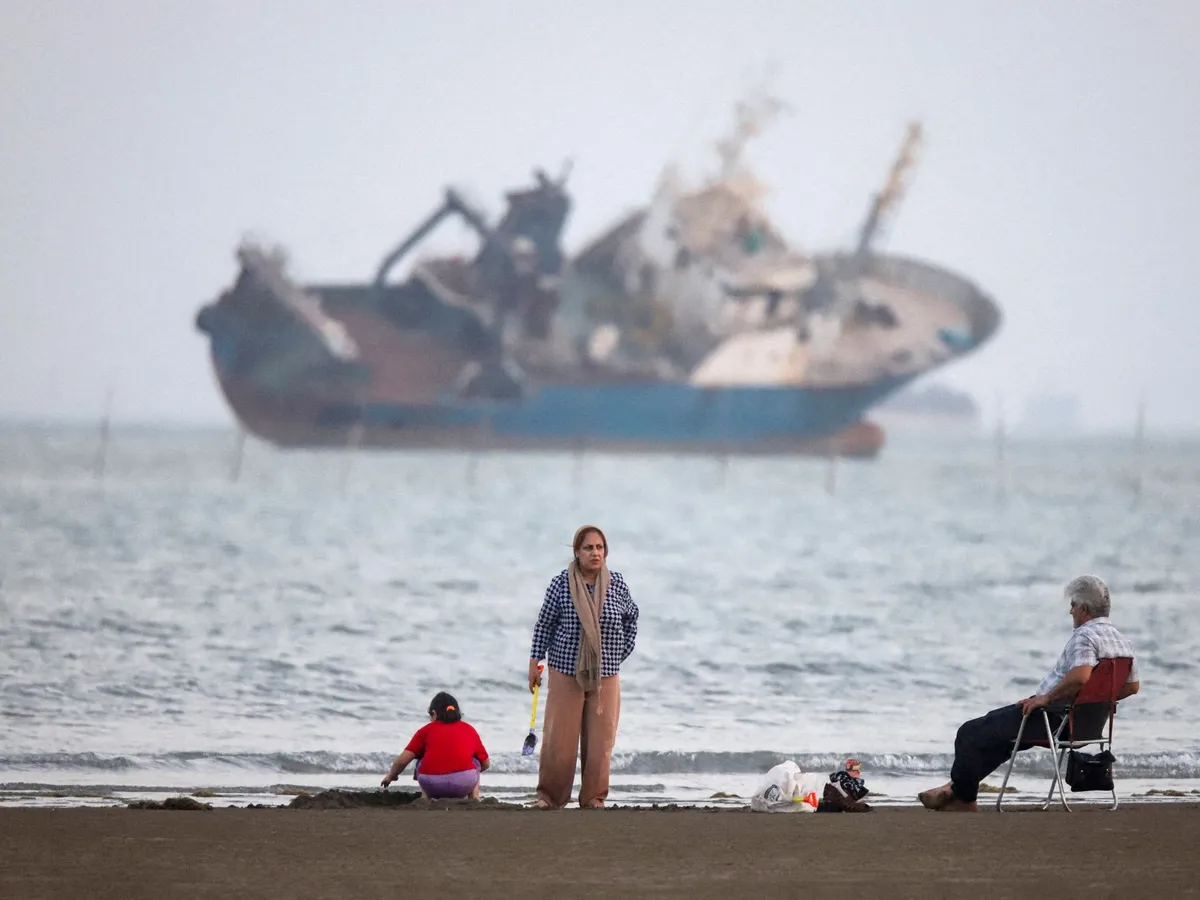
Al JazeeraFIG 01
Reading time
4min
Word count
964words
Sources cited
3cited
Entities identified
12entities
Quality score
100%
§ 01
Briefing Summary
AI-generatedNEWSAR · AI
European allies, including the UK and France, are hesitant to join a US-led naval mission in the Strait of Hormuz, despite US efforts to form a coalition. Analysts suggest this reluctance stems from a desire to avoid confrontation with Iran in a conflict Europe largely rejected and did not initiate. While the UK and France previously indicated potential participation in a defensive mission, they are now emphasizing de-escalation and stability. Their involvement is contingent on clear regional support and a durable political agreement, with any mission likely to be narrowly focused on protecting commercial shipping rather than a broader security operation. The stalled coalition reflects European caution about entanglement in an unpredictable conflict.
Confidence 0.90Sources 3Claims 5Entities 12
§ 02
Article analysis
Model · rule-basedFraming
Diplomatic
Political Strategy
Tone
Measured
AI-assessed
CalmNeutralAlarmist
Factuality
0.70 / 1.00
Factual
LowHigh
Sources cited
3
Well sourced
FewMany
§ 03
Key claims
5 extracted01
British Defence Secretary Wes Streeting stated the UK is 'absolutely aligned' with the US on securing maritime freedom in the Strait of Hormuz.
quoteWes Streeting
Confidence
1.00
02
Analysts suggest European caution stems from not wanting to be drawn into a conflict they did not initiate or support.
quoteHA Hellyer
Confidence
1.00
03
The United States has been trying to form an international naval coalition to escort ships through the Strait of Hormuz for months.
factual
Confidence
1.00
04
The UK and France had previously agreed to lead a mission under a sustainable truce, but the effort appears stalled.
factual
Confidence
0.90
05
European allies, including the UK and France, are reluctant to join the US-led naval mission in the Strait of Hormuz.
factual
Confidence
0.90
§ 04
Full report
4 min read · 964 words§ 05
Entities
12 identifiedKey playerOppositionContextPositiveNeutralNegative
People3
Organizations2
Locations6
§ 06
Keywords & salience
9 termsstrait of hormuz
1.00
naval mission
0.90
europe hesitation
0.80
us-iran war
0.70
maritime coalition
0.70
de-escalation
0.60
uk and france
0.60
global economy
0.50
regional demand
0.40
§ 07
Topic connections
Interactive graph Network visualization showing 51 related topics
View Full Graph Person Organization Location Event|Click node to navigate|Edge numbers = shared articles