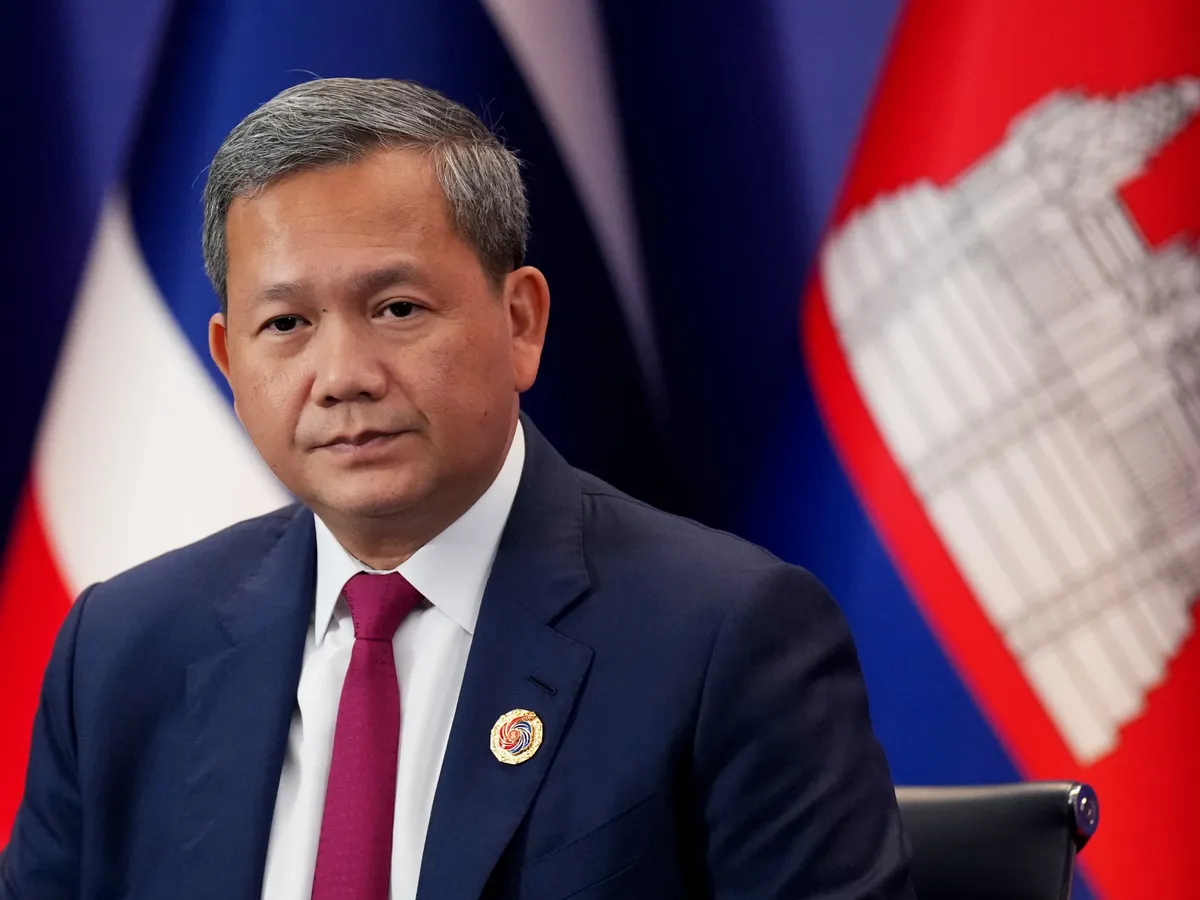
The prime minister has made repression less visible and more sophisticated, strengthening the authoritarian system he inherited.Former member of parliament, Cambodia, and vice president of the Cambodia-national-rescue-party" class="entity-link entity-organization" data-entity-id="133748" data-entity-type="organization">Cambodia National Rescue Party.Published On 7 Aug 2026When Hun Sen handed Cambodia’s premiership to his eldest son, Hun Manet, in August 2023, many diplomats and regional observers saw the succession as an opportunity for change. The carefully stage-managed handover fuelled hopes that a new generation of leaders, headed by a prime minister educated at West Point, New York University and the University of Bristol, might reopen Cambodia’s political space after decades of authoritarian rule.Writing at the time, I argued that this optimism was misplaced, not because the leadership was changing, but because the political system was not. Western policymakers were eager to believe that a dynastic transfer might create room to recalibrate relations with Phnom Penh. But they failed to recognise how deeply the Cambodian People’s Party’s survival depended on preserving the very institutions that had forced opposition figures such as me into exile. Hun Sen’s sweeping crackdowns on the opposition, independent media and civil society were not aberrations, but expressions of a governing model he had built and the ruling elite continued to sustain: one based on patronage, coercion and the elimination of political competition. As long as that model remained intact, there was little reason to expect a new leader to rule any differently.Three years on, this assessment has been borne out. Hun Manet has not governed as the liberal reformer many hoped he would. Instead, he has preserved the foundations of his father’s rule while making its repressive machinery less visible and more institutionally sophisticated. Although violence has become less conspicuous, the regime increasingly relies on elite patronage, legal repression, digital surveillance and tighter control over communications. The result is a quieter but arguably more resilient authoritarian state.
SRCAl Jazeera
LANGEN
LEANCenter
WORDS307
ENT10
FRI · 2026-08-07 · 16:47 GMTBRIEF NSR-2026-0807-100174
NSR-2026-0807-100174Analysis·EN·Political Strategy
Hun Manet is refining Cambodia’s authoritarian model
Hun Manet, who succeeded his father Hun Sen as Cambodia's prime minister in August 2023, has strengthened the country's authoritarian system. Despite hopes for political change following the dynastic transfer, Hun Manet has maintained the governing model based on patronage, coercion, and elimination of political competition.
Mu SochuaAl JazeeraFiled 2026-08-07 · 16:47 GMTLean · CenterRead · 2 min
Al JazeeraFIG 01
Reading time
2min
Word count
307words
Sources cited
0cited
Entities identified
10entities
Quality score
100%
§ 01
Briefing Summary
AI-generatedNEWSAR · AI
Hun Manet, who succeeded his father Hun Sen as Cambodia's prime minister in August 2023, has strengthened the country's authoritarian system. Despite hopes for political change following the dynastic transfer, Hun Manet has maintained the governing model based on patronage, coercion, and elimination of political competition. Instead of overt crackdowns, the regime now employs less visible but more sophisticated methods of repression. These include increased reliance on elite patronage, legal repression, digital surveillance, and tighter control over communications, resulting in a more resilient authoritarian state. This approach has preserved the foundations of his father's rule, rather than opening up political space.
Confidence 0.90Claims 5Entities 10
§ 02
Article analysis
Model · rule-basedFraming
Political Strategy
Human Rights
Tone
Measured
AI-assessed
CalmNeutralAlarmist
Factuality
0.40 / 1.00
Mixed
LowHigh
Sources cited
0
No named sources
FewMany
§ 03
Key claims
5 extracted01
The Cambodian People’s Party’s survival depends on preserving the institutions that forced opposition figures into exile.
factual
Confidence
0.90
02
Hun Sen’s crackdowns on opposition, media, and civil society were expressions of a governing model based on patronage, coercion, and elimination of political competition.
factual
Confidence
0.85
03
The regime increasingly relies on elite patronage, legal repression, digital surveillance, and tighter control over communications.
factual
Confidence
0.80
04
Hun Manet has preserved the foundations of his father’s rule while making its repressive machinery less visible and more institutionally sophisticated.
factual
Confidence
0.80
05
Hun Manet has not governed as the liberal reformer many hoped he would.
factual
Confidence
0.70
§ 04
Full report
2 min read · 307 words§ 05
Entities
10 identifiedKey playerOppositionContextPositiveNeutralNegative
Organizations5
Locations1
§ 06
Keywords & salience
10 termsauthoritarian model
1.00
hun manet
0.90
political system
0.80
cambodian people's party
0.70
legal repression
0.60
digital surveillance
0.60
opposition figures
0.50
elite patronage
0.50
dynastic transfer
0.40
independent media
0.40
§ 07
Topic connections
Interactive graph Network visualization showing 4 related topics
View Full Graph Person Organization Location Event|Click node to navigate|Edge numbers = shared articles