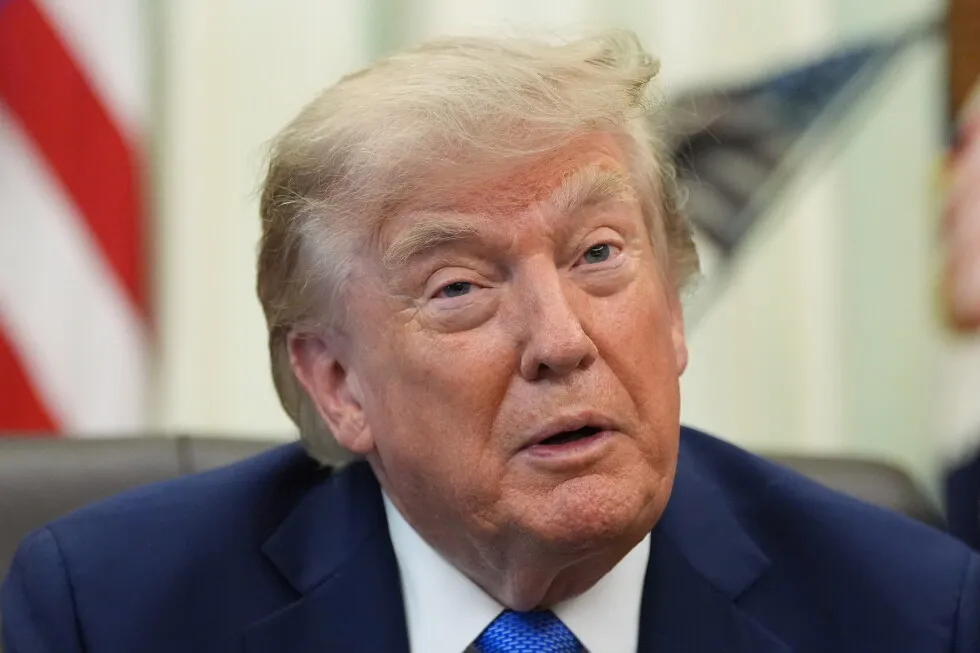
What to know about Trump’s new attempt to limit birthright citizenship 1 of 2 | President Donald Trump speaks before signing executive orders in the Oval Office of the White House, Thursday, Aug. 6, 2026, in Washington. (AP Photo/Alex Brandon) 2 of 2 | President Donald Trump listens before signing executive orders in the Oval Office of the White House, Thursday, Aug. 6, 2026, in Washington, as Commerce Secretary Howard Lutnick watches. (AP Photo/Alex Brandon) By Valerie Gonzalez Updated 6:01 AM MESZ, August 8, 2026 Leer en español Add AP News on Google Add AP News as your preferred source to see more of our stories on Google. Share Share Facebook Copy Link copied Print Email X LinkedIn Bluesky Flipboard Pinterest Reddit The Trump administration is once again trying to limit who can become an American, with a pair of executive orders issued this week that attempt to place restrictions on birthright citizenship and on foreigners who give birth in the U.S. A Supreme Court decision in June struck down a previous attempt at restricting birthright citizenship, but Thursday’s orders were made with “adjustments” keeping the decision in mind, President Donald Trump said. Still, some of the restrictions announced by the White House are expected to face legal challenges. The 14th Amendment, which makes a citizen of anyone born in the country, and two subsequent Supreme Court decisions interpreting it provide guidelines that already exclude certain births from receiving the citizenship benefit. Trump’s new attempt to restrict birthright citizenship even after the Supreme Court loss highlights the administration’s drive to limit who can become an American. birthright citizenship is guaranteed under current law for anyone who is born on U.S. soil, with a few exceptions. The executive order released Thursday was narrower in scope than the previous one shot down by the Supreme Court and appeared to focus on restricting automatic citizenship to specific categories of people, including children born to adults with connections to foreign embassies or organizations as well as anyone considered an “alien enemy” of the United States. U.S. immigration law says babies born to a “foreign diplomatic officer accredited to the United States” are not entitled to birthright citizenship under the Constitution, including ambassadors, ministers, chargés d’affaires, counselors, secretaries and attachés of embassies and legations, and members of the Delegation of the Commission of the European Communities. Trump again tries to restrict birthright citizenship after Supreme Court ruling 5 MIN READ Liberal Justice Elena Kagan says the Supreme Court is not a rubber stamp for Trump 3 MIN READ 26 A $150M contract for migrant kids’ lawyers goes to a Trump-linked Texas firm, raising concerns 3 MIN READ 26 Trump’s orders Thursday would sharply expand those exemptions. One order disqualifies babies who are products of “birth tourism.” The other applies to children of anyone working in a foreign embassy or representing a foreign government and employees of the United Nations or other international organizations. Children of parents tied to groups that are deemed terrorist organizations, like Antifa or Tren de Aragua, are also excluded. “How is the federal government going to decide that a child is born to a member of a designated terrorist organization?” said César Cuauhtémoc García Hernández, a law professor at Ohio State University. “These are not organizations that are sharing the membership lists if they even have them.” Citizenship through surrogacy has become a concern for Republican members of Congress, some of whom proposed a bill this year that would restrict citizenship for children of noncitizen parents born to surrogates in the U.S. García Hernández said he believes the new executive order addressing surrogacy could raise new legal questions. “Neither the 14th Amendment nor any of the Supreme Court’s decisions about how to interpret the 14th Amendment mentions or hints at surrogates,” the law professor said. Trump’s executive order defines birth tourism as someone who enters the United States on a “nonimmigrant visa for the purpose of giving birth on American soil.” Birth tourism is already considered fraud and grounds to restrict a visa if someone seeks one specifically to come to the U.S. and obtain citizenship for a child. Advocates said the executive order would give immigration officers discretion to deny entry to pregnant women suspected of wanting to give birth in the U.S. without providing clearly defined guidelines. The president did not offer data indicating the scope of the problem, but said Thursday: “I’ll tell you right now, hundreds of thousands, OK? Hundreds of thousands.” Although there’s no official estimate of how many births can be considered “birth tourism” cases, experts say Trump’s approximation is exaggerated. “The hundreds of thousands just seems like an overestimate based on the sort of limited data that we have available,” said Colleen Putzel-Kavanaugh, an associate policy analyst at the Migration Policy Institute. Data from the Centers for Disease Control and Prevention shows that in 2024 nearly 9,600 children were born to foreign mothers with an official address outside the country. Another estimate from the Center for Immigration Studies, a think tank that advocates for lower immigration, estimated that 20,000 to 26,000 birth tourists come to the U.S. each year. The order provides a sweeping indictment of “birth tourism operators” with no evidence of how widespread they are or how or why anyone accused of using their services would be exempt from constitutional protection. Those efforts are not new either. Previous administrations have also sought to prosecute so-called “birth tourism” schemes that helped women hide their pregnancies while traveling to the United States to give birth. “Birth tourism operators use deceptive s and inducements to entice foreign nationals to travel to the United States for the purpose of giving birth on American soil,” the order says. “They promise citizenship; access to public benefits; and short-term stays in specialized facilities, hotels, or rentals, but often fail to deliver on these promises. These operators coach their clients to misrepresent the purpose and duration of their travel to consular and border officials to obtain visas authorizing entry into the United States.” The Republican Party has embraced the mission. In late July, the office of the attorney general in Texas announced a “sweeping investigation” into potentially unlawful birth tourism schemes after some south Texas hospitals advertised birthing services in Mexico. Asked Thursday how his orders would survive Supreme Court scrutiny when his last attempt failed, Trump deferred to White House staff secretary Will Scharf, who, like his boss, sounded alarms about “birth tourism.” He emphasized consular discretion to grant visas. “What we’re doing is taking legally validated means that are clearly within our disposal and targeting them to this birth tourism industry. There’s absolutely nothing here that runs afoul of any of the Supreme Court rulings on the subject,” Sharf said. Advocates against the proposed changes said they believe the constitutional amendment and Supreme Court decisions will again stop the administration’s efforts to restrict birthright citizenship. “The bottom line is that the Supreme Court already considered the Trump administration’s plea to rewrite the Constitution and rejected it,” said Cody Wofsy, deputy director at the American Civil Liberties Union Immigrants’ Rights Project. “birthright citizenship is guaranteed by the 14th Amendment, and no amount of executive orders is going to change that.” Associated Press writer Melissa Goldin contributed.
SRCAssociated Press (AP)
LANGEN
LEANCenter
WORDS1 207
ENT10
SAT · 2026-08-08 · 04:23 GMTBRIEF NSR-2026-0808-100295
NSR-2026-0808-100295News Report·EN·Legal & Judicial
What to know about Trump’s new attempt to limit birthright citizenship
President Donald Trump has issued new executive orders attempting to limit birthright citizenship, following a previous attempt that was struck down by the Supreme Court. These orders aim to restrict citizenship for children born in the U.S.
Associated Press (AP)Filed 2026-08-08 · 04:23 GMTLean · CenterRead · 5 min
Associated Press (AP)FIG 01
Reading time
5min
Word count
1 207words
Sources cited
1cited
Entities identified
10entities
Quality score
100%
§ 01
Briefing Summary
AI-generatedNEWSAR · AI
President Donald Trump has issued new executive orders attempting to limit birthright citizenship, following a previous attempt that was struck down by the Supreme Court. These orders aim to restrict citizenship for children born in the U.S. to parents who are diplomats, representatives of foreign governments, employees of international organizations, or considered "alien enemies." One order specifically targets "birth tourism," defining it as entering the U.S. on a nonimmigrant visa with the intent to give birth on American soil. While the administration claims these orders are adjusted to comply with legal precedent, they are expected to face further legal challenges. Advocates argue that the 14th Amendment guarantees birthright citizenship and that executive orders cannot alter this constitutional right.
Confidence 0.90Sources 1Claims 5Entities 10
§ 02
Article analysis
Model · rule-basedFraming
Legal & Judicial
Political Strategy
Tone
Measured
AI-assessed
CalmNeutralAlarmist
Factuality
0.80 / 1.00
Factual
LowHigh
Sources cited
1
Limited
FewMany
§ 03
Key claims
5 extracted01
Some of the restrictions announced by the White House are expected to face legal challenges.
factualAP News
Confidence
1.00
02
U.S. immigration law excludes babies born to "foreign diplomatic officers accredited to the United States" from birthright citizenship.
factualAP News
Confidence
1.00
03
The 14th Amendment makes a citizen of anyone born in the country, with existing exceptions.
factualAP News
Confidence
1.00
04
A Supreme Court decision in June struck down a previous attempt at restricting birthright citizenship.
factualAP News
Confidence
1.00
05
The Trump administration issued executive orders attempting to place restrictions on birthright citizenship and on foreigners who give birth in the U.S.
factualAP News
Confidence
1.00
§ 04
Full report
5 min read · 1 207 words§ 05
Entities
10 identifiedKey playerOppositionContextPositiveNeutralNegative
People3
Organizations1
§ 06
Keywords & salience
8 termsbirthright citizenship
1.00
trump administration
0.90
executive orders
0.80
14th amendment
0.70
immigration law
0.60
supreme court
0.50
foreign diplomatic officer
0.40
alien enemy
0.40
§ 07
Topic connections
Interactive graph Network visualization showing 15 related topics
View Full Graph Person Organization Location Event|Click node to navigate|Edge numbers = shared articles