Wenran Jiang, the founding director of the China Institute and Mactaggart Research Chair Emeritus at the University of Alberta, is an adviser at the Institute for Peace and Diplomacy.Japan’s 610-page 2026 defence white paper cements a strategic shift: Tokyo has labelled China an “unprecedented and the greatest strategic challenge” for the fourth straight year, a framing dating back to 2014, when a Japanese white paper first flagged Beijing’s China-sea-air-defence-identification-zone" class="entity-link entity-location" data-entity-id="181668" data-entity-type="location">East China Sea Air Defence Identification Zone as risking unintended incidents. Japanese Prime Minister Sanae Takaichi has not altered this trajectory, only accelerated it.This strategic timing aligns with Beijing’s calculus. Even as US President Donald Trump visited China in May to steady ties, Tokyo, Manila and Seoul have been drawing lessons from the Iran war, which has depleted US interceptors, forcing the Pentagon to move parts of its Terminal High Altitude Area Defence (THAAD) and Patriot systems from South Korea to the Middle East.For Beijing, Tokyo’s apparent conclusion that the US security umbrella is structurally leaky confirms warnings of alliance fragility, even as it heightens anxiety about autonomous powers rearming. Japanese Defence Minister Shinjiro Koizumi’s admission of a Pacific “defence vacuum” reinforces to Beijing that Tokyo is filling a gap Washington appears to have left.Japan alleges that Beijing’s drills around Taiwan aim to normalise its military presence as “a fait accompli”. Beijing says these are needed to protect its sovereignty. Yet Tokyo’s claim helps it justify rearmament. The white paper’s warnings of grey-zone blockades and a tilting cross-strait balance serve as domestic rallying cries.The cited triggers include the Liaoning aircraft carrier’s deployment beyond the second island chain as well as the Liaoning and Shandong aircraft carriers’ first simultaneous Pacific deployment in June last year. In addition, Japan recorded over 1,400 aircraft launches and recoveries during Chinese carrier operations in the Pacific last year. China argues that these operations are consistent with international law and practices.Tokyo now frames the East and South China seas and the Taiwan Strait challenges as a single threat, branding China-Russia patrols “demonstration activities”. A new chapter on “new forms of warfare” draws on Ukraine drone and artificial intelligence lessons. The defence production section calls the industry “defence capability itself” – a move Beijing would see as embedding militarisation into Japan’s economy.
SRCSouth China Morning Post
LANGEN
LEANCenter-Right
WORDS373
ENT12
SUN · 2026-08-09 · 12:30 GMTBRIEF NSR-2026-0809-100594
NSR-2026-0809-100594Analysis·EN·National Security
With Japan, China faces a corrosive security dilemma
Japan's 2026 defense white paper labels China an "unprecedented and the greatest strategic challenge" for the fourth consecutive year, accelerating a strategic shift that began in 2014. This move aligns with Beijing's view that the US security umbrella is weakening, as evidenced by the redeployment of US defense systems from South Korea.
Wenran JiangSouth China Morning PostFiled 2026-08-09 · 12:30 GMTLean · Center-RightRead · 2 min
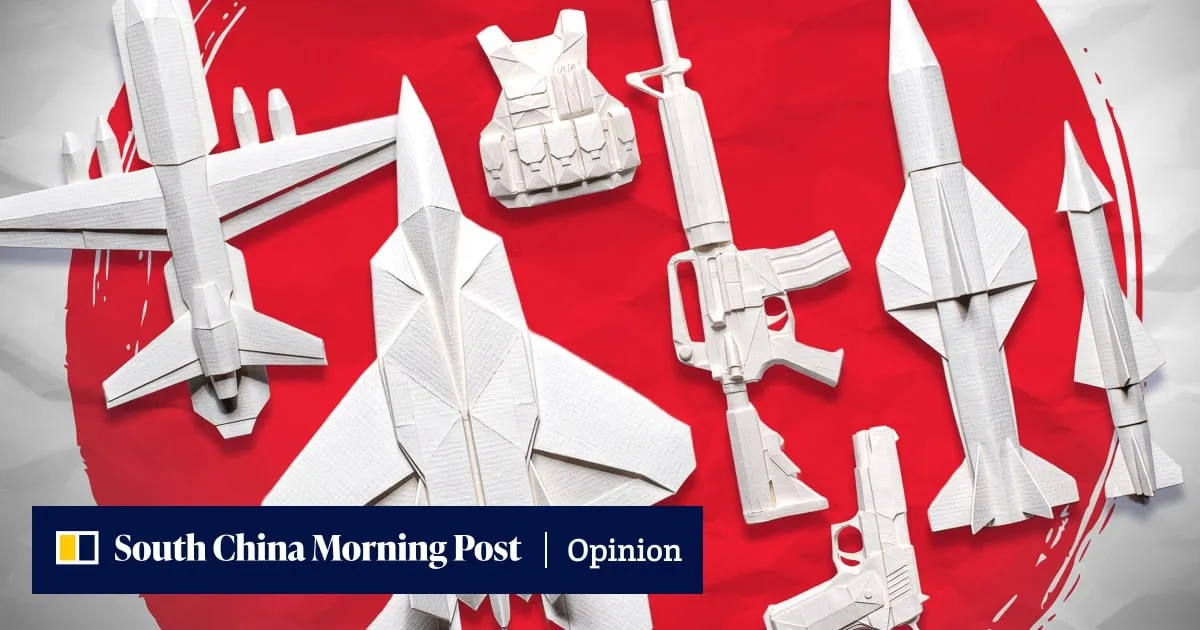
South China Morning PostFIG 01
Reading time
2min
Word count
373words
Sources cited
3cited
Entities identified
12entities
Quality score
100%
§ 01
Briefing Summary
AI-generatedNEWSAR · AI
Japan's 2026 defense white paper labels China an "unprecedented and the greatest strategic challenge" for the fourth consecutive year, accelerating a strategic shift that began in 2014. This move aligns with Beijing's view that the US security umbrella is weakening, as evidenced by the redeployment of US defense systems from South Korea. Japan perceives China's drills around Taiwan as an attempt to normalize its military presence, while China states they are for sovereignty protection. Japan's white paper cites China's carrier deployments and joint patrols as triggers, framing the East and South China Seas and Taiwan Strait as a unified threat. The paper also addresses "new forms of warfare" and calls for integrating defense production into Japan's economy, which Beijing may view as militarization.
Confidence 0.90Sources 3Claims 5Entities 12
§ 02
Article analysis
Model · rule-basedFraming
National Security
Diplomatic
Tone
Measured
AI-assessed
CalmNeutralAlarmist
Factuality
0.40 / 1.00
Mixed
LowHigh
Sources cited
3
Well sourced
FewMany
§ 03
Key claims
5 extracted01
Tokyo now frames the East and South China seas and the Taiwan Strait challenges as a single threat.
factualTokyo
Confidence
1.00
02
Japan recorded over 1,400 aircraft launches and recoveries during Chinese carrier operations in the Pacific last year.
statisticJapan
Confidence
1.00
03
Japan alleges Beijing's drills around Taiwan aim to normalize its military presence as a 'fait accompli'.
factualJapan
Confidence
1.00
04
Japan's 2026 defense white paper labels China an 'unprecedented and the greatest strategic challenge' for the fourth straight year.
factualJapan's defense white paper
Confidence
1.00
05
Tokyo, Manila, and Seoul are drawing lessons from the Iran war regarding US military capabilities.
factualArticle's interpretation
Confidence
0.80
§ 04
Full report
2 min read · 373 words§ 05
Entities
12 identifiedKey playerOppositionContextPositiveNeutralNegative
People3
Organizations2
§ 06
Keywords & salience
10 termssecurity dilemma
1.00
strategic challenge
0.90
defence white paper
0.80
alliance fragility
0.70
taiwan strait
0.60
rearmament
0.50
military presence
0.50
new forms of warfare
0.40
us security umbrella
0.40
grey-zone blockades
0.40
§ 07
Topic connections
Interactive graph Network visualization showing 51 related topics
View Full Graph Person Organization Location Event|Click node to navigate|Edge numbers = shared articles