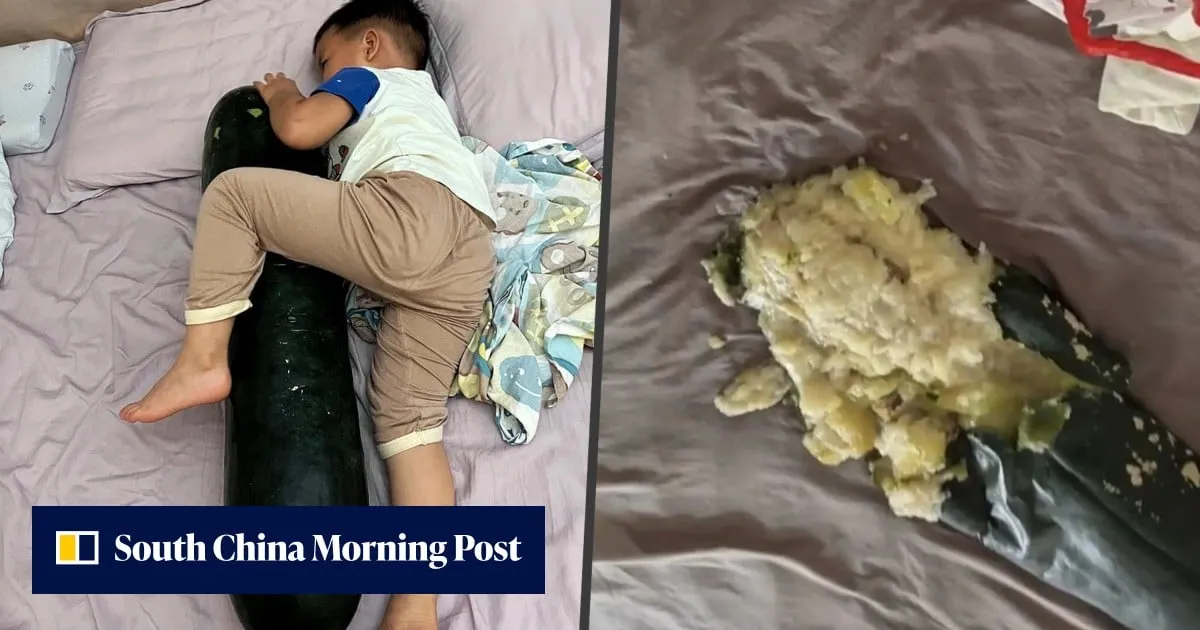
While many people have embraced the trend of hugging a giant winter melon to sleep as a means of cooling down during summer, some have shared their “painful” experiences, recounting instances where the fruit exploded, releasing a foul-smelling and putrid liquid that soiled their beds and floors.They detailed this “disastrous scene” on social media, noting that the winter melons exploded after several nights of being held, as reported by the Sichuan Daily.“It exploded. The stench was unbearable. It was like a burst sewer,” one internet user remembered.A woman from central Hubei province recounted her experience, advising others against this method of cooling down. “The rotten melon pulp and fluid ruined my bedsheet. It was disgusting. I had to dispose of both the bedsheet and the winter melon,” she saidOne individual recalled the unbearable odour of a melon that burst after being held overnight, comparing it to a broken sewer. Photo: Baidu“I initially sought relief from the summer heat, but it only caused me great discomfort,” she added.Hugging winter melons to sleep in summer is a traditional practice that dates back to ancient China.In the late Ming dynasty (1368–1644), an encyclopaedia called Wu Li Xiao Shi, or Some Tips in Physics in English, mentioned the remedy of using winter melon to cool off on warm nights.The renowned wellness book Xian Qing Ou Ji, known as Daily Jottings for Health in English, from the Qing dynasty (1644–1912), describes the custom of residents in southern China clutching winter melons while sleeping in the summer.The rationale behind this practice is that the fruit contains 95 per cent water, which helps absorb heat through skin contact. Essentially, it is akin to holding a cold water bag, experts explain.With 95 per cent water content, winter melons effectively absorb heat, making them ideal for cooling. Photo: guokr.comSince last year, many have adopted this trend as a natural alternative to air conditioning, which can lead to colds, finding the winter melon method more economical.Further ReadingHowever, this remedy carries a risk: the melon can potentially explode after being held for several days.According to Ao Qingyan, a senior agricultural specialist from the Chengdu Academy of Agriculture and Forestry Sciences, microbes enter the winter melons when the white wax on their skin is compromised through frequent skin contact.These microbes ferment inside the melon as they decompose sugars and organic matter, producing carbon dioxide in the process.As gas accumulates, an explosion can occur, Ao explained.“When people hug the melon all night, especially when covered with a quilt, it creates a warm, incubating environment for fermentation,” Ao informed the media.Regularly inspect your winter melon: if it feels soft, swollen, or gives off a sour smell, discard it immediately. Photo: BaiduShe recommended changing the melon once a week.“It’s wise to touch and inspect it regularly. If you notice any part of it is soft, swollen, or emits a sour odour, you should discard it immediately,” Ao advised.“Hugging winter melons is merely a low-cost, temporary method for alleviating summer heat. Due to the risk of explosion and mould growth, it is not an ideal solution. Air conditioners, cold mats, and cold pillows are more reliable alternatives with lower risks,” she concluded.
SRCSouth China Morning Post
LANGEN
LEANCenter-Right
WORDS526
ENT10
MON · 2026-08-10 · 01:00 GMTBRIEF NSR-2026-0810-100717
NSR-2026-0810-100717News Report·EN·Human Interest
China experts explain why hugging winter melons for cooling in summer can cause explosions
A traditional Chinese practice of hugging winter melons for cooling during summer has led to unexpected explosions. While the fruit's high water content aids in heat absorption, prolonged skin contact can compromise its protective waxy coating, allowing microbes to enter.
Alice YanSouth China Morning PostFiled 2026-08-10 · 01:00 GMTLean · Center-RightRead · 3 min
South China Morning PostFIG 01
Reading time
3min
Word count
526words
Sources cited
2cited
Entities identified
10entities
Quality score
100%
§ 01
Briefing Summary
AI-generatedNEWSAR · AI
A traditional Chinese practice of hugging winter melons for cooling during summer has led to unexpected explosions. While the fruit's high water content aids in heat absorption, prolonged skin contact can compromise its protective waxy coating, allowing microbes to enter. These microbes ferment sugars within the melon, producing carbon dioxide gas that builds up pressure. Experts explain that the warmth from body heat and blankets accelerates this fermentation process, leading to potential explosions that release foul-smelling liquid. Agricultural specialists advise regular inspection of the melon and recommend discarding it if it feels soft, swollen, or smells sour, suggesting that air conditioners and other cooling methods are safer alternatives.
Confidence 0.90Sources 2Claims 5Entities 10
§ 02
Article analysis
Model · rule-basedFraming
Human Interest
Public Health
Tone
Mixed Tone
AI-assessed
CalmNeutralAlarmist
Factuality
0.70 / 1.00
Factual
LowHigh
Sources cited
2
Limited
FewMany
§ 03
Key claims
5 extracted01
The practice of using winter melons for cooling dates back to ancient China, mentioned in Ming and Qing dynasty texts.
factualarticle
Confidence
0.95
02
Microbes enter winter melons when their protective white wax is compromised, leading to fermentation.
factualAo Qingyan, senior agricultural specialist
Confidence
0.90
03
Winter melons contain 95% water, which helps absorb heat through skin contact, similar to a cold water bag.
factualexperts
Confidence
0.90
04
Hugging winter melons for cooling in summer can cause explosions due to microbial fermentation producing gas.
factualAo Qingyan, senior agricultural specialist
Confidence
0.90
05
Exploded winter melons release a foul-smelling, putrid liquid that can soil beds and floors.
quoteinternet user
Confidence
0.80
§ 04
Full report
3 min read · 526 words§ 05
Entities
10 identifiedKey playerOppositionContextPositiveNeutralNegative
People1
Organizations4
§ 06
Keywords & salience
9 termswinter melon cooling
1.00
summer heat relief
0.90
melon explosion
0.90
microbial fermentation
0.80
traditional practice
0.70
natural cooling method
0.60
ancient china
0.50
water content
0.50
skin contact
0.40
§ 07
Topic connections
Interactive graph No topic relationship data available yet. This graph will appear once topic relationships have been computed.