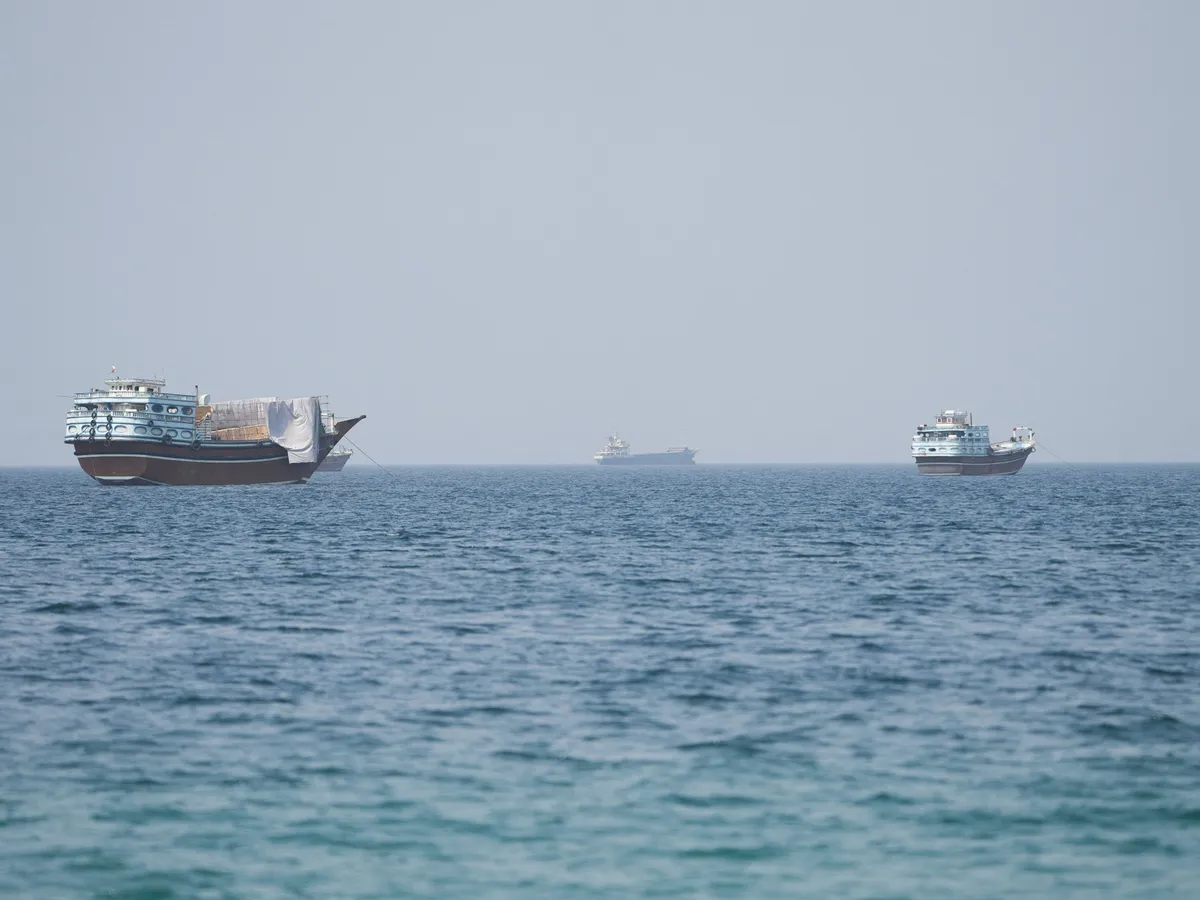
Brent crude prices rise as Tehran says critical waterway will not reopen without major US concessions.Oil prices are climbing higher as Iran’s latest demands for reopening the Strait of Hormuz dampen hopes for a return to stability in global energy markets.Brent crude, the international benchmark, rose more than 1 percent on Monday as Tehran’s insistence that the critical waterway will not reopen without major concessions from the United States stoked market anxiety.Recommended Stories list of 4 itemslist 1 of 4Union reports 108 attacks on Palestinian journalists in Julylist 2 of 4F-16s intercept two aircraft near Trump’s New Jersey golf clublist 3 of 4Houthis renew missile and drone attacks on Yemen’s port of al-Makhalist 4 of 4Could Morocco’s football chief Fouzi Lekjaa become its next prime minister?end of listBrent futures for October stood at $83.77 a barrel at 2:30 GMT, up about 16 percent compared with before the start of the US and Israel’s Iran" class="entity-link entity-event" data-entity-id="169305" data-entity-type="event">war on Iran.“The lack of concrete movement, together with lingering questions about the practical details of any agreement, is keeping a risk premium in the price,” Tim Waterer, chief market analyst at Sydney, Australia-based KCM Trade, told Al Jazeera.“Each day that passes without a breakthrough is making traders a little more cautious.”Iranian Minister of Foreign Affairs Abbas Araghchi said on Sunday that while Iran and Oman were close to an agreement on the Strait of Hormuz, the waterway would not reopen until Washington met certain conditions, including easing sanctions and paying war reparations.Shipping in the strait, a conduit for about one-fifth of global oil supplies before the war, has effectively collapsed since the conflict began in late February, prompting the largest energy disruption in recorded history.Between eight and 15 vessels crossed the strait on August 4, August 5 and August 6, according to ship-tracking platform MarineTraffic, a fraction of the roughly 130 transits before the conflict.
SRCAl Jazeera
LANGEN
LEANCenter
WORDS309
ENT12
MON · 2026-08-10 · 03:24 GMTBRIEF NSR-2026-0810-100722
NSR-2026-0810-100722News Report·EN·Economic Impact
Oil prices climb as Iranian demands cloud outlook for Strait of Hormuz
Oil prices are increasing as Iran's demands regarding the Strait of Hormuz create uncertainty in global energy markets. Brent crude, the international benchmark, saw a rise of over 1 percent.
John PowerAl JazeeraFiled 2026-08-10 · 03:24 GMTLean · CenterRead · 2 min
Al JazeeraFIG 01
Reading time
2min
Word count
309words
Sources cited
1cited
Entities identified
12entities
Quality score
100%
§ 01
Briefing Summary
AI-generatedNEWSAR · AI
Oil prices are increasing as Iran's demands regarding the Strait of Hormuz create uncertainty in global energy markets. Brent crude, the international benchmark, saw a rise of over 1 percent. Iran's Foreign Minister stated that the critical waterway will not reopen without major concessions from the United States, including sanctions relief and war reparations. Shipping through the Strait of Hormuz, which previously handled about one-fifth of global oil supplies, has significantly decreased since the conflict began in late February. This disruption has led to a substantial energy disruption, with a fraction of pre-conflict transits now occurring. Market analysts suggest that the lack of concrete progress and unresolved details are contributing to a risk premium in oil prices.
Confidence 0.90Sources 1Claims 5Entities 12
§ 02
Article analysis
Model · rule-basedFraming
Economic Impact
Diplomatic
Tone
Measured
AI-assessed
CalmNeutralAlarmist
Factuality
0.70 / 1.00
Factual
LowHigh
Sources cited
1
Limited
FewMany
§ 03
Key claims
5 extracted01
Iran insists the Strait of Hormuz will not reopen without major US concessions, including easing sanctions and paying war reparations.
quoteIranian Minister of Foreign Affairs Abbas Araghchi
Confidence
1.00
02
Shipping in the Strait of Hormuz has collapsed since late February, with a fraction of pre-conflict transits.
factual
Confidence
0.95
03
Brent futures for October rose about 16 percent compared to before the US and Israel’s war on Iran.
statistic
Confidence
0.90
04
Brent crude prices are rising due to Iran's demands regarding the Strait of Hormuz.
factual
Confidence
0.90
05
The lack of concrete movement and practical details is keeping a risk premium in oil prices.
quoteTim Waterer
Confidence
0.85
§ 04
Full report
2 min read · 309 words§ 05
Entities
12 identifiedKey playerOppositionContextPositiveNeutralNegative
Locations5
§ 06
Keywords & salience
9 termsoil prices
1.00
strait of hormuz
1.00
iran
0.90
energy markets
0.80
us concessions
0.70
brent crude
0.70
global oil supplies
0.60
sanctions
0.50
war reparations
0.40
§ 07
Topic connections
Interactive graph Network visualization showing 51 related topics
View Full Graph Person Organization Location Event|Click node to navigate|Edge numbers = shared articles