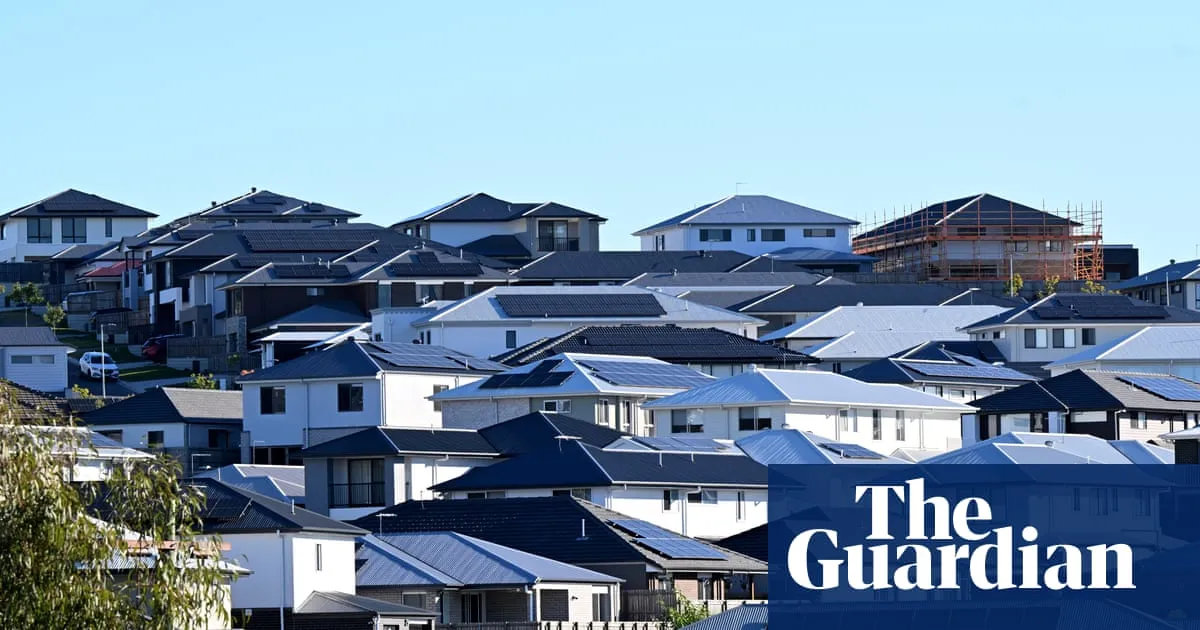
With the RBA likely avoiding immediate interest rate hikes, mortgaged households are expected to benefit from lower loan repayments. Photograph: Darren England/AAP View image in fullscreen With the RBA likely avoiding immediate interest rate hikes, mortgaged households are expected to benefit from lower loan repayments. Photograph: Darren England/AAP Analysis Australia’s falling house prices are actually a good thing for mortgage holders. Here’s why Patrick Commins Economics editor The RBA’s governor, Michele Bullock, has made it clear that the ‘easing’ property market is on her mind Get our breaking news email, free app or daily news podcast It’s the silver lining that’s not making headlines: falling home prices means another Reserve Bank rate hike is less likely. RBA board members will not be sitting on Monday and Tuesday discussing ways to prop up Sydney house values. Even so, the RBA’s governor, Michele Bullock, has made it clear that property is on her mind. The central bank always expected conditions “to ease” in response to the rate hikes in February, March and May, Bullock said last week – after all, that’s usually how these things work. “But the housing market has eased by more than we had anticipated in May,” she said. “This appears to reflect a range of factors, including recent policy developments affecting the housing market, and a general softening in housing market sentiment.” By “recent policy developments”, she means the changes in the budget to property taxes. Jonathan McMenamin, a senior economist at Barrenjoey, told News24 on Monday that the RBA board will “try and play down the housing market to some degree, but still use that as a reason why they might be able to hold for a longer period of time”. At this point it’s worth noting that Bullock believes the economy needs to slow further to wrangle inflation back to the central bank’s 2.5% target over the next 12-18 months. View image in fullscreen Governor of the Australia" class="entity-link entity-organization" data-entity-id="3046" data-entity-type="organization">Reserve Bank of Australia, Michele Bullock. Photograph: Lukas Coch/AAP The “key question” for the governor is whether or not this slowdown will be achieved through this year’s three interest rate hikes, or if they will need to do more. Here’s where we have the silver lining for mortgaged households. While there is no “mechanical” monetary policy response to dropping property prices, central bank officials are attuned to the knock-on effects to the economy. From a consumption angle, these come in two forms: the “wealth effect” and what could be called the “turnover effect”. The first is that when prices go up, people feel wealthier and so are more likely to spend (and vice versa). There’s some evidence of this, and the RBA certainly speaks about it. The second is that when the property market is running hot, more homes change hands. That has an effect on the buying of goods and services that people typically demand when they move house, like household appliances. The fewer people moving, the less spending on things like new furniture. Disentangling the two effects is hard, but the direction of travel in each case is the same. Falling property values should also weigh on housing construction, although some economists argue that this effect has been blunted by the nationwide push to boost housing supply. The chief economist at Westpac, Luci Ellis, says the weakness in the housing market provides the RBA with further confirmation that monetary policy is “tight” with the cash rate at 4.35%. Challenger’s chief economist, Jonathan Kearns, also agrees the property market travails will play into the RBA’s deliberations, if only “very marginally” at a time when inflation is running so hot and there are plenty of other things to worry about. “I still think there’s a reasonable chance they will need to hike again,” Kearns said. And for homeowners sitting on reasonable and sometimes hefty price gains over recent years, avoiding higher borrowing costs might seem worth the recent drop in values. Explore more on these topics Housing Interest rates Australia" class="entity-link entity-organization" data-entity-id="3046" data-entity-type="organization">Reserve Bank of Australia Australian economy analysis Share Reuse this content
SRCThe Guardian - World News
LANGEN
LEANCenter-Left
WORDS671
ENT12
MON · 2026-08-10 · 15:00 GMTBRIEF NSR-2026-0810-100919
NSR-2026-0810-100919Analysis·EN·Economic Impact
Australia’s falling house prices are actually a good thing for mortgage holders. Here’s why
Australia's falling house prices are a positive development for mortgage holders as they reduce the likelihood of further Reserve Bank of Australia (RBA) interest rate hikes. RBA Governor Michele Bullock has acknowledged that the property market has eased more than anticipated, influenced by policy changes and softening sentiment.
Patrick Commins Economics editorThe Guardian - World NewsFiled 2026-08-10 · 15:00 GMTLean · Center-LeftRead · 3 min
The Guardian - World NewsFIG 01
Reading time
3min
Word count
671words
Sources cited
2cited
Entities identified
12entities
Quality score
100%
§ 01
Briefing Summary
AI-generatedNEWSAR · AI
Australia's falling house prices are a positive development for mortgage holders as they reduce the likelihood of further Reserve Bank of Australia (RBA) interest rate hikes. RBA Governor Michele Bullock has acknowledged that the property market has eased more than anticipated, influenced by policy changes and softening sentiment. This market slowdown provides the RBA with evidence that monetary policy is sufficiently tight. While the RBA is focused on bringing inflation down, the cooling housing market's impact on consumer spending and sentiment may allow them to hold interest rates steady. This offers mortgage holders the benefit of potentially lower loan repayments.
Confidence 0.90Sources 2Claims 5Entities 12
§ 02
Article analysis
Model · rule-basedFraming
Economic Impact
Human Interest
Tone
Measured
AI-assessed
CalmNeutralAlarmist
Factuality
0.60 / 1.00
Mixed
LowHigh
Sources cited
2
Limited
FewMany
§ 03
Key claims
5 extracted01
The RBA’s governor, Michele Bullock, stated the housing market has eased by more than anticipated.
quoteMichele Bullock
Confidence
1.00
02
Falling property prices can lead to lower loan repayments for mortgaged households.
factual
Confidence
0.90
03
The RBA board might use the housing market as a reason to hold interest rates for longer.
predictionJonathan McMenamin
Confidence
0.80
04
Falling home prices mean another Reserve Bank rate hike is less likely.
factual
Confidence
0.80
05
Changes in budget property taxes are a factor in the housing market easing.
factual
Confidence
0.70
§ 04
Full report
3 min read · 671 words§ 05
Entities
12 identifiedKey playerOppositionContextPositiveNeutralNegative
People3
Organizations3
Locations1
§ 06
Keywords & salience
10 termsmortgage holders
1.00
falling house prices
1.00
reserve bank of australia
0.90
interest rate hikes
0.80
loan repayments
0.70
property market
0.70
economic slowdown
0.60
inflation target
0.50
wealth effect
0.40
property taxes
0.40
§ 07
Topic connections
Interactive graph Network visualization showing 14 related topics
View Full Graph Person Organization Location Event|Click node to navigate|Edge numbers = shared articles