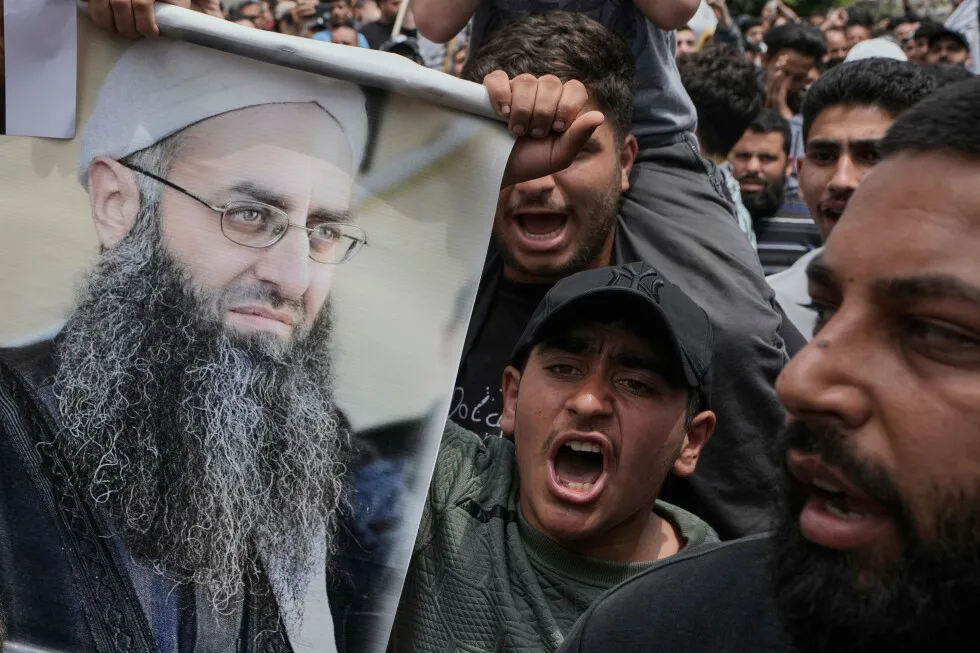
Sunni Muslims hold a portrait of imprisoned Sunni cleric Ahmad al-Assir during a protest against a clause in a proposed amnesty law that would exclude some prisoners, including the cleric, from being eligible for amnesty, after Friday prayers in Beirut, Lebanon, Friday, May 22, 2026. (AP Photo/Bilal Hussein, File) By KAREEM CHEHAYEB and FADI TAWIL Updated 4:00 PM MESZ, August 12, 2026 Add AP News on Google Add AP News as your preferred source to see more of our stories on Google. Share Share Facebook Copy Link copied Print Email X LinkedIn Bluesky Flipboard Pinterest Reddit Beirut (AP) — Lebanon’s parliament Wednesday passed a controversial General Amnesty Law, a day after a majority of legislators voted to formally abolish the Death Penalty. Lawmakers who backed the bill call it a beginning to correcting past overreach by the judiciary and security agencies and help reduce prison overcrowding, but critics say it is skewed and largely benefits Sunni Islamist prisoners. The initial proposal, debated since 2019, has exposed sectarian tensions among the country’s multitude of Islamic and Christian sects. The last time Lebanon approved a similar amnesty was in 1991, when the majority of the country’s combatants and militia leadership were absolved of any atrocities and possible war crimes following the country’s devastating 1975-90 civil war that killed about 150,000 people and left 17,000 missing. The new law replaces death sentences with long prison terms, reduces life sentences, and frees some convicted militants and drug dealers. It excludes rape, trafficking, corruption, terror funding, and premeditated murder, but reduces sentences for killing Lebanese troops. Some detainees will be released immediately. Repeated drug offenders and Lebanese who have been convicted of collaborating with Israel were excluded from the amnesty. It also remains unknown if the amnesty applies to Lebanese families who took refuge in Israel after occupying Israeli forces withdrew from southern Lebanon in 2000 but who were not involved in military operations against Lebanon. Released foreign prisoners, mainly Syrian Islamist militant prisoners, would be transferred to Lebanon’s General Security intelligence agency that is responsible for enforcing immigration laws. It wasn’t immediately known if they would be deported. Lebanon abolishes Death Penalty in landmark parliament vote 2 MIN READ Rights groups accuse Israel of targeting and killing Lebanese journalist Amal Khalil 2 MIN READ Turkey wants to join a new Lebanon security initiative after UN mission ends 2 MIN READ Concerns rise over the fate of extremist Islamist prisoners While the law was debated in parliament, lawmakers from various sects made different demands. Sunnis wanted the release of Islamist militants while Shiites demanded drug dealers, mostly from Lebanon’s eastern Baalbek region where cannabis is planted, to be freed. Christians required amnesty for hundreds of Lebanese who fled to Israel after the Israeli withdrawal. Many have links to the Israeli-backed South Lebanon Army militia, which collapsed following the withdrawal. However, the most controversial point in the yearslong debate was the fate of extremist Islamist prisoners, including firebrand cleric Ahmad al-Assir. Al-Assir gained support in southern Lebanon for his vocal criticism of the powerful Shiite militant Hezbollah group’s involvement in Syria’s uprising that turned into civil war. In 2013, clashes between his supporters and opponents killed 18 Lebanese soldiers. He was sentenced to death in 2017. His fate remains unclear, but Lebanese lawmaker Waddah Sadek, a Sunni Muslim and supporter of the law, told The Associated Press al-Assir could be released “between a year and a half and two years.” Sunni legislators largely celebrated the law passing. Bilal Abdullah, who represents the Druze-led Progressive Socialist Party, said the amnesty law is not intended to benefit just one sect. “We are turning a political page where (Sunnis were) targeted, justly and unjustly,” Abdullah told reporters in parliament. “Targeted by a regime, security agencies, and unfortunately the military tribunal with some of its unjust convictions.” Supporters of detained Islamists claim their sentencings came at a time when the Shiite Muslim Hezbollah militant group had greater political power in the country and larger sway over its security institutions and judicial system, directly targeting the country’s Sunni Muslims. They also said the detainees weren’t allowed a fair trial and some were held for too long in pretrial detention due to Lebanon’s swamped courts. Videos circulating on social media showed Islamist prisoners in the notorious Roumieh prison chanting “God is great” in celebration once the law was approved. The families of the killed Lebanese soldiers have called the law a grave injustice, saying that the perpetrators behind the death of their loved ones should remain behind bars or even be sentenced to death. Civil society and reformists have largely been critical of the move. Activist and lawyer Nizar Saghieh, who co-founded the watchdog group Legal Agenda, said justice “comes through accountability and building institutions, not a general amnesty.” Saghieh criticized lawmakers who called the amnesty a form of justice due to what they said were unfair trials in military and civil courts. However, they haven’t made any real structural reforms, he said. “They talk about injustice in military courts, but they are still functioning as before.” KAREEM CHEHAYEB Chehayeb is an Associated Press reporter in Beirut. twitter instagram mailto
SRCAssociated Press (AP)
LANGEN
LEANCenter
WORDS858
ENT11
WED · 2026-08-12 · 13:53 GMTBRIEF NSR-2026-0812-101578
NSR-2026-0812-101578News Report·EN·Legal & Judicial
Lebanon passes a controversial general amnesty law
Lebanon's parliament passed a controversial general amnesty law, following a vote to abolish the death penalty. Supporters claim the law aims to correct judicial overreach and reduce prison overcrowding, while critics argue it disproportionately benefits Sunni Islamist prisoners and exacerbates sectarian tensions.
Associated Press (AP)Filed 2026-08-12 · 13:53 GMTLean · CenterRead · 4 min
Associated Press (AP)FIG 01
Reading time
4min
Word count
858words
Sources cited
0cited
Entities identified
11entities
Quality score
100%
§ 01
Briefing Summary
AI-generatedNEWSAR · AI
Lebanon's parliament passed a controversial general amnesty law, following a vote to abolish the death penalty. Supporters claim the law aims to correct judicial overreach and reduce prison overcrowding, while critics argue it disproportionately benefits Sunni Islamist prisoners and exacerbates sectarian tensions. The law replaces death sentences with prison terms, reduces life sentences, and frees some militants and drug dealers, though it excludes offenses like rape and corruption. It also reduces sentences for killing Lebanese troops but excludes repeated drug offenders and those convicted of collaborating with Israel. The fate of extremist Islamist prisoners, including cleric Ahmad al-Assir, remains a contentious issue, with some lawmakers suggesting his potential release. The law has drawn mixed reactions, with some celebrating and others, like the families of slain soldiers, deeming it an injustice.
Confidence 0.90Claims 5Entities 11
§ 02
Article analysis
Model · rule-basedFraming
Legal & Judicial
Political Strategy
Tone
Measured
AI-assessed
CalmNeutralAlarmist
Factuality
0.80 / 1.00
Factual
LowHigh
Sources cited
0
No named sources
FewMany
§ 03
Key claims
5 extracted01
The amnesty excludes rape, trafficking, corruption, terror funding, and premeditated murder.
factual
Confidence
1.00
02
The new law replaces death sentences with long prison terms and frees some convicted militants and drug dealers.
factual
Confidence
1.00
03
Lebanon's parliament passed a controversial general amnesty law.
factual
Confidence
1.00
04
Critics argue the law is skewed and primarily benefits Sunni Islamist prisoners.
quoteCritics
Confidence
0.90
05
Lawmakers backing the bill see it as correcting judicial overreach and reducing prison overcrowding.
quoteLawmakers who backed the bill
Confidence
0.90
§ 04
Full report
4 min read · 858 words§ 05
Entities
11 identifiedKey playerOppositionContextPositiveNeutralNegative
Organizations1
§ 06
Keywords & salience
8 termsgeneral amnesty law
1.00
lebanon parliament
0.90
sectarian tensions
0.80
death penalty
0.70
civil war
0.60
sunni islamist prisoners
0.50
prison overcrowding
0.40
syrian islamist militant prisoners
0.40
§ 07
Topic connections
Interactive graph Network visualization showing 51 related topics
View Full Graph Person Organization Location Event|Click node to navigate|Edge numbers = shared articles