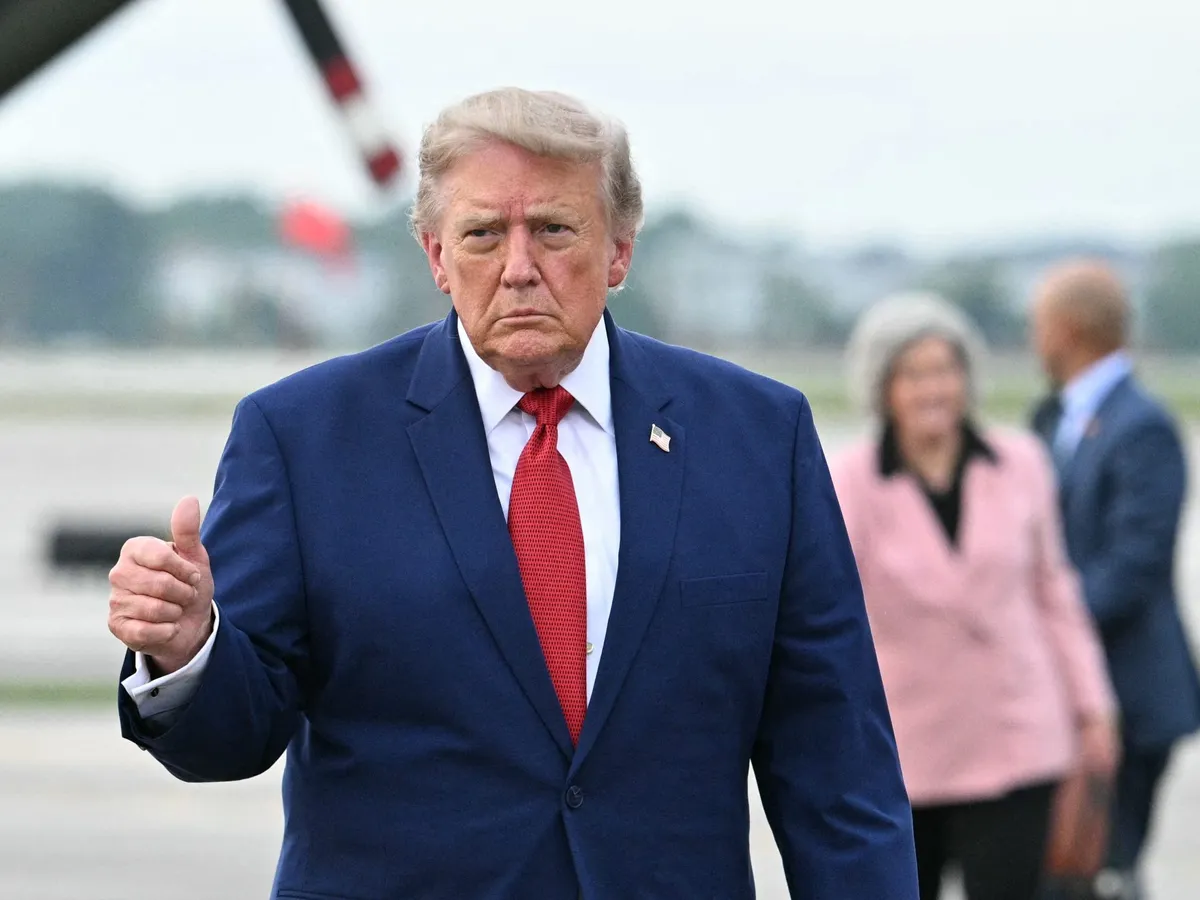
Just eight vessels crossed strait on Tuesday, down from 130 to 140 prior to the war as peace talks stall.United States President Donald Trump has doubled down on claims the United States maintains “total control” over the Strait of Hormuz, even as transit through the arterial waterway fell to a one-week low amid the Iran" class="entity-link entity-event" data-entity-id="38635" data-entity-type="event">US-Israel war with Iran.Trump made the statement in a Truth Social post on Wednesday, reiterating a similar claim he made to reporters the day before as diplomatic efforts to end the conflict and fully re-open the strait have continued to stall.Recommended Stories list of 3 itemslist 1 of 3Six killed in Houthi attack on Bab al-Mandeb ship, Yemen’s government sayslist 2 of 3Oil prices rise as attacks dent hopes for Strait of Hormuz reopeninglist 3 of 3Trump says his decoy plane faced ‘greater risk’ in secret flight changeend of list“The U.S.A. has total control over the Strait of Hormuz. I THINK WE WILL KEEP IT!” Trump said.He went on to claim the ongoing US blockade of Iranian ports “is being called, by everyone, “A WALL OF STEEL,” and there is nothing Iran can do about it”.“Iran is all talk and no action, the Bully of the Middle East No Longer,” Trump said, ending his message with, “Praise be to Allah!”Despite the statement, Iran has continued to assert its influence over the strait as it has pursued talks with Oman on future management. Wider peace talks with the US have been largely paused amid the Iran-Oman talks, which do not include Washington.Iran has said it will not allow full traffic in the strait until the US naval blockade is lifted, sanctions are lifted, and its assets are unfrozen.While ships can still transit through the strait, they face several obstacles and heightened threats. That has caused the volume of traffic to drop dramatically.Reuters news agency reported that just eight ships transited through the Strait of Hormuz on Tuesday, far below the 130 to 140 ships pre-war rate. That was down from the previous ten-day average of about 12 ships, according to trade analytics platform Kpler data.The US and Israel launched the war with Iran on February 28. The US and Iran signed a Memorandum of Understanding (MoU) aimed at ending the conflict in June, but the agreement dissolved in mid July with both sides renewing attacks.
SRCAl Jazeera
LANGEN
LEANCenter
WORDS388
ENT12
WED · 2026-08-12 · 15:07 GMTBRIEF NSR-2026-0812-101601
NSR-2026-0812-101601News Report·EN·Conflict
As Strait of Hormuz transit drops, Trump again says US has ‘control’
Amidst an ongoing US-Israel war with Iran, transit through the Strait of Hormuz has significantly decreased, with only eight vessels crossing on Tuesday, down from a pre-war rate of 130-140. Despite this drop, US President Donald Trump reiterated claims of "total control" over the strait, stating the US blockade of Iranian ports is a "WALL OF STEEL." Iran, however, asserts its influence and has engaged in talks with Oman regarding future management of the strait, pausing wider peace talks with the US.
Al Jazeera StaffAl JazeeraFiled 2026-08-12 · 15:07 GMTLean · CenterRead · 2 min
Al JazeeraFIG 01
Reading time
2min
Word count
388words
Sources cited
2cited
Entities identified
12entities
Quality score
100%
§ 01
Briefing Summary
AI-generatedNEWSAR · AI
Amidst an ongoing US-Israel war with Iran, transit through the Strait of Hormuz has significantly decreased, with only eight vessels crossing on Tuesday, down from a pre-war rate of 130-140. Despite this drop, US President Donald Trump reiterated claims of "total control" over the strait, stating the US blockade of Iranian ports is a "WALL OF STEEL." Iran, however, asserts its influence and has engaged in talks with Oman regarding future management of the strait, pausing wider peace talks with the US. Iran has stated it will not permit full traffic until the US naval blockade is lifted, sanctions are removed, and its assets are unfrozen. The war began on February 28, and a prior agreement to end the conflict dissolved in mid-July, leading to renewed attacks.
Confidence 0.90Sources 2Claims 4Entities 12
§ 02
Article analysis
Model · rule-basedFraming
Conflict
Diplomatic
Tone
Mixed Tone
AI-assessed
CalmNeutralAlarmist
Factuality
0.70 / 1.00
Factual
LowHigh
Sources cited
2
Limited
FewMany
§ 03
Key claims
4 extracted01
United States President Donald Trump claims the United States maintains “total control” over the Strait of Hormuz.
quoteDonald Trump
Confidence
1.00
02
The US and Iran signed a Memorandum of Understanding (MoU) aimed at ending the conflict in June, but the agreement dissolved in mid July.
factual
Confidence
0.90
03
Iran has stated it will not allow full traffic in the strait until the US naval blockade is lifted, sanctions are lifted, and its assets are unfrozen.
factualIran
Confidence
0.90
04
Just eight vessels crossed the Strait of Hormuz on Tuesday, down from 130 to 140 prior to the war.
statisticReuters / Kpler
Confidence
0.90
§ 04
Full report
2 min read · 388 words§ 05
Entities
12 identifiedKey playerOppositionContextPositiveNeutralNegative
Organizations4
Locations6
§ 06
Keywords & salience
8 termsstrait of hormuz
1.00
us-iran war
0.90
donald trump
0.80
us naval blockade
0.70
peace talks
0.60
iran sanctions
0.50
maritime traffic
0.40
oman
0.40
§ 07
Topic connections
Interactive graph Network visualization showing 51 related topics
View Full Graph Person Organization Location Event|Click node to navigate|Edge numbers = shared articles