In kitchens and Telegram chats across Russia, the same question is being asked with growing frequency: will Vladimir Putin order another mobilisation?Nearly five years into the war, Russia is scrambling to find enough soldiers to replenish its ranks, as voluntary recruitment slows and its forces suffer heavy losses on the battlefield in Ukraine.With Putin showing no sign of abandoning his far-reaching territorial demands, even as Russia’s summer offensive stalls, the Kremlin faces a growing manpower headache.“The problem for the Kremlin is that it is getting much harder to find people willing to fight, even for crazy money,” said Aleksei Tabalov, a human rights activist and director of an organisation that helps Russian conscripts.Putin last resorted to mobilisation in September 2022, when a series of dramatic battlefield setbacks forced the Kremlin to call up 300,000 reservists to stabilise the front.A billboard advertising ‘contract military service’ beside a highway outside Krasnodar, Russia. Photograph: APSince then, Moscow has avoided another deeply unpopular call-up by relying largely on high paid voluntary contracts to fill the ranks with roughly 1.3 million contract soldiers Russia has recruited since.Men, particularly from Russia’s poorer regions, have been offered life-changing signing bonuses and salaries on open-ended contracts amounting to several years of local wages, alongside substantial payouts to their families if they are killed.But Russia’s heavy losses mean it must continue finding new soldiers at a high rate.Western estimates put Russian casualties at more than 30,000 killed and wounded a month, a toll that reflects the army’s attritional “meat grinder” tactics, in which troops are repeatedly sent forward in small assault groups despite heavy losses.Moscow, meanwhile, now recruits roughly 1,000 soldiers a day, according to calculations by Janis Kluge, a Russia expert at the German Institute for International and Security Affairs, which means most new recruits are used to replenish depleted units rather than expand Russia’s offensive capacity.That has once again raised the prospect of mobilisation.Top Russian officials have dismissed reports of an impending call-up, with former president Dmitry Medvedev describing them as “nonsense” and a “lying provocation” by Ukraine.Two people familiar with discussions in Moscow also said there was no indication that Putin had decided to order another mass mobilisation. A senior western official likewise said there were no signs that a decision had been taken.A firefighting helicopter drops water over a food warehouse damaged during Russian drone strikes near Kyiv, 12 August 2026. Photograph: Valentyn Ogirenko/ReutersBut fears that another call-up may be on the way have nevertheless increasingly entered everyday conversations.In Telegram chats used by local sports teams, work colleagues and groups of friends, Russians swap rumours about a possible mobilisation and share advice on securing exemptions or avoiding the draft. Some speculate that a new call-up could come after September’s elections to the Duma.“It’s guesswork right now whether mobilisation will actually happen,” said Ivan Chuviliaev, a spokesperson for Get Lost, a group that helps Russian soldiers desert.But he said the renewed speculation was already being exploited to boost recruitment.“The panic around mobilisation is being used by officials to pressure men into signing contracts,” Chuviliaev said. “The message is: mobilisation is coming anyway, so you might as well sign a contract now and get a payout before you’re forced to fight.”Putin recently signed a law expanding the pool of convicted prisoners eligible to sign contracts with the army. Photograph: Russian President official/APAImages/ShutterstockFor now, people familiar with the Kremlin’s thinking say the authorities appear determined to strong-arm more men into signing contracts rather than risk another mobilisation.Over the summer, lawyers and activists have documented increasingly coercive recruitment tactics in several regions, with men detained on the street by police, taken from workplaces or summoned to stations – before being brought to military recruitment offices and pressed to sign contracts.“It has turned into a hunt for people,” said Tabalov. “Under various pretexts, through deception, blackmail, violence and threats, they are forcing them to sign contracts.”Tabalov said recruiters were increasingly targeting what he described as “socially marginalised” men, including those with debts, criminal cases or other vulnerabilities that could be used to put pressure on them to enlist.In the southern Penza region, where some of the most aggressive draft methods have been reported, videos posted online have shown men being driven away in vans as relatives protested outside recruitment offices. Activists say some have been threatened with prosecution or beaten until they agreed to sign.The search has widened elsewhere too. Universities, technical colleges and vocational schools have been encouraged to recruit students into newly formed drone units, offering another source of manpower for the military. Putin recently signed a law expanding the pool of convicted prisoners eligible to sign contracts with the army, including people convicted of “serious and especially serious crimes”.Much of the responsibility for finding soldiers has been pushed down to Russia’s regions.Governors and local administrations are expected to meet recruitment targets set by Moscow, giving the Kremlin some distance from the drive while leaving regional officials responsible for finding enough men in their own territories.Around that system, a lucrative recruitment industry has emerged. Regional governments offer thousands of dollars not only to soldiers who sign contracts but also to those who find them, with “bring a friend” schemes paying residents for every person they persuade to enlist.Smoke rises from an oil refinery after a Ukrainian drone attack in Moscow, 18 June 2026. Photograph: Social Media/ReutersPrivate recruiters and public-sector employees scour social media for candidates, while s for military contracts have become ubiquitous online. Russian regions have paid recruiters at least 7.7bn roubles ($96m) since such schemes were introduced, according to the independent Russian outlet IStories.One recruiter in central Russia, speaking to the Guardian on condition of anonymity, said his organisation was expected to find between 20 and 30 men each month, with bonuses for exceeding the target and penalties for falling short.“It was easier last year,” the recruiter said. “Now it is getting harder.”The recruiter said mobilisation was also being discussed in his office, but that there had been no orders or indications that a new draft was imminent.Another mass call-up, however, would carry significant political risks for the Kremlin.The 2022 call-up triggered one of the biggest episodes of domestic disruption since the invasion began, prompting a mass exodus of Russians and a sharp drop in Putin’s approval ratings.It would also come at a potentially sensitive moment. Recent polling suggests confidence in the course of the war is weakening, with the share of Russians who believe the campaign in Ukraine is going well falling to its lowest level since April 2022.For now, analysts say Moscow is more likely to step up recruitment efforts through higher bonuses, pressure on regional officials and increasingly coercive tactics.Whether that will be enough could ultimately determine if Putin resorts to another mobilisation, said Tabalov, the activist.The options before the Kremlin, Tabalov said, could range from another mass call-up to a more selective mobilisation, sending existing conscripts to the front or quietly calling up reservists for frontline service.“I don’t think they’ll be able to recruit enough people under the current system,” Tabalov said. “Then they’ll be faced with the question of what form mobilisation should take.”
SRCThe Guardian - World News
LANGEN
LEANCenter-Left
WORDS1 183
ENT12
FRI · 2026-08-14 · 13:00 GMTBRIEF NSR-2026-0814-102308
NSR-2026-0814-102308News Report·EN·Conflict
Putin’s recruiters scramble to avoid second mass mobilisation as Ukraine losses mount
Russia is facing a significant manpower shortage for its military operations in Ukraine, prompting recruiters to scramble to avoid a second mass mobilization. The country is reportedly suffering over 30,000 casualties per month, necessitating the recruitment of approximately 1,000 soldiers daily to replenish depleted units.
Pjotr SauerThe Guardian - World NewsFiled 2026-08-14 · 13:00 GMTLean · Center-LeftRead · 5 min
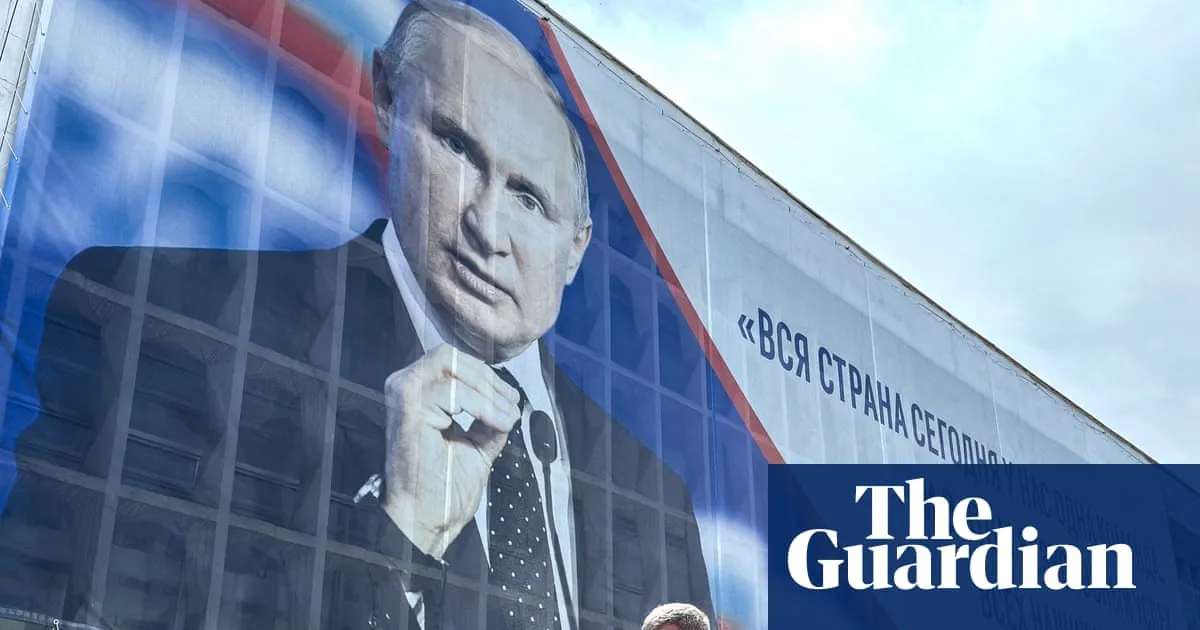
The Guardian - World NewsFIG 01
Reading time
5min
Word count
1 183words
Sources cited
4cited
Entities identified
12entities
Quality score
100%
§ 01
Briefing Summary
AI-generatedNEWSAR · AI
Russia is facing a significant manpower shortage for its military operations in Ukraine, prompting recruiters to scramble to avoid a second mass mobilization. The country is reportedly suffering over 30,000 casualties per month, necessitating the recruitment of approximately 1,000 soldiers daily to replenish depleted units. While the Kremlin has thus far avoided another unpopular call-up by relying on voluntary contracts with substantial financial incentives, the high attrition rate is making it increasingly difficult to find willing fighters. Reports indicate that coercive recruitment tactics are being employed in various regions, with men being pressured or detained to sign contracts. Despite official dismissals of impending mobilization, speculation persists among the Russian public, with some suggesting it could occur after upcoming elections.
Confidence 0.90Sources 4Claims 5Entities 12
§ 02
Article analysis
Model · rule-basedFraming
Conflict
Political Strategy
Tone
Mixed Tone
AI-assessed
CalmNeutralAlarmist
Factuality
0.70 / 1.00
Factual
LowHigh
Sources cited
4
Well sourced
FewMany
§ 03
Key claims
5 extracted01
Top Russian officials, including former president Dmitry Medvedev, have dismissed reports of impending mobilization as 'nonsense' and a 'lying provocation'.
quoteTop Russian officials
Confidence
0.90
02
Russia is struggling to find enough soldiers to replenish its ranks due to slowing voluntary recruitment and heavy losses in Ukraine.
factual
Confidence
0.90
03
Moscow recruits approximately 1,000 soldiers daily, primarily to replenish depleted units rather than expand offensive capabilities.
statisticJanis Kluge
Confidence
0.85
04
Fears of another mobilization call-up are increasingly present in everyday conversations among Russians.
factual
Confidence
0.80
05
Western estimates place Russian casualties at over 30,000 killed and wounded per month.
statisticWestern estimates
Confidence
0.80
§ 04
Full report
5 min read · 1 183 words§ 05
Entities
12 identifiedKey playerOppositionContextPositiveNeutralNegative
People3
Locations5
§ 06
Keywords & salience
9 termsmass mobilisation
1.00
ukraine losses
0.90
voluntary recruitment
0.80
manpower headache
0.70
attritional tactics
0.60
russian casualties
0.50
contract soldiers
0.50
vladimir putin
0.40
kremlin
0.40
§ 07
Topic connections
Interactive graph Network visualization showing 51 related topics
View Full Graph Person Organization Location Event|Click node to navigate|Edge numbers = shared articles