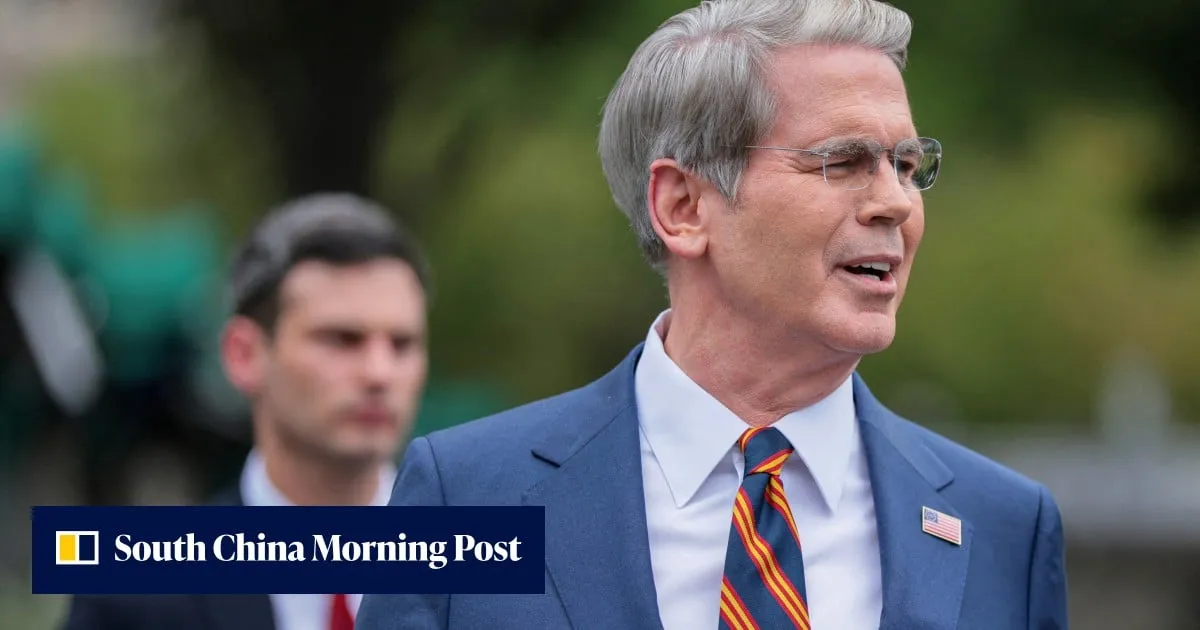
Treasury Secretary Scott Bessent says the US is getting ready to squeeze Iran with unprecedented economic pressure, a claim critics greeted with scepticism given the country is already subject to a naval blockade and thousands of sanctions.While the Trump administration has not said what it is planning to do, there are still pressure points that Bessent’s Treasury Department could hit. The main challenge is that targeting the remaining options risks blowback on the US economy.“Unless the president decides to prioritise addressing the Iran threat over all other issues, and namely China, it’s unlikely any action they take is going to materially change Iran’s calculus,” Bloomberg Economics analyst Chris Kennedy said.A man rides past a billboard with a message that reads in Farsi: “We must rise up” and an image of the late Iranian supreme leader Ayatollah Ali Khamenei, in Tehran, on Saturday. Photo: APBelow is a look at a few options. They are far from exhaustive and it remains unclear which, if any, the administration will pursue. Officials could combine several of these measures or opt for a different approach altogether.China buys more than 90 per cent of Iran’s oil exports. Penalties on entities that facilitate these purchases would directly reduce Tehran’s oil revenues.Washington has already sanctioned some Chinese teapot refineries and firms since the US started the war against Iran in late February. But so far, the US has stopped short of targeting the major Chinese banks that finance the trade.The risk is that hitting Chinese companies or financial institutions risks worsening tensions with Beijing ahead of a planned meeting between US President Donald Trump and Chinese leader Xi Jinping. There is also an economic trade-off, since curtailing Iranian barrels would remove discounted crude from the global market and could lift already elevated oil prices.Petrol prices are seen listed as motorists make their way during the evening commute in California on Thursday. Photo: AFP
SRCSouth China Morning Post
LANGEN
LEANCenter-Right
WORDS315
ENT12
SUN · 2026-08-16 · 06:52 GMTBRIEF NSR-2026-0816-102737
NSR-2026-0816-102737Analysis·EN·Political Strategy
How the US could squeeze Iran with economic isolation – and the risks involved
US Treasury Secretary Scott Bessent has indicated the US plans to impose unprecedented economic pressure on Iran, despite existing sanctions and a naval blockade. Critics express skepticism about the effectiveness of new measures, given Iran's current economic constraints.
Tribune News ServiceSouth China Morning PostFiled 2026-08-16 · 06:52 GMTLean · Center-RightRead · 2 min
South China Morning PostFIG 01
Reading time
2min
Word count
315words
Sources cited
2cited
Entities identified
12entities
Quality score
100%
§ 01
Briefing Summary
AI-generatedNEWSAR · AI
US Treasury Secretary Scott Bessent has indicated the US plans to impose unprecedented economic pressure on Iran, despite existing sanctions and a naval blockade. Critics express skepticism about the effectiveness of new measures, given Iran's current economic constraints. Potential actions could target entities facilitating Iran's oil exports, primarily Chinese companies and banks, which account for over 90% of these sales. However, imposing penalties on these entities carries risks, including escalating tensions with China ahead of a planned meeting between President Trump and Xi Jinping, and potentially raising global oil prices by removing discounted Iranian crude from the market. Analysts suggest that without prioritizing Iran over other issues like China, any new actions may not significantly alter Iran's behavior.
Confidence 0.90Sources 2Claims 5Entities 12
§ 02
Article analysis
Model · rule-basedFraming
Political Strategy
Economic Impact
Tone
Measured
AI-assessed
CalmNeutralAlarmist
Factuality
0.60 / 1.00
Mixed
LowHigh
Sources cited
2
Limited
FewMany
§ 03
Key claims
5 extracted01
China purchases over 90% of Iran's oil exports.
factual
Confidence
1.00
02
Actions against Iran are unlikely to materially change its calculus unless the US prioritizes it over China.
quoteChris Kennedy
Confidence
0.90
03
Curtailing Iranian oil could remove discounted crude from the global market and raise oil prices.
factual
Confidence
0.90
04
Targeting Chinese entities facilitating Iran oil purchases risks worsening US-China tensions.
factual
Confidence
0.90
05
The US is preparing to exert unprecedented economic pressure on Iran.
quoteScott Bessent
Confidence
0.90
§ 04
Full report
2 min read · 315 words§ 05
Entities
12 identifiedKey playerOppositionContextPositiveNeutralNegative
People5
Organizations1
Locations4
§ 06
Keywords & salience
8 termseconomic pressure
1.00
iran sanctions
0.90
china trade
0.80
economic isolation
0.70
oil exports
0.60
economic blowback
0.50
treasury department
0.40
us economy
0.40
§ 07
Topic connections
Interactive graph Network visualization showing 51 related topics
View Full Graph Person Organization Location Event|Click node to navigate|Edge numbers = shared articles