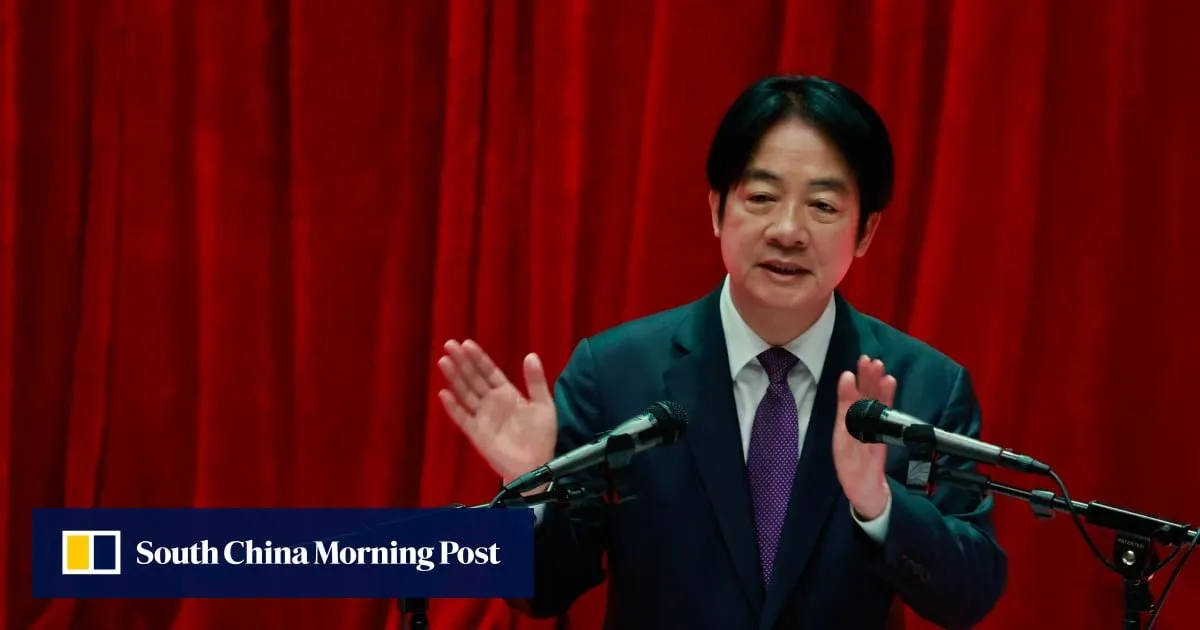
The opposition push to impeach Taiwanese leader William Lai Ching-te has entered a new phase after he refused to appear at related legislative hearings.The no-show has further deepened partisan strife and is likely to complicate governance ahead of year-end local government elections, observers warn, although most of them agree that the impeachment motion is unlikely to clear Taiwan’s high constitutional threshold.The impeachment motion – an unprecedented move against a sitting leader of Taiwan – was launched late last year by the main opposition party Kuomintang (KMT) and the smaller Taiwan People’s Party (TPP).It came after the cabinet declined to countersign amendments to a revised fiscal allocation law passed by the legislature, where the opposition holds a slim majority. The revised law aims to increase the share of central funds allocated to local governments, thereby reducing central government funds.Under Taiwan’s constitutional system, an impeachment motion against the island’s leader must be proposed by more than half of the 113-seat parliament, or a minimum of 57 lawmakers. It must then be approved by at least a two-thirds majority – or 76 votes – before being sent to the Constitutional Court for adjudication.This bar is widely seen as unattainable for the opposition. The ruling Democratic Progressive Party (DPP) holds 51 seats, compared with 62 for the opposition and independents – leaving them 14 votes short of the two-thirds majority needed to pass the motion.Nevertheless, the opposition-led legislature voted last month to proceed with two public hearings and four parliamentary review sessions, inviting Lai to attend and explain his position.
SRCSouth China Morning Post
LANGEN
LEANCenter-Right
WORDS256
ENT6
SUN · 2026-01-25 · 02:00 GMTBRIEF NSR-2026-0125-10323
NSR-2026-0125-10323News Report·EN·Political Strategy
What next for Taiwan as William Lai refuses to attend impeachment hearings?
Taiwan's opposition parties, Kuomintang (KMT) and Taiwan People’s Party (TPP), initiated an impeachment motion against President William Lai Ching-te after the cabinet refused to endorse amendments to a fiscal allocation law. The revised law, passed by the opposition-led legislature, seeks to increase central funds for local governments.
Lawrence ChungSouth China Morning PostFiled 2026-01-25 · 02:00 GMTLean · Center-RightRead · 2 min
South China Morning PostFIG 01
Reading time
2min
Word count
256words
Sources cited
1cited
Entities identified
6entities
Quality score
100%
§ 01
Briefing Summary
AI-generatedNEWSAR · AI
Taiwan's opposition parties, Kuomintang (KMT) and Taiwan People’s Party (TPP), initiated an impeachment motion against President William Lai Ching-te after the cabinet refused to endorse amendments to a fiscal allocation law. The revised law, passed by the opposition-led legislature, seeks to increase central funds for local governments. Lai refused to attend legislative hearings related to the impeachment, deepening partisan conflict. While the opposition lacks the necessary two-thirds majority in parliament to pass the motion and send it to the Constitutional Court, the move is expected to complicate governance before upcoming local elections. The impeachment motion is an unprecedented move against a sitting Taiwanese leader.
Confidence 0.90Sources 1Claims 5Entities 6
§ 02
Article analysis
Model · rule-basedFraming
Political Strategy
Conflict
Tone
Measured
AI-assessed
CalmNeutralAlarmist
Factuality
0.70 / 1.00
Factual
LowHigh
Sources cited
1
Limited
FewMany
§ 03
Key claims
5 extracted01
The DPP holds 51 seats, compared with 62 for the opposition and independents.
statisticnull
Confidence
1.00
02
An impeachment motion requires more than half of parliament to propose and a two-thirds majority to pass.
factualnull
Confidence
1.00
03
The opposition holds a slim majority in the legislature.
factualnull
Confidence
1.00
04
The impeachment motion was launched by the Kuomintang (KMT) and Taiwan People’s Party (TPP).
factualnull
Confidence
1.00
05
William Lai refused to appear at legislative hearings related to his impeachment.
factualnull
Confidence
1.00
§ 04
Full report
2 min read · 256 words§ 05
Entities
6 identifiedKey playerOppositionContextPositiveNeutralNegative
Organizations4
Locations1
§ 06
Keywords & salience
10 termsimpeachment
1.00
taiwan
0.90
william lai
0.80
opposition party
0.70
legislative hearings
0.70
constitutional threshold
0.60
partisan strife
0.60
local government elections
0.50
fiscal allocation law
0.50
governance
0.40
§ 07
Topic connections
Interactive graph Network visualization showing 51 related topics
View Full Graph Person Organization Location Event|Click node to navigate|Edge numbers = shared articles