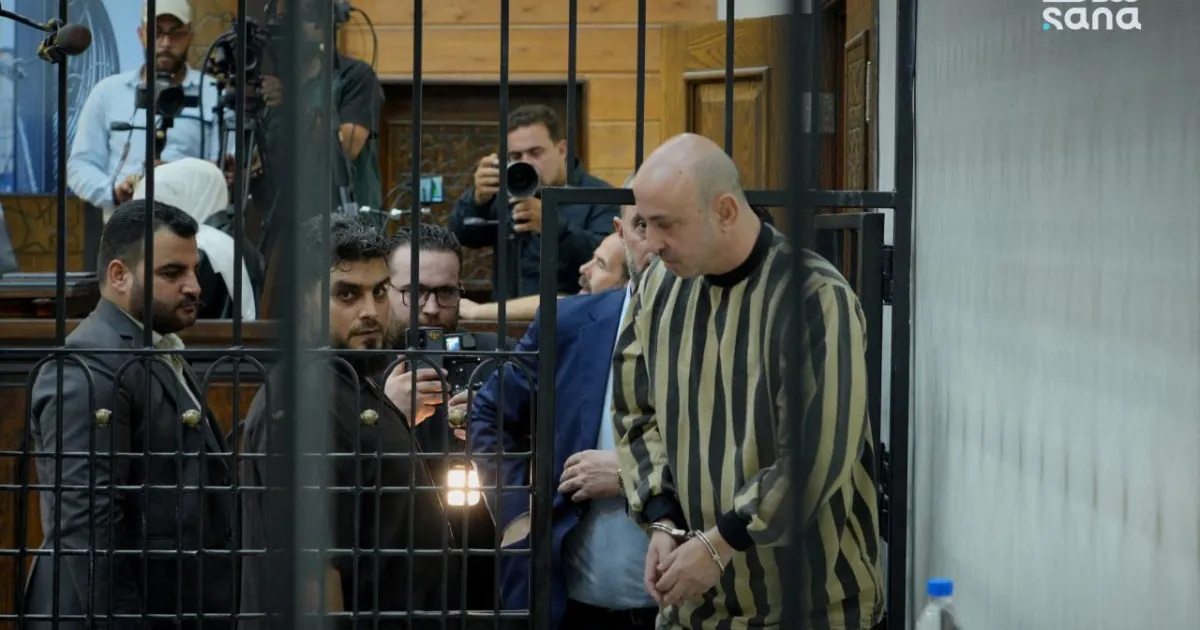
EXPLAINERThe latest sentence against Wassim al-Assad comes a week after ousted President Bashar al-Assad was sentenced to death.Published On 18 Aug 2026Syria has sentenced the former al-Assad regime figure Wassim al-Assad to death for crimes that include premeditated murder and torture during the country’s 14-year war.His sentence on Tuesday was handed down one week after former President Bashar al-Assad; his younger brother, Maher al-Assad; and cousin Atef Najib were also sentenced to death.We break down who Wassim al-Assad is and what he has been found guilty of amid ongoing transitional justice efforts in Syria.Who is Wassim al-Assad?Wassim al-Assad, 46, was born in Latakia on Syria’s Mediterranean coast. He is a cousin of Bashar al-Assad, who was ousted in a lightning rebel advance on the capital, Damascus, in December 2024.Bashar and Maher al-Assad and other members of their family fled to Moscow, where they have lived in exile under tight Russian supervision ever since.A member of Syria’s minority Alawite community, Bashar al-Assad had been in power since 2000. He took over when his father, Hafez, who had ruled Syria since 1970, died.A transitional government took power soon after the fall of the al-Assad regime. It is headed by President Ahmed al-Sharaa, one of the leaders of the armed opposition groups that overthrew the al-Assad regime. The current government has overseen a judicial process to bring perpetrators of crimes against humanity committed under the regime to justice.Wassim al-Assad is one of those who is facing a range of charges, including establishing and leading pro-regime paramilitary groups since early 2011 when Syria’s civil war began with Arab Spring protests, which were violently crushed by al-Assad forces.In all, almost half a million Syrians were killed during the war. Between 13 million and 14 million of Syria’s 22 million pre-war population were displaced from their homes, roughly half of them forced to flee overseas.Wassim al-Assad was specifically charged with participating in military operations targeting civilian areas in Eastern Ghouta, particularly the town of al-Mleiha, where many civilians were killed.Eastern Ghouta is a farming region just east of Damascus. During the Syrian war, it became a major rebel stronghold, was put under military siege by the al-Assad government and was the site of a resulting humanitarian crisis.On Tuesday, the Fourth Criminal Court in Damascus handed down a death sentence after finding Wassim al-Assad guilty.Judge Fakhr al-Din al-Aryan said Wassim al-Assad had committed multiple murders and “murder accompanied by torture and brutality … classified as crimes against humanity and war crimes”. The judge added that the court had established beyond doubt that an armed group linked to Wassim al-Assad was involved in abducting and killing Syrians.Arrested in June 2025 upon his return from Lebanon, Wassim al-Assad has long been accused of overseeing the production and smuggling of the amphetamine-like drug Captagon to neighbouring countries during the former regime’s rule. He is also under United States and European sanctions.The court found him not guilty of drug-trafficking charges, ruling there was insufficient evidence of his direct involvement, Al Jazeera’s Obaida Hitto reported from outside the court.In addition to the death sentence, the court ordered the confiscation of Wassim al-Assad’s assets.Which other former Syrian leaders have been convicted?On August 11, the Fourth Criminal Court also sentenced Bashar and Maher al-Assad and Najib to death. The sentences were celebrated by people in the streets outside the courthouse in Damascus.While the al-Assad brothers were sentenced in absentia, former security official Najib, who is widely seen as the man who triggered the civil war with his brutal crackdown on protesters in Deraa in southern Syria in 2011, was sentenced in person after being held in detention since January 2025.Najib was charged with at least 10 crimes, including murder, torture and overseeing massacres as well as crimes against humanity linked to the Deraa massacre.The trial, which began in April, has been viewed as a test of Syria’s transitional justice system and of the new authorities’ willingness to prosecute al-Assad‑era officials for abuses committed under his rule.Al-Sharaa’s government had faced criticism for delays in launching the promised transitional justice process after the war.“The country has been trying to reconcile more than five decades of dictatorship led by the al-Assad family over the last 18 months or so,” Hitto reported last week.
SRCAl Jazeera
LANGEN
LEANCenter
WORDS706
ENT12
TUE · 2026-08-18 · 13:06 GMTBRIEF NSR-2026-0818-103434
NSR-2026-0818-103434News Report·EN·Legal & Judicial
Who is Wassim al-Assad, sentenced to death for Syria war atrocities?
Wassim al-Assad, a 46-year-old cousin of the ousted Syrian President Bashar al-Assad, has been sentenced to death by the Fourth Criminal Court in Damascus for war crimes. The charges include premeditated murder and torture, particularly for his involvement in military operations targeting civilian areas in Eastern Ghouta.
Al JazeeraFiled 2026-08-18 · 13:06 GMTLean · CenterRead · 3 min
Al JazeeraFIG 01
Reading time
3min
Word count
706words
Sources cited
2cited
Entities identified
12entities
Quality score
100%
§ 01
Briefing Summary
AI-generatedNEWSAR · AI
Wassim al-Assad, a 46-year-old cousin of the ousted Syrian President Bashar al-Assad, has been sentenced to death by the Fourth Criminal Court in Damascus for war crimes. The charges include premeditated murder and torture, particularly for his involvement in military operations targeting civilian areas in Eastern Ghouta. This sentence follows a similar death sentence issued a week prior for Bashar al-Assad, his brother Maher al-Assad, and cousin Atef Najib. Wassim al-Assad was arrested in June 2025 upon his return from Lebanon. The court found him guilty of multiple murders and crimes against humanity, ordering the confiscation of his assets, though he was acquitted of drug-trafficking charges due to insufficient evidence. This judicial process is part of transitional justice efforts by Syria's current government to prosecute perpetrators of crimes committed under the former regime.
Confidence 0.90Sources 2Claims 5Entities 12
§ 02
Article analysis
Model · rule-basedFraming
Legal & Judicial
Human Rights
Tone
Measured
AI-assessed
CalmNeutralAlarmist
Factuality
0.80 / 1.00
Factual
LowHigh
Sources cited
2
Limited
FewMany
§ 03
Key claims
5 extracted01
An armed group linked to Wassim al-Assad was involved in abducting and killing Syrians, established beyond doubt by the court.
factualJudge Fakhr al-Din al-Aryan
Confidence
1.00
02
Judge Fakhr al-Din al-Aryan stated that Wassim al-Assad committed multiple murders classified as crimes against humanity and war crimes.
quoteJudge Fakhr al-Din al-Aryan
Confidence
1.00
03
Wassim al-Assad was charged with participating in military operations targeting civilian areas in Eastern Ghouta, including the town of al-Mleiha.
factual
Confidence
1.00
04
Wassim al-Assad is a cousin of former President Bashar al-Assad, who was ousted in December 2024.
factual
Confidence
1.00
05
Wassim al-Assad has been sentenced to death for crimes including premeditated murder and torture during Syria's 14-year war.
factual
Confidence
1.00
§ 04
Full report
3 min read · 706 words§ 05
Entities
12 identifiedKey playerOppositionContextPositiveNeutralNegative
People5
Locations6
§ 06
Keywords & salience
10 termswassim al-assad
1.00
syrian war
1.00
death sentence
0.90
bashar al-assad
0.80
war crimes
0.70
transitional justice
0.60
al-assad regime
0.50
syria
0.50
torture
0.40
paramilitary groups
0.40
§ 07
Topic connections
Interactive graph No topic relationship data available yet. This graph will appear once topic relationships have been computed.