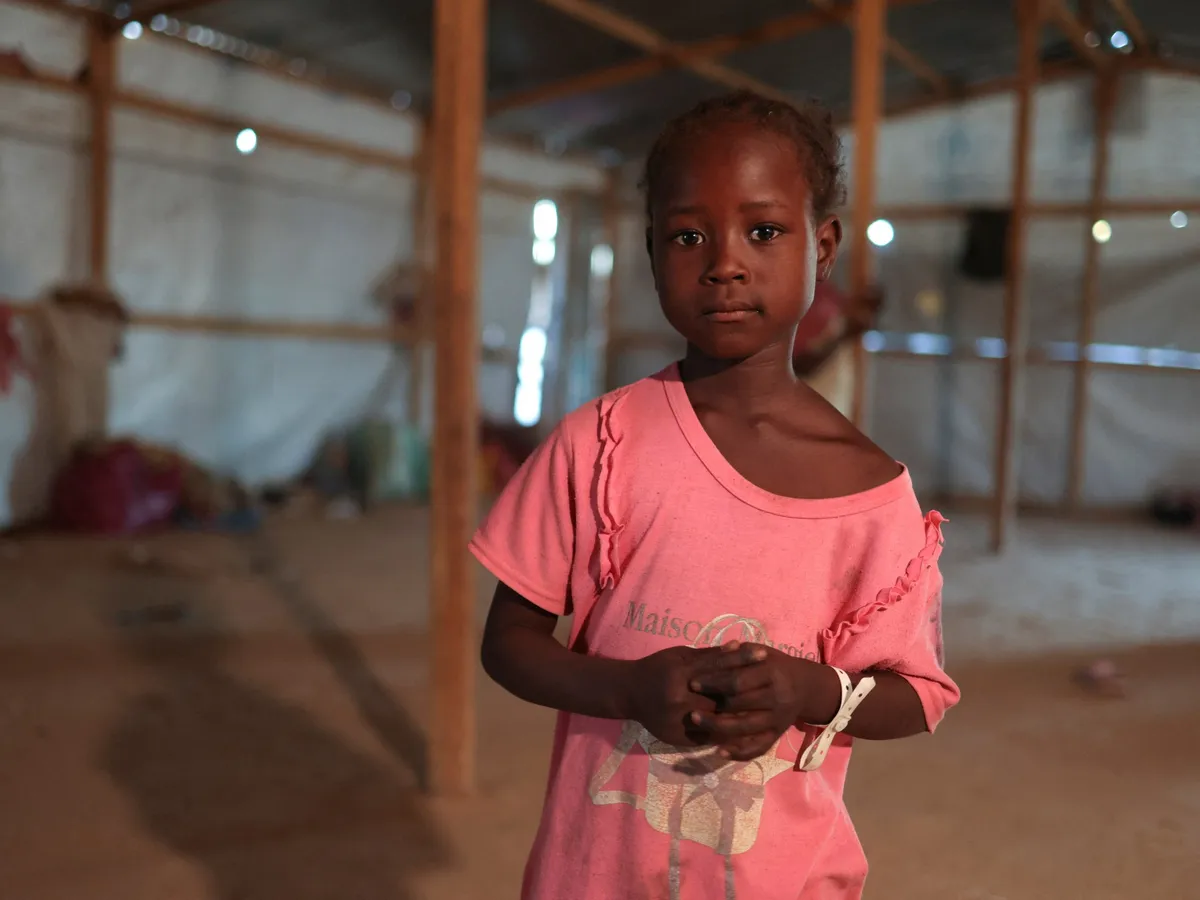
Displaced mothers are forced into gruelling manual labour to feed families as new data confirm Sudan has surpassed COVID-19 records for school closures.Published On 25 Jan 2026In the displacement camps of Ad-Damazin in southeastern Sudan’s Blue Nile State, the war is reshaping social norms and introducing new realities that are forcing Sudanese women into manual labour to survive.Rasha is a displaced mother. She has ignored old boundaries and perceptions of what a man’s work is and started working as a woodcutter to feed her children.“Carpentry is hard, … but the axe has become an extension of my hand,” Rasha told Al Jazeera Arabic. “There are no choices left.”Her story is not unique. Thousands of Sudanese women have become their families’ sole breadwinners and work under harsh conditions. Rasha’s earnings after a day of back-breaking labour under the sun are often enough to buy only a packet of biscuits.She spends the money on food and soap. “You want soap. You want to wash,” she said. “As for clothes, we have given up hope on that.”The nearly three-year war between the Sudanese army and the Rapid Support Forces paramilitary group has had a catastrophic impact on the country and its people.According to the United Nations Office for the Coordination of Humanitarian Affairs (OCHA), more than 30 million people from a population of 46.8 million are in need of humanitarian assistance.The population is facing acute food shortages and a nutrition crisis, especially in the Darfur and Kordofan regions in western and central Sudan. At the same time, disease outbreaks are worsening the situation.Moreover, Sudan is dealing with the world’s largest displacement crisis with an estimated 13.6 million people forced from their homes by the fighting.
SRCAl Jazeera
LANGEN
LEANCenter
WORDS282
ENT8
SUN · 2026-01-25 · 06:23 GMTBRIEF NSR-2026-0125-10362
NSR-2026-0125-10362News Report·EN·Human Interest
Sudan’s women break ‘traditional rules’ to survive
Due to the ongoing conflict in Sudan, women in displacement camps, particularly in Ad-Damazin, Blue Nile State, are increasingly taking on manual labor roles traditionally held by men to provide for their families. The nearly three-year war between the Sudanese army and the Rapid Support Forces has created a humanitarian crisis, leaving over 30 million people in need of assistance.
Mohammad MansourAl JazeeraFiled 2026-01-25 · 06:23 GMTLean · CenterRead · 2 min
Al JazeeraFIG 01
Reading time
2min
Word count
282words
Sources cited
1cited
Entities identified
8entities
Quality score
100%
§ 01
Briefing Summary
AI-generatedNEWSAR · AI
Due to the ongoing conflict in Sudan, women in displacement camps, particularly in Ad-Damazin, Blue Nile State, are increasingly taking on manual labor roles traditionally held by men to provide for their families. The nearly three-year war between the Sudanese army and the Rapid Support Forces has created a humanitarian crisis, leaving over 30 million people in need of assistance. With widespread displacement affecting 13.6 million people, women like Rasha are working as woodcutters and in other strenuous jobs to secure basic necessities like food and soap. The UN reports acute food shortages and disease outbreaks are worsening the situation for the population of 46.8 million.
Confidence 0.90Sources 1Claims 5Entities 8
§ 02
Article analysis
Model · rule-basedFraming
Human Interest
Economic Impact
Tone
Mixed Tone
AI-assessed
CalmNeutralAlarmist
Factuality
0.80 / 1.00
Factual
LowHigh
Sources cited
1
Limited
FewMany
§ 03
Key claims
5 extracted01
More than 30 million people from a population of 46.8 million are in need of humanitarian assistance.
statisticUnited Nations Office for the Coordination of Humanitarian Affairs (OCHA)
Confidence
1.00
02
Rasha's earnings after a day of back-breaking labour under the sun are often enough to buy only a packet of biscuits.
factualAl Jazeera
Confidence
0.90
03
Sudan is dealing with the world’s largest displacement crisis with an estimated 13.6 million people forced from their homes.
statisticAl Jazeera
Confidence
0.90
04
Displaced mothers are forced into gruelling manual labour to feed families.
factualAl Jazeera
Confidence
0.90
05
Thousands of Sudanese women have become their families’ sole breadwinners and work under harsh conditions.
factualAl Jazeera
Confidence
0.80
§ 04
Full report
2 min read · 282 words§ 05
Entities
8 identifiedKey playerOppositionContextPositiveNeutralNegative
Organizations4
§ 06
Keywords & salience
8 termssudan
1.00
displacement
0.90
women
0.80
manual labor
0.70
food shortages
0.60
war
0.50
humanitarian assistance
0.50
social norms
0.40
§ 07
Topic connections
Interactive graph Network visualization showing 51 related topics
View Full Graph Person Organization Location Event|Click node to navigate|Edge numbers = shared articles